Allies Distance Themselves from US Maritime Strategy
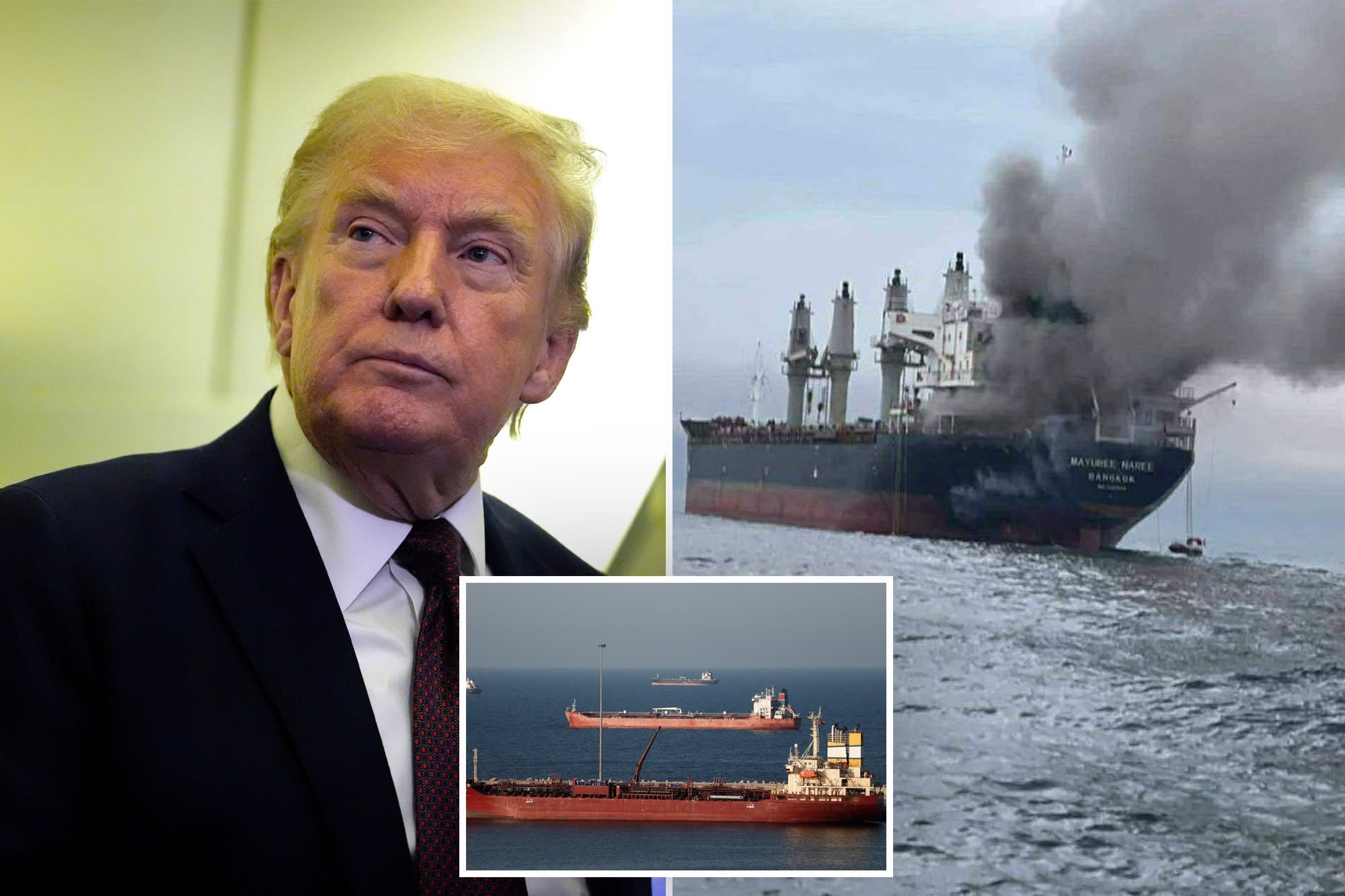
Key NATO member states have explicitly rejected former US President Donald Trump's proposal for a naval blockade of the Strait of Hormuz, creating a significant rift in the Western alliance as the threat alone triggered a sharp spike in global oil prices. The statements from European capitals came after Trump claimed "other countries will be involved" in enforcing the blockade following the collapse of ceasefire talks with Iran.
British Prime Minister Keir Starmer was unequivocal in his opposition. "We are not supporting the blockade," he told the BBC. "It is in my view vital that we get the strait open and fully open." Starmer labeled the closure "deeply damaging" and announced that the UK and France would convene a summit to develop an independent, multinational plan to safeguard shipping once the conflict ends.
The criticism was echoed across the continent. Spanish Defense Minister Margarita Robles told Al Jazeera that Trump's decision to block ships "entering or departing Iranian ports" "makes no sense," calling it "one more episode in this whole downward spiral." Turkish Foreign Minister Hakan Fidan called for the strategic waterway to be reopened through diplomatic channels.
Market Turbulence and Legal Peril
The immediate financial impact was severe. Brent crude prices jumped 7.7% to $102.52 per barrel, while US crude rose nearly 8% to $104.02. The UK's wholesale gas contract for May surged by 11.7%. This reversal came just after a tentative two-week ceasefire deal had briefly pushed prices below the $100 threshold.
Priyanka Sachdeva, a senior market analyst at Phillip Nova, noted the market's acute sensitivity. "The market reaction underscores a simple but powerful reality: Hormuz risk is not theoretical; it is structural, and it is real," she said. "In today’s environment, every barrel of risk added to oil markets carries an inflation price tag for the global economy."
International law experts warned the blockade threat jeopardizes the fragile ceasefire. Donald Rothwell, a professor at Australian National University, wrote that "in purely legal terms, if the US imposes a blockade then the ceasefire is over and hostilities have resumed." This legal precariousness adds another layer of instability to the situation.
Asian Energy Security in the Crosshairs
The Strait of Hormuz is a critical artery for global energy, and its closure has direct and profound implications for Asian economies. Before the conflict, approximately 20% of the world's oil and liquefianatural gas supplies transited the narrow passage. Major Asian importers are now facing acute energy security challenges.
Analysts point to specific vulnerabilities. The Philippines, a US treaty ally, sources 98% of its energy resources through the strait. Japan, another key US partner, recently had an LNG carrier pass through the waterway. The blockade threat, therefore, pits Washington against the energy needs of its own allies in the Indo-Pacific. As detailed in our previous reporting, an energy shock is looming for import-dependent nations.
Sarang Shidore, director of the Global South program at the Quincy Institute, framed the US move as "another step toward a might-makes-right world." He argued, "Illegalities are being heaped on top of illegalities. The attack on Iran that started this war was compounded by Tehran’s seizure of the Strait of Hormuz. Washington’s blockade of the strait has further upped the ante."
The situation has also drawn a sharp response from Tehran. An adviser to Supreme Leader Ayatollah Ali Khamenei claimed Iran has "large, untouched levels" to fight back, while Parliament Speaker Mohammad Bagher Ghalibaf warned Americans would soon "be nostalgic for $4-$5 gas." This follows Iran's rejection of new talks with the US, citing Trump's "erratic" threats.
Amid the escalating rhetoric, the US military appeared to slightly temper the political statement. US Central Command said Monday that American forces "will not impede freedom of navigation for vessels transiting the Strait of Hormuz to and from non-Iranian ports," a formulation that steps back from a "complete blockade" but maintains pressure on Iranian shipping. This comes as the conflict traps the administration and regional allies grapple with the consequences.
The collective rejection by NATO allies of Trump's blockade strategy highlights a significant geopolitical fracture. It underscores the growing reluctance among European powers to be drawn into unilateral US actions in the Middle East that threaten global economic stability and directly impact key Asian partners. The crisis places energy-importing economies across Asia, from Tokyo to Manila, in a precarious position, caught between regional security dynamics and volatile global markets.



