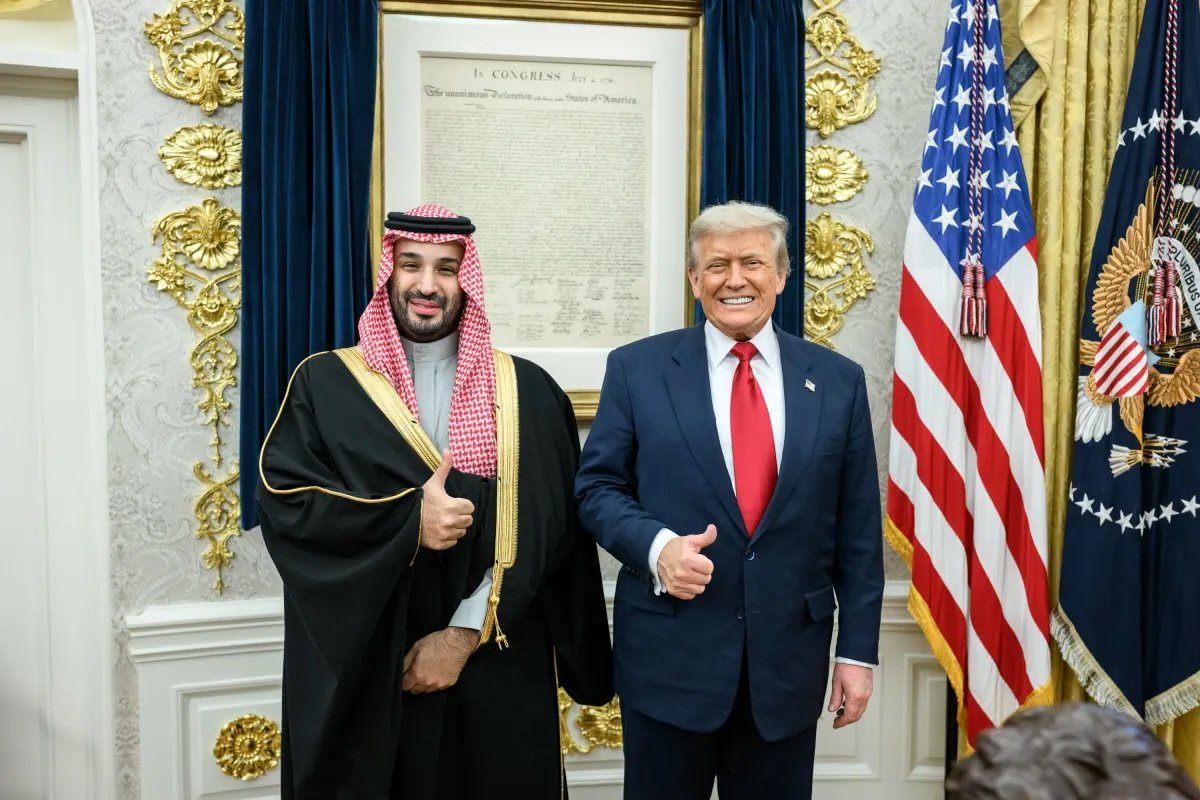
Nonproliferation experts are urging the U.S. Congress to reject a reported agreement between the Trump administration and Saudi Arabia that would permit the kingdom to develop its own nuclear fuel cycle, including uranium enrichment and reprocessing. According to a Reuters report, the proposed deal lacks the so-called “Gold Standard” safeguards that would prevent Saudi Arabia from using civilian nuclear technology as a cover for weapons development.
Kelsey Davenport, director for nonproliferation policy at the Arms Control Association, warned on social media that the agreement “sets a terrible precedent” by undermining bipartisan U.S. policy that has long required nuclear cooperation partners to forgo enrichment and reprocessing. “If the deal is inadequate, which it seems to be,” Davenport said, “Congress should vote to disapprove it.”
Regional Proliferation Risks
Andrea Stricker, deputy director of the Foundation for Defense of Democracies’ Nonproliferation Program, argued that Congress should block the deal, cautioning that it could encourage other states in the region—including in Asia—to seek their own nuclear capabilities. “One hopes the policy will be reversed by a subsequent administration before too much damage is done,” Stricker added, “in terms of watering down safeguards, setting negative precedents for other states, and failing to contain the spread of enrichment and reprocessing.”
James Acton, co-director of the Carnegie Endowment for International Peace’s Nuclear Policy Program, called the reported deal “tantamount to the United States giving up on nonproliferation.” He noted that Saudi officials have openly expressed interest in nuclear weapons, and that Washington should do nothing to facilitate enrichment or reprocessing in the kingdom.
Emma Ashford, a senior fellow at the Stimson Center, highlighted the irony of the Trump administration “bombing Iran to prevent them ever having enrichment, while giving it to the Saudis.” Her comment echoes broader concerns that the deal could destabilize the Middle East and beyond, particularly given the ongoing tensions with Iran. For context, the administration’s approach to Iran has already drawn criticism: as Iran Conflict Becomes the Forever War Trump Vowed to Avoid illustrates, the U.S. has struggled to contain Tehran’s nuclear ambitions through military pressure.
Strategic Leverage and Historical Precedent
Rosemary Kelanic, director of the Middle East Program at Defense Priorities, described the reported deal as a “terrible idea” that reverses decades of U.S. policy. She warned that uranium enrichment would give Saudi Arabia “a potent source of leverage to extract future concessions from Washington,” including new security guarantees. “That has happened before,” Kelanic noted, “for instance in South Korea and West Germany, where the U.S. traded protection to persuade partners to abandon nuclear programs.”
The implications for Asia are significant. A Saudi nuclear program could embolden other regional powers, such as South Korea, which has long debated its own nuclear options. As Seoul's Pragmatic Diplomacy Navigates Trump's Unpredictable Foreign Policy highlights, South Korea has historically balanced its security needs with nonproliferation commitments. A U.S.-Saudi deal that relaxes standards could undermine those efforts.
Rep. Gregory Meeks (D-NY), ranking member of the House Foreign Relations Committee, expressed “deep concerns” about the reported agreement, which he said “would significantly erode existing nonproliferation standards.” Meeks emphasized that any nuclear cooperation deal must include “appropriate limits on enrichment and reprocessing, as well as the [International Atomic Energy Agency’s] Additional Protocol.”
The debate comes amid heightened tensions in the region, including Houthi threats to Red Sea shipping lanes. As Houthis Declare Maritime Embargo on Saudi Arabia, Threatening Red Sea Oil Routes reports, such instability only amplifies the risks of a nuclear-armed Saudi Arabia. Critics argue that the Trump administration’s push for the deal prioritizes short-term commercial and geopolitical gains over long-term security.
If Congress fails to block the agreement, nonproliferation advocates warn, the consequences could ripple across the Indo-Pacific, where countries like Japan and South Korea already possess advanced nuclear technologies but have refrained from weaponization. The reported deal, they say, would signal that the United States is willing to abandon its nonproliferation principles for strategic convenience—a message that could reshape the global nuclear order.