North Korea's recent series of weapons tests signals a strategic shift: Pyongyang is actively absorbing battlefield lessons from conflicts in Iran and Ukraine to refine its warfighting doctrine. According to a New York Times report this month, the tests—confirmed by South Korean officials—demonstrate an effort to develop capabilities that can strain missile defenses and sustain a prolonged regional war.
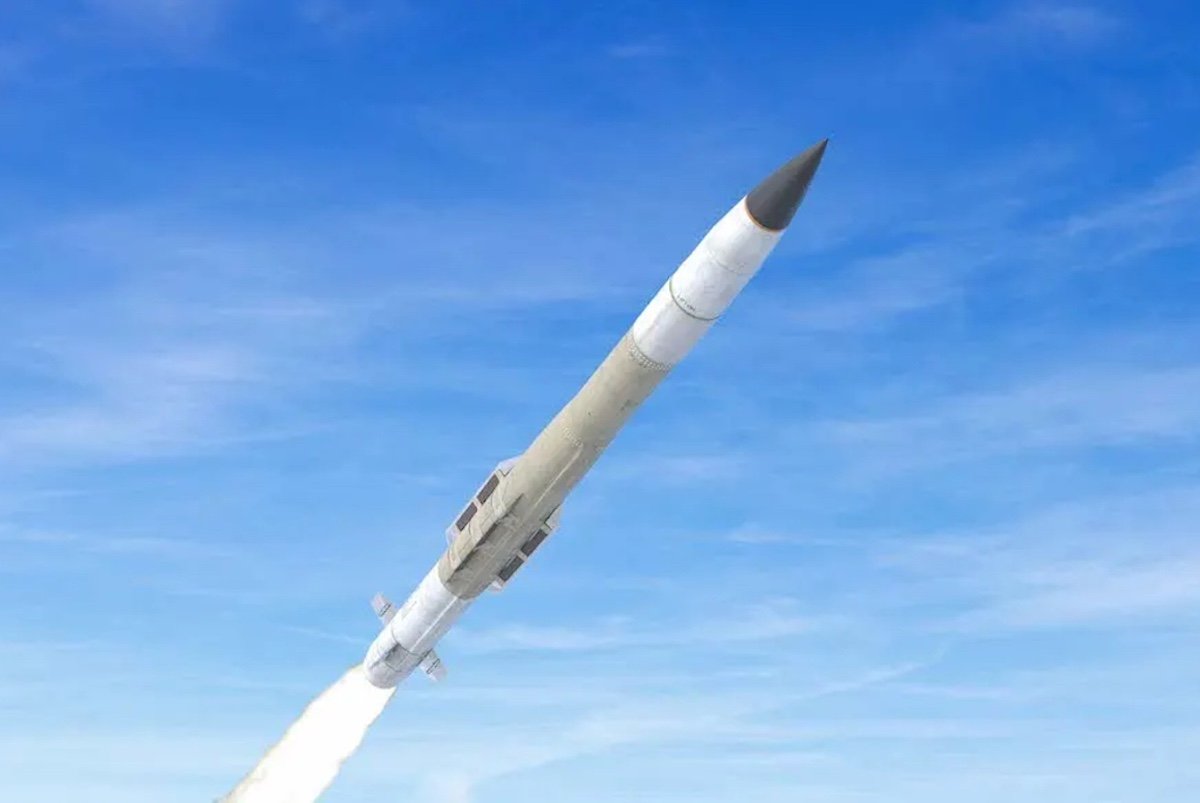
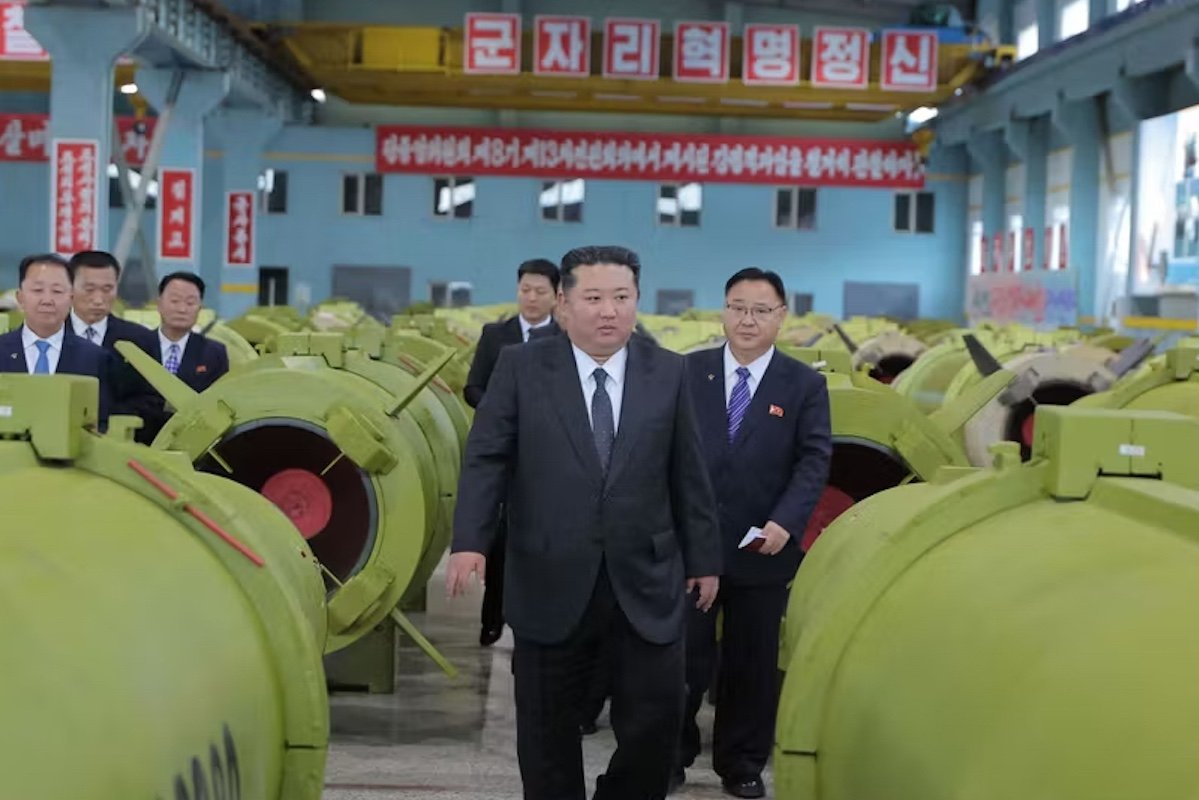
The tests included a Hwasong-11A (KN-23) short-range ballistic missile equipped with a cluster-munition warhead capable of dispersing submunitions over an area equivalent to ten football fields. North Korea also tested graphite "blackout bombs" designed to disable electrical grids, along with a mobile short-range air defense system and a new missile engine built with low-cost materials. These developments reflect a strategy to offset technological disadvantages through mass production and survivability.
Missiles launched during the tests flew between approximately 241 and 698 kilometers off North Korea's east coast, prompting South Korea to convene a national security meeting to assess risks. The tests align with leader Kim Jong Un's five-year military buildup plan and coincide with deepening ties with China and Russia, as well as continued hostility toward South Korea and stalled diplomacy with the United States.
Lessons from Iran and Ukraine
North Korea has long used external conflicts to accelerate military modernization. The Iran war appears to validate lessons already drawn from Ukraine, particularly regarding missile survivability and massed salvos. Jonah Brody and Rena Gabber, in a March 2026 report for the Jewish Institute for National Security of America (JINSA), note that North Korea has contributed to Iran's missile development through technology transfer and component supply since the 1980s. This assistance formed a core pillar of Iran's early ballistic missile program, enabling Iran to transition from foreign dependence to domestic manufacturing while retaining design lineage linked to North Korean systems.
Bruce Bechtol Jr., writing in a March 2026 Korea Regional Review article, describes the extensive operational use of North Korean-derived missile systems in Iranian strikes against US, Israeli, and regional targets. Short-range Qiam missiles, derived from Scud systems, have a range of up to 800 kilometers, while Nodong-based variants—Emad and Ghadr—reach 1,750 to 1,950 kilometers. More advanced Musudan-derived systems, such as the Khorramshahr-4, can carry warheads of up to two tons and are reportedly equipped with cluster munitions.
Applied to the Korean Peninsula, Robert Peters notes in a March 2026 Heritage Foundation report that Scud and Nodong systems could be used to strike military and leadership targets in a conflict, including ports, airfields, and US bases such as Osan and Camp Humphreys, to disrupt reinforcement flows and coerce South Korea. Similar to Iran's use of ballistic missiles against Israel and the Gulf States, Peters says North Korea could use large salvos to strain missile defenses with conventionally armed missiles before follow-on strikes. North Korea has demonstrated the ability to fire mixed salvos of different missile types, complicating interception and saturating defenses.
The Iran war may have validated North Korea's emphasis on missile survivability under sustained air attack. Citing US intelligence sources, CNN reported this month that roughly half of Iran's ballistic missile launchers and thousands of one-way attack drones remain intact despite weeks of relentless airstrikes. The New York Times also reported that Iran has been digging out its ballistic missile bunkers and silos struck by US and Israeli bombs, returning them to operation just hours after an attack.
Both Iran and North Korea rely on extensive underground facilities. Colin David and Tal Beeri mention in a January 2026 Alma Research and Education report that Iran has 25 medium-range ballistic missile sites. Similarly, Joseph Bermudez and other writers note in a Beyond Parallel report that North Korea maintains 20 undeclared missile bases, useful for launching short-range to intercontinental ballistic missiles against regional targets and possibly the US homeland. Both countries depend on mobile launchers, hardened underground sites, and terrain dispersal to complicate detection and targeting.
The killing of Iranian Supreme Leader Ali Khamenei in the opening strikes of the Iran war may have shown North Korea that, despite possessing nuclear weapons, regime decapitation remains possible. This risk persists given US-South Korea conventional superiority, advanced surveillance, and pre-emptive strike capabilities. North Korea's regime survival strategy likely revolves around ensuring that any war would be prolonged, costly, and unpredictable, denying adversaries a quick or decisive victory.
These developments suggest North Korea is not merely modernizing but refining how it intends to fight and survive a future conflict. Rather than signaling an imminent offensive, this points to a deterrence strategy reminiscent of Cold War approaches in Europe: building survivable conventional in-theater combat capabilities independent of nuclear deterrence. For more on North Korea's evolving naval capabilities, see North Korea Advances Sea-Based Nuclear Deterrent with New Destroyer Tests. The broader implications for US alliances are explored in South Korea's Alliance with the US Faces a Reckoning Over Cost and Reciprocity. Meanwhile, the nuclear dimension is examined in North Korea's Advancing Nuclear Threat Exposes a Dangerous Policy Divide.