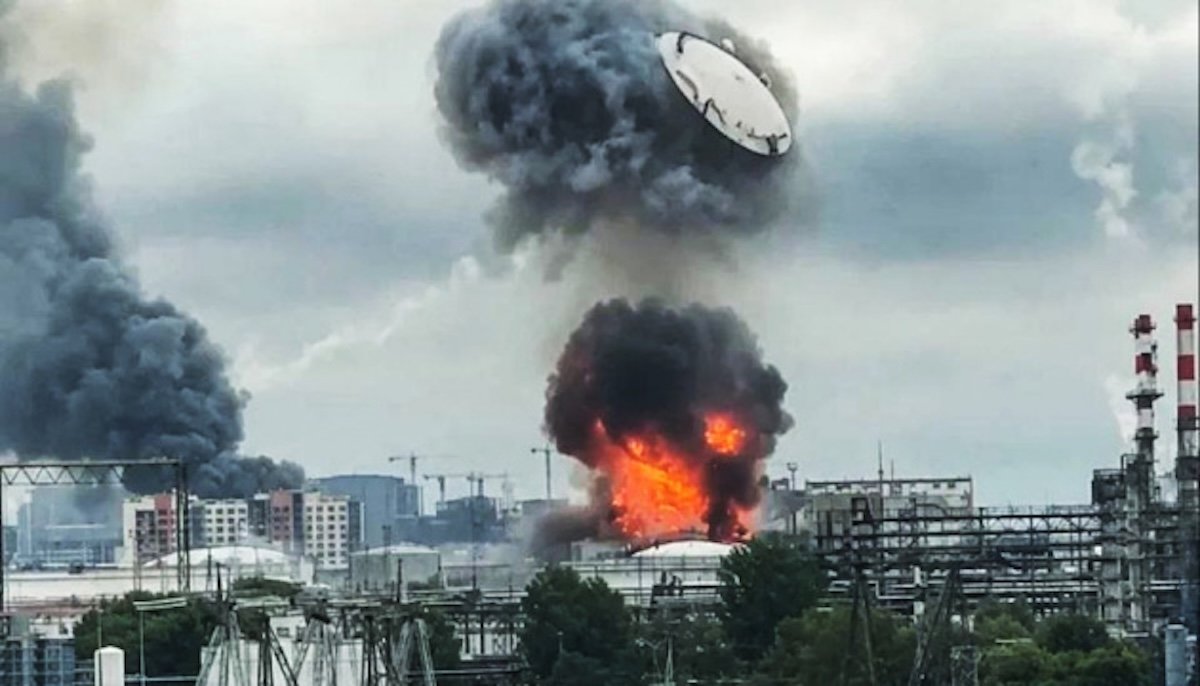
The wars of 2026 have underscored the centrality of drones in modern conflict. In Eastern Europe, both Moscow and Kyiv deploy unmanned aerial vehicles (UAVs) on an unprecedented scale across the so-called “kill zone.” For Ukraine, drones have proven tactically invaluable, striking deep into Russian territory, disrupting supply lines and energy infrastructure, and even reaching Moscow. Iran, meanwhile, used its aerial and naval drone fleets to close the Strait of Hormuz and target American and allied bases across the Middle East.
Relatively cheap and easy to produce, UAVs have shown they can impose disproportionate costs on adversaries, exhausting expensive interceptor missiles and threatening far more sophisticated and valuable weapon systems. North Korea has taken note, and Seoul—now wary of losing the Trump administration’s support—has valid reasons to be concerned about its rival’s budding drone program. While drones may not fundamentally tilt the military balance on the Korean Peninsula, they could give Pyongyang new and relatively inexpensive tools for gray zone coercion while forcing South Korea to devote greater resources to defending against them.
An asymmetric option below the nuclear threshold
The Democratic People’s Republic of Korea (DPRK) fields one of the world’s largest standing armies, with approximately 1.3 million active troops. But Kim Jong Un’s military is largely equipped with outdated Cold War-era hardware, unable to match the technological superiority of its main adversaries in Seoul and Washington. To overcome this quality gap, Pyongyang has relied on its nuclear arsenal as an ultimate deterrent. Yet nukes, despite their strategic value, are a limited instrument given the catastrophic risks of their use.
UAVs, by contrast, offer the Kim regime another asymmetric capability that can be employed far below the nuclear threshold. An operational drone force, even a limited one, could provide Pyongyang with means to disrupt and pressure its southern neighbors without immediately resorting to ballistic missiles or a conventional invasion.
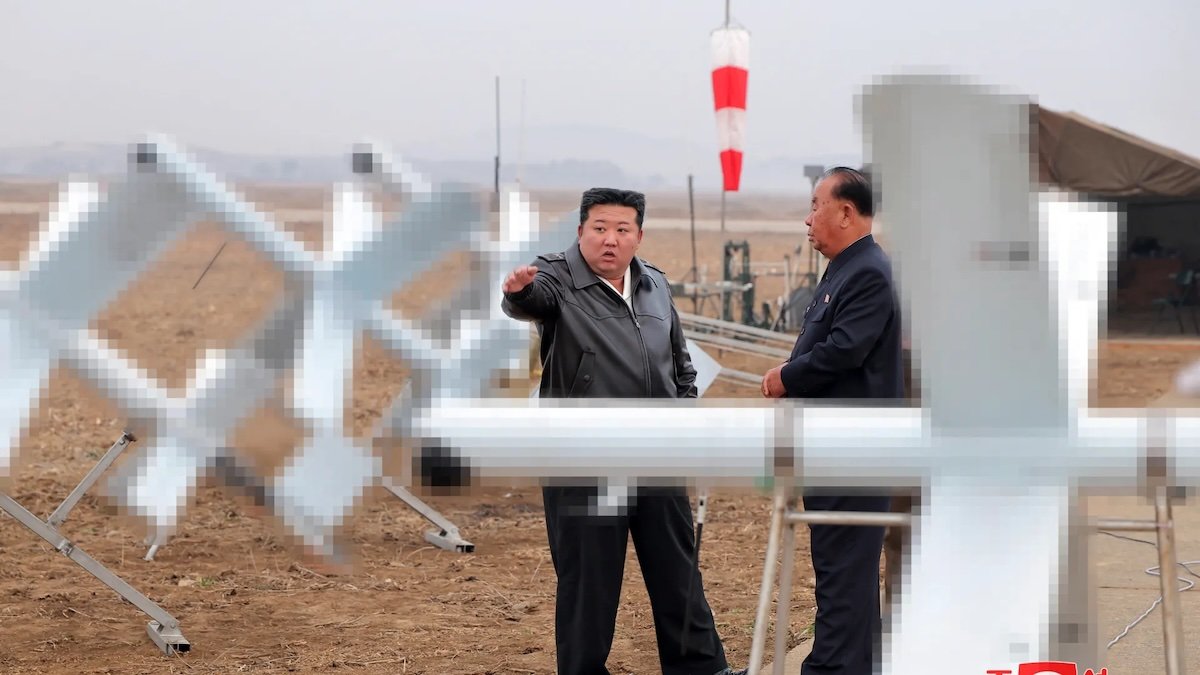
Pyongyang has been developing drones for years. In 2023, it presented the domestically produced Saetbyol-4 and Saetbyol-9, systems seemingly modelled after the American RQ-4 Global Hawk while featuring both reconnaissance and attack capabilities. One year later, the country presented six additional models as part of the smaller “Kumsong” series, which it then reportedly tested in September 2025 and again in September 2026. These systems appear to function as tactical suicide drones, similar to the first-person-view (FPV) drones widely deployed in Ukraine, and are speculated to feature elementary AI capabilities.
North Korea’s involvement in the war in Ukraine could accelerate these capabilities further. Aside from funds and legitimacy, the war has offered Pyongyang a valuable window into an active drone war, potentially providing access to improved technology and battlefield experience. Pyongyang has so far delivered over 5.8 million rounds of artillery shells to Moscow and committed thousands of troops to the Russian war effort, allegedly including drone operators. Moscow has also reportedly shared technology with the North Koreans to enable the production of Shahed-type drones, which could aid Pyongyang in overcoming some of the technological barriers associated with developing and operating more advanced UAVs. Concerns about North Korean workers at Russian drone plants have only heightened these proliferation fears.
Technology transfers do not automatically translate into operational capabilities. The DPRK’s actual ability to produce drones at scale and integrate them into existing command-and-control systems remains to be seen. Still, Pyongyang does not necessarily need to replicate Russia’s or Iran’s drone warfare capabilities for UAVs to become strategically useful; limited capabilities could simply be enough to expand the regime’s options for coercion.
Policymakers and strategists in Seoul, Tokyo, and Washington should take notice. Especially as the risks extend beyond conventional wars. A UAV-capable DPRK would possess additional tools for gray zone disruptions and provocations along the DMZ, allowing it to test South Korean defenses, create uncertainty and generate leverage for coercive diplomacy. Drones could potentially be used to conduct surveillance, harass military positions, or probe South Korean responses without crossing the threshold associated with a major military attack.
The defensive burden could also be significant. In a potential kinetic conflict, Pyongyang could employ large numbers of relatively inexpensive drones against South Korean targets. Even if most are intercepted, the disparity between the costs of attacking drones and the defensive systems stopping them would impose disproportionate costs on Seoul.
Recognizing the threat, South Korea is actively taking measures against Pyongyang’s UAV boom. South Korean Defense Minister Ahn Gyu-back intends to give drones a key role in the South Korean defense apparatus. Ahn has announced the production of 60,000 UAVs by 2029 and seeks to train 500,000 drone operators. The country is also spending billions to upgrade existing weapon systems like its K2 tanks with counter-drone capabilities and is investing in counter-drone systems like lasers and jammers to deal with future threats.
As such, North Korea’s drone program is unlikely to overturn the military balance on the Korean Peninsula. South Korea will remain technologically superior, and its growing counter-drone capabilities could minimize some of Pyongyang’s newfound capabilities. Yet, drones could still have a significant impact on the security landscape around the 38th parallel. UAVs provide Pyongyang with a relatively cheap means of creating disruption, inflicting damage and testing South Korean defenses without immediately escalating the conflict into an all-out war. The shift toward fully autonomous combat drones seen in Ukraine could further amplify these risks, as could the use of drones by resistance forces in Myanmar, which shows how even non-state actors can challenge air dominance.