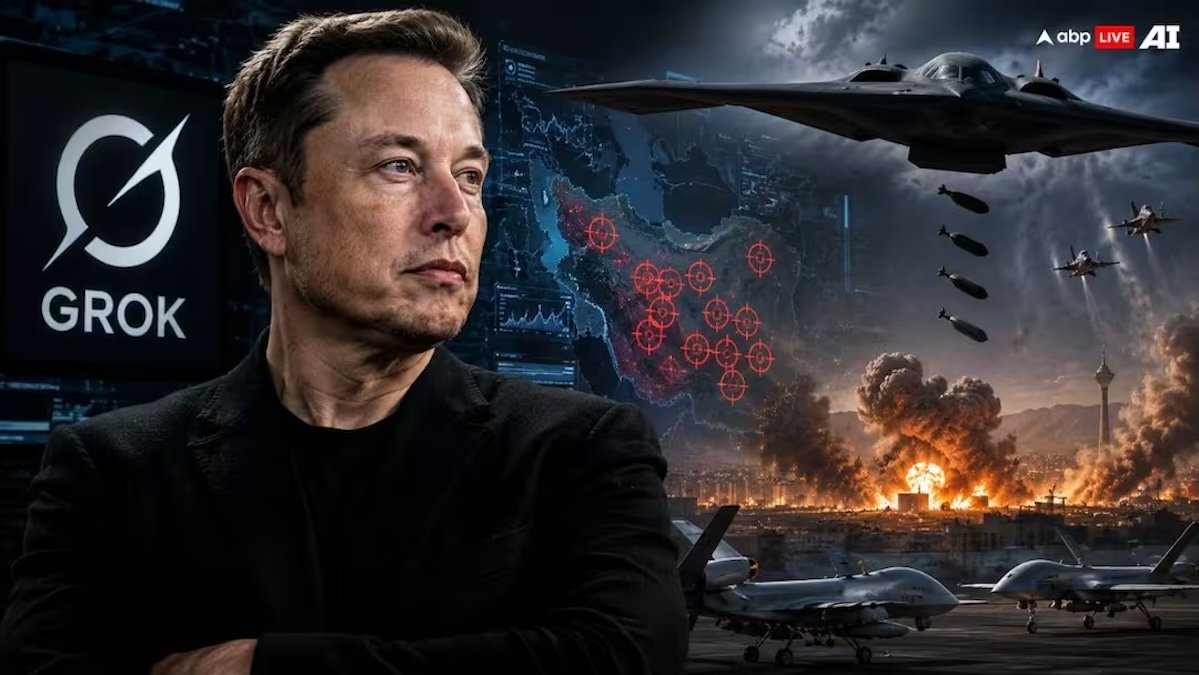
In a sworn statement filed this week in a federal court in Mississippi, Cameron Stanley, the Pentagon's chief digital and artificial intelligence officer, confirmed that the US military deployed a version of Elon Musk's AI tool, Grok, to assist in striking 2,000 distinct targets in Iran over a 96-hour period. The operation, dubbed Operation Epic Fury, was launched by the Trump administration in late February.
Stanley's statement, part of a lawsuit brought by the NAACP against Musk's company xAI, revealed that the Pentagon relies on what it calls the Grok Gov Model, a derivative of xAI's commercial offerings. This model is integrated into the Maven Smart System, a Pentagon platform used for intelligence analysis and targeting. According to Stanley, the system "enabled US forces to deploy over 2,000 munitions to 2,000 distinct targets within 96 hours."
Legal Battle Over Data Center Emissions
The NAACP's lawsuit accuses xAI of illegally operating dozens of polluting gas turbines at its Colossus 2 data center in Memphis, Tennessee, which powers Grok. The plaintiffs sought to limit the facility's energy use, arguing it harms local communities. In his defense, Stanley claimed that restricting Grok's deployment would severely impact military and civilian tools that depend on the Grok Gov Model, warning that limitations on energy supply or compute capacity would hinder Pentagon operations.
The Defense Department had previously acknowledged, shortly after the Iran strikes began, that it was "leveraging a variety of advanced AI tools" to process intelligence rapidly. A Pentagon spokesperson said these tools help "sift through vast amounts of data in seconds so our leaders can cut through the noise and make smarter decisions faster than the enemy can react."
Congressional Scrutiny Over Civilian Casualties
The use of AI in targeting has drawn sharp criticism from lawmakers. In a March 12 letter to Pentagon Secretary Pete Hegseth, more than 120 House Democrats demanded details on the role of AI in selecting targets during Operation Epic Fury. They specifically asked whether AI tools were used to identify an Iranian elementary school as a target. On the first day of the war, a US airstrike hit a girls' school in southern Iran, killing over 150 people, mostly young children.
Stanley's statement did not specify which of the 2,000 targets were civilian sites, nor did it address the school bombing. The Pentagon has not released a full list of targets or casualty figures.
The controversy comes amid broader debates over the militarization of AI. The United States has increasingly integrated AI into its defense systems, even as it blacklists Chinese tech giants for similar dual-use technologies. Critics argue that such tools, while efficient, risk automating decisions that should require human judgment, especially when civilian lives are at stake.
For Asian observers, the use of AI in US military operations against Iran raises questions about the technology's role in regional conflicts. As Iran accuses the EU of appeasement amid escalating strikes, the precedent set by AI-assisted targeting could influence future engagements in the Indo-Pacific, where the US maintains a significant military presence. Meanwhile, Washington's dual approach—sanctioning Chinese AI firms while deepening its own military-AI ties—highlights the strategic contradictions in the region's tech landscape.
The NAACP lawsuit continues, with xAI arguing that its data center operations are essential for national security. The case is expected to test the balance between environmental regulations and military imperatives, a tension that resonates in Asian capitals where data center expansion often clashes with climate goals.