The US Department of Defense (DoD) has placed Alibaba Group Holding Ltd., Baidu Inc., and electric-vehicle maker BYD Co. on its updated “1260H” list of Chinese military companies, escalating a long-running technology rivalry. The move, mandated by a 2021 Congressional directive, targets China’s “military-civil fusion” (MCF) strategy by barring these non-state-owned giants from US defense contracts and research funding.
The updated roster, which now includes 188 firms, also reinstates memory chipmakers YMTC and CXMT after a brief February rollout was retracted over diplomatic timing. The designations come just weeks after a summit in Beijing between US President Donald Trump and Chinese President Xi Jinping failed to ease technology tensions. While the listing carries no immediate legal impact on regular commerce, it serves as a warning to US investors and may foreshadow further trade restrictions or delisting from US exchanges.
Alibaba and WuXi AppTec have rejected the US claims, asserting they operate independently of China’s military. The Chinese Embassy in Washington accused the US of misusing national security justifications to impose discriminatory trade measures on foreign businesses.
China’s Evolving Military-Civil Fusion
MCF has long been a pillar of China’s defense-industrial base, though its emphasis appears to be shifting. China’s 15th Five-Year Plan (2026-2030) does not explicitly mention MCF, but it includes language calling for deeper integration of technological and industrial innovation and for strengthening integrated national strategies. This suggests continuity with Beijing’s efforts to mobilize civilian resources for national defense, albeit through a more indirect approach.
The toning down of MCF rhetoric may reflect China’s desire to smooth a major irritant in US-China bilateral ties. An August 2025 US Department of State report alleges that China uses MCF to acquire US technology by eliminating barriers between civilian and defense sectors, exploiting civilian access to international investments, joint ventures, technology imports, academic partnerships, and talent recruitment. The report also claims China employs coercive methods, such as forced technology transfers, to divert civilian technologies to the People’s Liberation Army (PLA).
Yet expecting China to exclude its leading technology firms from supporting national defense may be unrealistic. A declassified White House national security memo, reported by the Financial Times in November 2025, alleged that Alibaba provides critical technical support for PLA military operations targeting the US. The document claims Alibaba grants the PLA direct access to sensitive customer metadata, including IP addresses, payment records, and Wi-Fi information, and that employees shared information about unpatched “zero-day” software exploits and advanced AI services with the PLA. Alibaba rejected the accusations, calling them a malicious public relations effort to undermine US-China trade relations.
Earlier evidence of BYD’s involvement comes from an October 2019 Radarlock report, which says the company shared commercial technology, big data, and international market access with defense entities such as the China Academy of Launch Vehicle Technology (CALT). The report notes that BYD integrates its technical resources with specialized MCF zones and state defense conglomerates like NORINCO and the Aviation Industry Corporation of China (AVIC). BYD’s proprietary lithium-ion battery research, developed in collaboration with a SASTIND-affiliated defense institute and an AVIC supply partner, won a state award for its contributions to national defense technologies.
America’s Own Military-AI Push
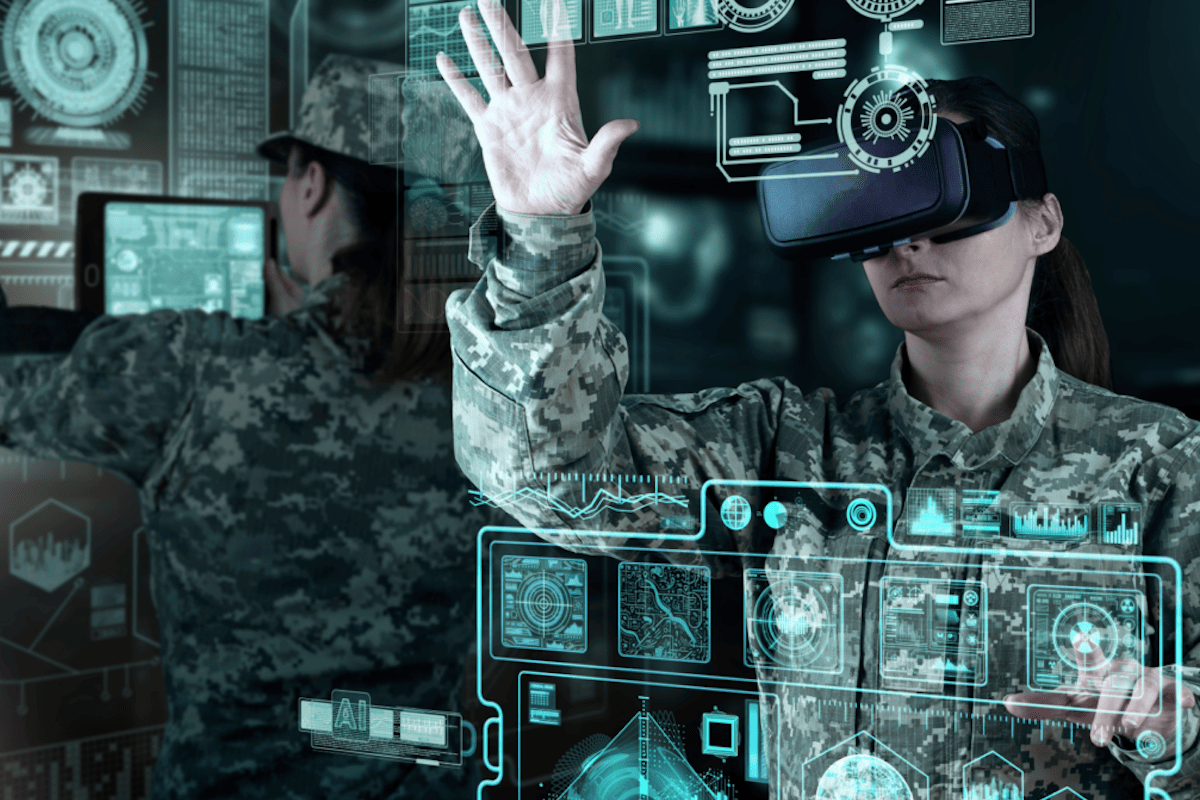
While Washington cracks down on Chinese firms, it is deepening its own reliance on private-sector innovation for military advantage. An April 2026 US Congressional Research Service (CRS) report notes that in July 2025, the DoD awarded US$200 million in contracts to Anthropic, Google, OpenAI, and xAI to integrate advanced AI technologies for national security. Anthropic’s Claude model became the DoD’s most widely deployed frontier AI system, used across national security agencies for intelligence analysis, operational planning, cyber operations, and modeling.
The CRS report adds that the US used Claude in the January 2026 operation to capture Venezuelan President Nicolas Maduro. This parallel—Washington penalizing Chinese firms for military-civil fusion while actively forging its own—highlights a fundamental paradox in US-China technology competition. Both powers increasingly depend on private-sector innovation for military advantage, yet each accuses the other of crossing a line.
The US approach risks undermining its own credibility, particularly in the Indo-Pacific, where countries like India and Japan are closely watching the dual standards. For a deeper look at how regional powers are navigating these tensions, see our analysis of India's Great Nicobar Base Challenges China's Malacca Strait Dependence and China's HQ-16F Deployment Signals Shift in Taiwan Conflict Planning.
As the US and China continue to weaponize their technology sectors, the line between civilian and military innovation grows ever thinner. The real question is not whether such fusion occurs, but how transparent and accountable it is—and whether the rules of the game apply equally to all players.