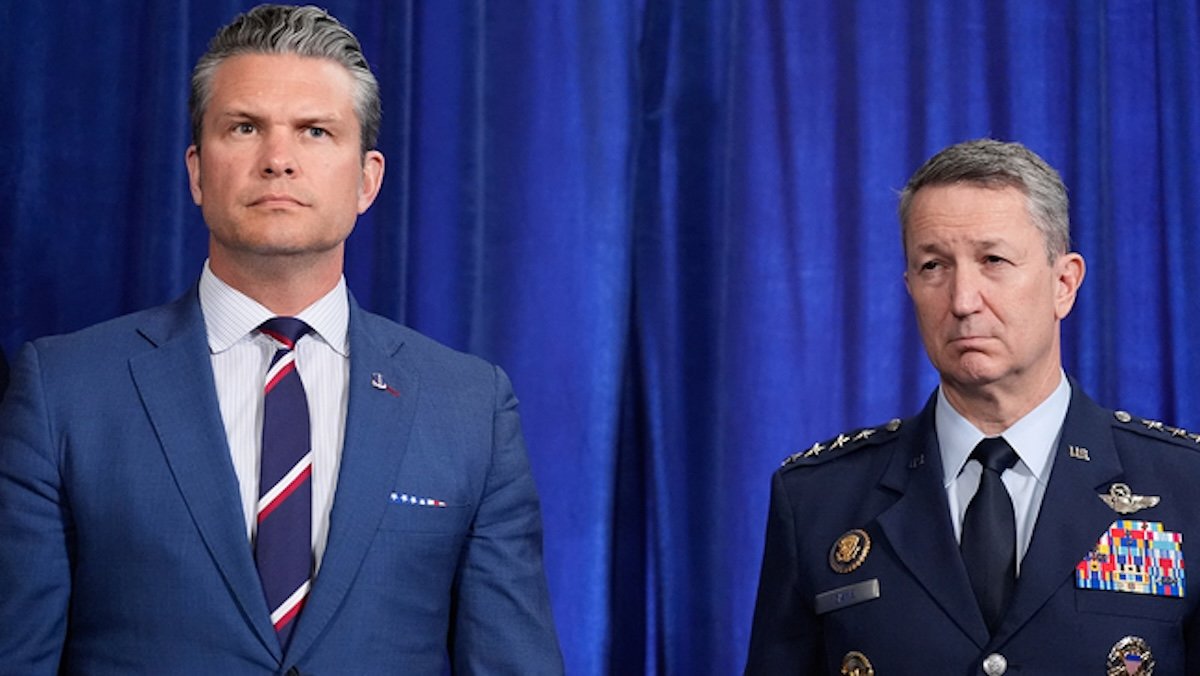
A broker acting for US Defense Secretary Pete Hegseth attempted to arrange a significant investment in weapons manufacturers' stocks shortly before the United States and Israel initiated military strikes against Iran, according to a report by The Financial Times. The alleged move has ignited a political firestorm in Washington, raising questions about the use of insider information and the intersection of personal finance and national security policy.
Alleged Investment Inquiry Before Hostilities
Citing three anonymous sources, the FT reported that Hegseth's broker at Morgan Stanley contacted asset management giant BlackRock in February about making a multimillion-dollar investment into its Defense Industrials Active ETF. This exchange-traded fund includes major US defense contractors such as RTX, Lockheed Martin, Boeing, and Northrop Grumman. The inquiry reportedly occurred just weeks before the US launched bombing raids on Iranian targets beginning February 28.
The Pentagon has issued a forceful denial. A spokesperson labeled the story "entirely false and fabricated," asserting that neither Secretary Hegseth nor any of his representatives approached BlackRock regarding such an investment. Pentagon spokesperson Sean Parnell demanded an "immediate retraction" from the Financial Times, calling the report a "baseless, dishonest smear."
However, the FT maintains that the broker's inquiry on behalf of the "high-profile potential client" was flagged internally within BlackRock. The investment was ultimately not executed because the specific fund was not available for purchase by Morgan Stanley clients at that time. Notably, the fund's value has declined by over 12% in the past month, meaning the investment would not have yielded immediate profits.
Broader Concerns Over Ethics and Insider Knowledge
The allegation has resonated amid existing, broader concerns that officials within the Trump administration may be leveraging non-public information for financial gain. Critics argue the reported broker activity represents a severe conflict of interest, given Hegseth's central role in advocating for the military campaign.
"You know, back when the [US government] gave a damn about anti-corruption, this is something we would've seen as a 'no no,'" said Richard Nephew, a former anti-corruption coordinator at the US State Department. Economist Justin Wolfers stated that, "in a functional democracy, he would offer his resignation tonight."
Secretary Hegseth has been the most vocal proponent of the war with Iran within the US administration. President Donald Trump has stated that Hegseth was the first among his advisers to "speak up" in favor of military action during internal deliberations. Trump also suggested last week that Hegseth was "quite disappointed" when the president indicated the conflict might end soon, quoting the Defense Secretary as saying, "Oh, that's too bad."
Implications for the Indo-Pacific Region
While the story centers on Washington, its implications ripple across the Indo-Pacific. The stability of the Middle East is intrinsically linked to Asian energy security and maritime trade routes. A protracted US-Iran conflict could divert American military and diplomatic resources, potentially affecting Washington's strategic focus and commitments in Asia. An extended stalemate in the Middle East could complicate US efforts to counterbalance China or respond to crises on the Korean Peninsula or in the Taiwan Strait.
Furthermore, the allegations of potential insider trading by a senior US security official could undermine confidence in Washington's governance and decision-making processes among its Asian allies and partners. Nations like Japan, South Korea, and Australia, which rely heavily on the predictability of US foreign policy and the integrity of its institutions, watch such domestic scandals closely. The controversy emerges as the administration seeks a major defense budget increase, a move already under bipartisan scrutiny that could be further complicated by ethics questions.
The report also touches on the financial mechanisms of global conflict. The defense firms in the ETF BlackRock manages are central to US military partnerships worldwide, including major arms sales to allies like Taiwan, which is cultivating its own layered defense strategy. Perceptions that US policy could be influenced by officials' personal financial interests, rather than purely strategic calculus, would be deeply concerning for capitals from New Delhi to Tokyo.
The Financial Times report remains contested, with starkly different narratives from the newspaper and the Pentagon. Yet, it has successfully cast a spotlight on the opaque boundaries between public office and private finance in an era of persistent conflict, with watching eyes from across the Pacific.