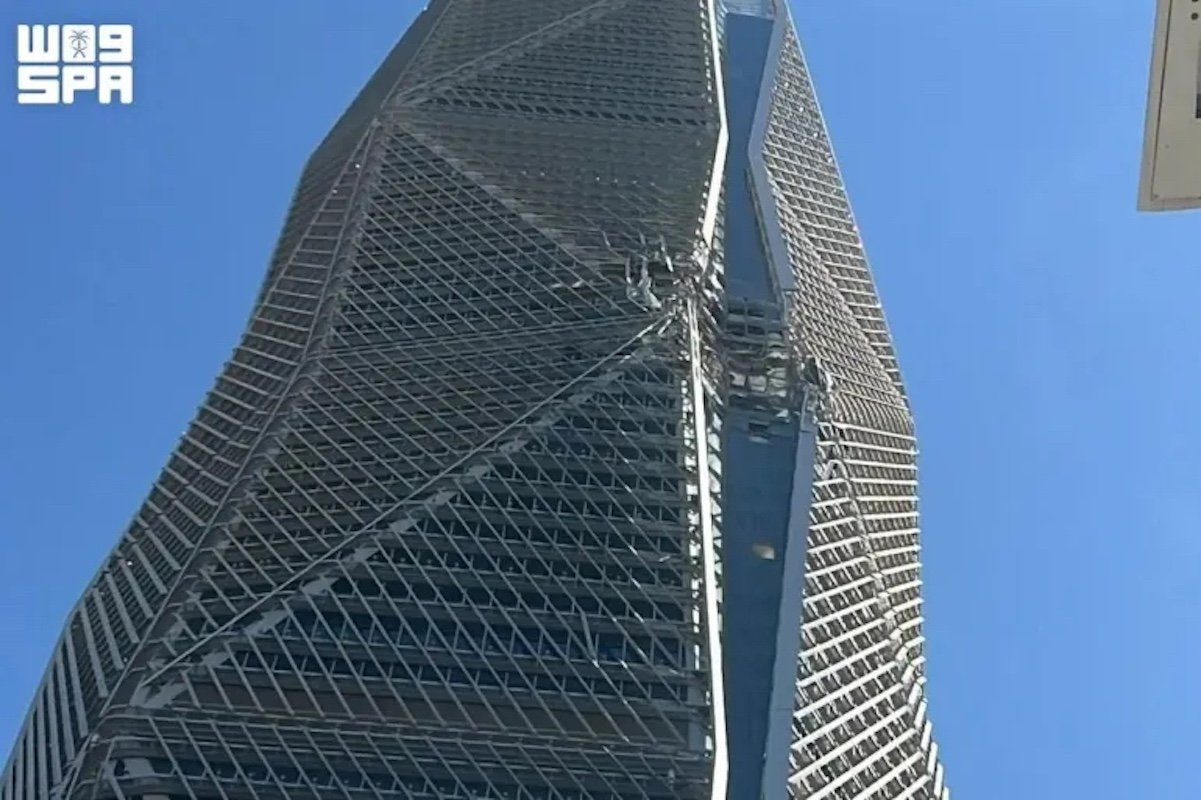
Reported attacks on the headquarters of Saudi Arabia's Public Investment Fund (PIF) in Riyadh mark a dangerous escalation in the conflicts gripping the Middle East. For the second time in less than a week, the building housing one of the world's most influential sovereign wealth funds has reportedly been struck. Saudi Arabia's Civil Defense said 11 people were injured in the latest incident, which Riyadh attributes to suspected Houthi-aligned forces in Yemen.
While independent verification of responsibility is still pending, the economic and strategic implications are clear. The conflict is no longer confined to military installations or energy infrastructure; it now targets the institutions underpinning Saudi Arabia's long-term economic transformation. A November 25 Reuters report confirmed renewed attacks on Riyadh's financial district, with Saudi authorities vowing a firm response.
From energy warfare to financial warfare
For decades, the strategic vulnerability of Saudi Arabia and the Gulf Cooperation Council (GCC) was tied to oil fields, refineries, export terminals, and maritime chokepoints. The attacks on the PIF suggest that vulnerability has expanded. Financial institutions, commercial districts, and the infrastructure supporting economic diversification are no longer insulated from regional hostilities.
The PIF is not an ordinary investment institution. With assets approaching US$1 trillion in recent years, it is a principal instrument through which Crown Prince Mohammed bin Salman hopes to realize Vision 2030, transforming Saudi Arabia into a diversified economy. Its investments span artificial intelligence, advanced manufacturing, renewable energy, tourism, infrastructure, technology, and international sporting enterprises. An attack on its headquarters carries symbolic weight far beyond physical damage.
Although damaging a building does not automatically impair a sovereign wealth fund's financial assets, repeated attacks can erode investor confidence, raise insurance premiums, and complicate recruitment of international talent. Saudi Arabia's ambition to become a global financial and technological hub depends heavily on the international perception of its safety and stability.
The implications extend to the other five GCC members: the United Arab Emirates, Qatar, Kuwait, Bahrain, and Oman. All have invested heavily in transforming their economies into international centers of finance, logistics, technology, and commerce. The Abu Dhabi Investment Authority, Mubadala Investment Company, Qatar Investment Authority, and Kuwait Investment Authority are among the world's most consequential institutional investors.
Any perception that the Gulf's financial centers are exposed to recurrent military attacks could have ramifications beyond West Asia. Sovereign wealth funds are deeply embedded in the economies of Europe, North America, and Asia, supporting infrastructure, multinational corporations, emerging technologies, and financial markets. Destabilizing their operating environments could reverberate through the international financial system.
Moreover, the Gulf's diversification strategies require decades of uninterrupted development. Regional warfare threatens to divert financial resources from productive investments toward defense, reconstruction, and emergency spending. The renewed conflict in Yemen has shown that an unresolved civil war cannot be indefinitely contained within national borders. The Houthis' ability to threaten Saudi infrastructure and maritime commerce has become a matter of international concern, with Reuters reporting disruptions to aviation and commercial activities in Saudi Arabia and large-scale displacement of Yemenis.
Yet an exclusively military response may prove insufficient to resolve Yemen's underlying political and humanitarian crisis. Saudi Arabia has legitimate security concerns, but the Yemeni population cannot be condemned to perpetual warfare, poverty, displacement, and deprivation. The protection of civilians and civilian infrastructure, as required under international humanitarian law, must apply to all parties. The financial district of Riyadh deserves protection, just as hospitals, residential neighborhoods, and humanitarian facilities in Yemen do.
Ripple effects for Southeast Asia
For ASEAN, particularly Malaysia, Indonesia, and Singapore, the deterioration of security across the GCC carries considerable economic implications. The GCC is an increasingly important source of foreign direct investment, energy supplies, and development capital for Southeast Asia. The ASEAN-GCC–China Economic Summit in Kuala Lumpur in May 2025 demonstrated the potential for cooperation between these regions, but such cooperation cannot thrive if the Gulf remains engulfed in warfare.
With the Strait of Hormuz already exposed to severe geopolitical disruption and the Bab el-Mandeb Strait facing mounting insecurity, attacks on financial institutions add another source of systemic risk. Energy insecurity, maritime insecurity, and financial insecurity are converging. ASEAN's interests lie in supporting diplomatic initiatives that can bring stability to the region, as energy leverage and missile expansion reshape the strategic landscape. The Houthis' recasting of their war as national defense, rather than proxy action, complicates any resolution.
The attacks on the PIF are a stark reminder that the war's front lines are no longer just physical. They now include the financial arteries of the Gulf. The international community must recognize that protecting civilian infrastructure, including financial districts, is essential to preventing a broader economic catastrophe. The path to stability lies not in escalation but in addressing the root causes of conflict, including Yemen's humanitarian crisis. As the region teeters on the edge, the world watches whether Riyadh's response will be measured or further inflame a war that already threatens global economic stability.