The Strait of Hormuz may dominate headlines, but a quieter, equally consequential strategic shift is unfolding in Southeast Asia. On April 14, the United States and Indonesia announced a "major defense cooperation partnership," strengthening military ties that could reshape the region's security landscape. Reports indicate that President Prabowo Subianto has approved expanded US access to Indonesian airspace, a move that underscores Jakarta's growing alignment with Washington.
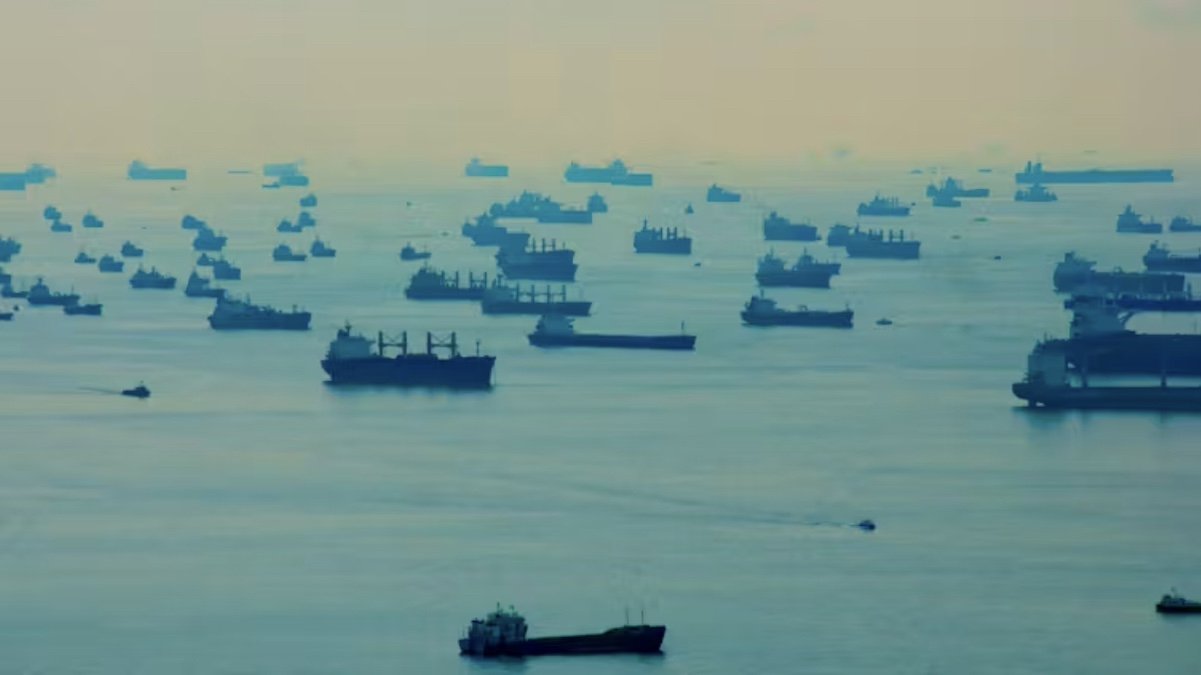
These developments are significant because Indonesia's vast archipelago straddles some of the world's most critical maritime corridors, including the Strait of Malacca. This narrow waterway, barely 2.8 kilometers wide at its narrowest point near Singapore, is the shortest sea route connecting the Indian Ocean to the South China Sea and the Pacific. It carries nearly 24% of global seaborne trade by volume, including 45% of the world's seaborne oil, over 25% of internationally traded cars, and 23% of dry bulk commodities like grains and soybeans.
The strait is also home to Singapore, the world's second-busiest container port and largest ship refueling hub, handling over 40 million containers annually. Port Klang in Malaysia, another top-ten global container port, processes 14 million containers each year. Any disruption here would ripple through global supply chains, affecting everything from European electronics imports to Asian food security.
Why Malacca Is Irreplaceable
Alternatives to the Strait of Malacca are limited and costly. The Sunda and Lombok Straits, both within Indonesian waters, add 1,000 to 1,500 nautical miles to a voyage—three to five extra days at sea—along with higher fuel costs and the loss of Singapore's refueling infrastructure. The Torres Strait near Papua New Guinea is too shallow for large vessels, and a detour around Australia adds another 10 to 15 days. These geographical realities make the strait virtually irreplaceable.
China understands this vulnerability acutely. In 2003, then-President Hu Jintao coined the phrase "Malacca dilemma" to describe Beijing's strategic exposure. Between 75% and 80% of China's imported oil still passes through the strait. Despite heavy investment in alternatives—pipelines from Myanmar's Kyaukpyu to Yunnan province, the China-Pakistan Economic Corridor linking Gwadar Port to Xinjiang, and Central Asian oil and gas pipelines—none come close to matching the scale of Malacca. The Myanmar pipeline, for instance, has a capacity of only 440,000 barrels per day, a fraction of China's roughly 11 million barrels of daily oil imports.
Rail freight corridors to Europe and Arctic shipping routes offer longer-term hedges but remain expensive, limited in capacity, or seasonal. For now, the strait remains the linchpin of East Asian trade.
The growing military presence around the strait adds a new layer of risk. The US has expanded base access and naval deployments, while China has built a network of ports and naval facilities. India, through its Andaman and Nicobar Islands, maintains a strategic foothold near the strait's western approaches. As some analysts argue, the strait could become a lever in great-power competition, much like the Strait of Hormuz.
Should a crisis erupt—whether over Taiwan, a spillover from Hormuz, or a shift in alliances—the Strait of Malacca would be at the center. The new US-Indonesia partnership, combined with existing tensions, makes this scenario more plausible. As the Hormuz stalemate reshapes Asian energy security, the Malacca Strait's strategic importance only grows.
For now, there is no indication that the military buildup will affect commercial shipping. But if conflict does arise, trade-dependent economies like China, Japan, and South Korea would suffer most. The strait's narrow confines and heavy traffic make it a potential chokepoint that no major power can afford to ignore.