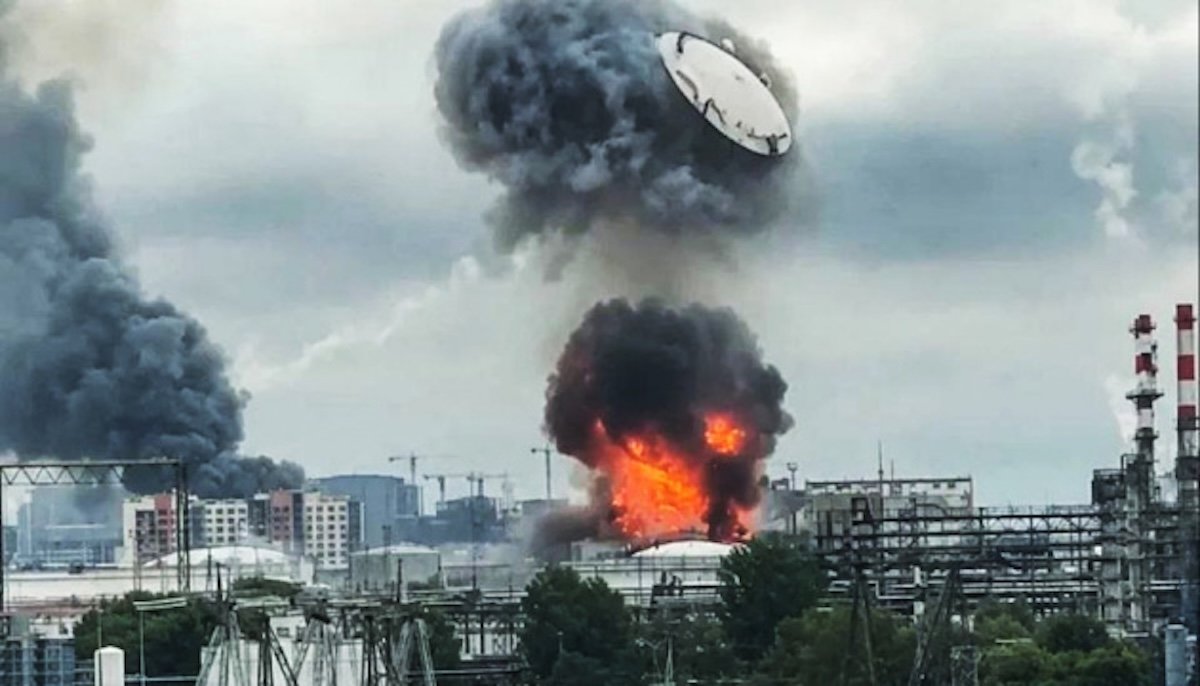
The idea that nuclear weapons can guarantee global stability for the rest of the century is a dangerous illusion. Even if we accept that the United States and other nuclear powers will avoid a direct nuclear exchange, the price of that stability is the constant threat of societal annihilation. This is not a world we should willingly inhabit, where security rests on the potential for mass destruction and where we are asked to live moral lives within an inherently immoral system.
The premise itself is flawed. History and current events demonstrate that reliance on nuclear arms does not produce lasting stability. The Russian invasion of Ukraine, a clear violation of the UN Charter, was preceded by President Vladimir Putin's threats to use nuclear weapons if the West intervened. In late 2022, the Biden administration reportedly believed Russia was operationally preparing for nuclear use. More recently, President Donald Trump's rhetoric regarding Iran has included talk of "society-ending devastation," which, while perhaps not a formal legal threat, certainly undermines the notion that nuclear use is unthinkable.
The moral and legal case against deterrence
Nuclear deterrence requires a readiness to inflict catastrophic harm on civilian populations, even if military targets are cited. This constitutes planning for war crimes and crimes against humanity, and in cases of aggressive war, crimes against peace. The first use of nuclear weapons, even in self-defense, would likely be so escalatory and disproportionate as to constitute a crime against peace.
The Nuremberg principles established that individuals, not just states, can be held accountable for international crimes. Nazi officials were convicted for waging aggressive war and planning atrocities. A modern application of this principle is that citizens have a responsibility to prevent nuclear war, through non-violent protest and advocacy. This is exactly what happened on August 6 outside the Livermore nuclear weapons laboratory in California.
The International Court of Justice (ICJ) issued a landmark advisory opinion on July 8, 1996, finding that the threat or use of nuclear weapons is generally illegal, as it violates international humanitarian law prohibiting indiscriminate harm and unnecessary suffering. The court also affirmed that if use is illegal, so is the threat. While the ICJ did not explicitly address deterrence, it recognized the potential illegality inherent in nuclear reliance.
The court also underscored the obligation under Article VI of the Nuclear Non-Proliferation Treaty (NPT) to pursue negotiations on nuclear disarmament in good faith. This obligation has been reinforced by UN General Assembly resolutions and NPT review conferences, where non-nuclear states have extracted commitments from nuclear powers to reduce the role of nuclear weapons and work toward elimination. These commitments, if honored, would have brought the world much closer to a nuclear-free state.
In 2017, non-nuclear states negotiated the Treaty on the Prohibition of Nuclear Weapons (TPNW), which now has 100 signatories, though no nuclear-armed state has joined. The TPNW is a powerful statement of principles, even if its practical impact remains uncertain. Its first review conference is scheduled for late this year.
Under the Trump administration, the United States has retreated from the multilateralism that produced the Chemical Weapons Convention, the Comprehensive Nuclear Test Ban Treaty, and the Rome Statute. This trend is worrying, especially as nuclear deals with non-nuclear states continue to proliferate, raising regional security concerns.
The path forward is clear: nuclear abolition, combined with broader arms control and improved global governance, is the only way to address the risks, immorality, and illegality of nuclear deterrence. As the nuclear age began with lies, it may end the same way unless we act. The world must choose between a future of perpetual fear and one of genuine security through disarmament.