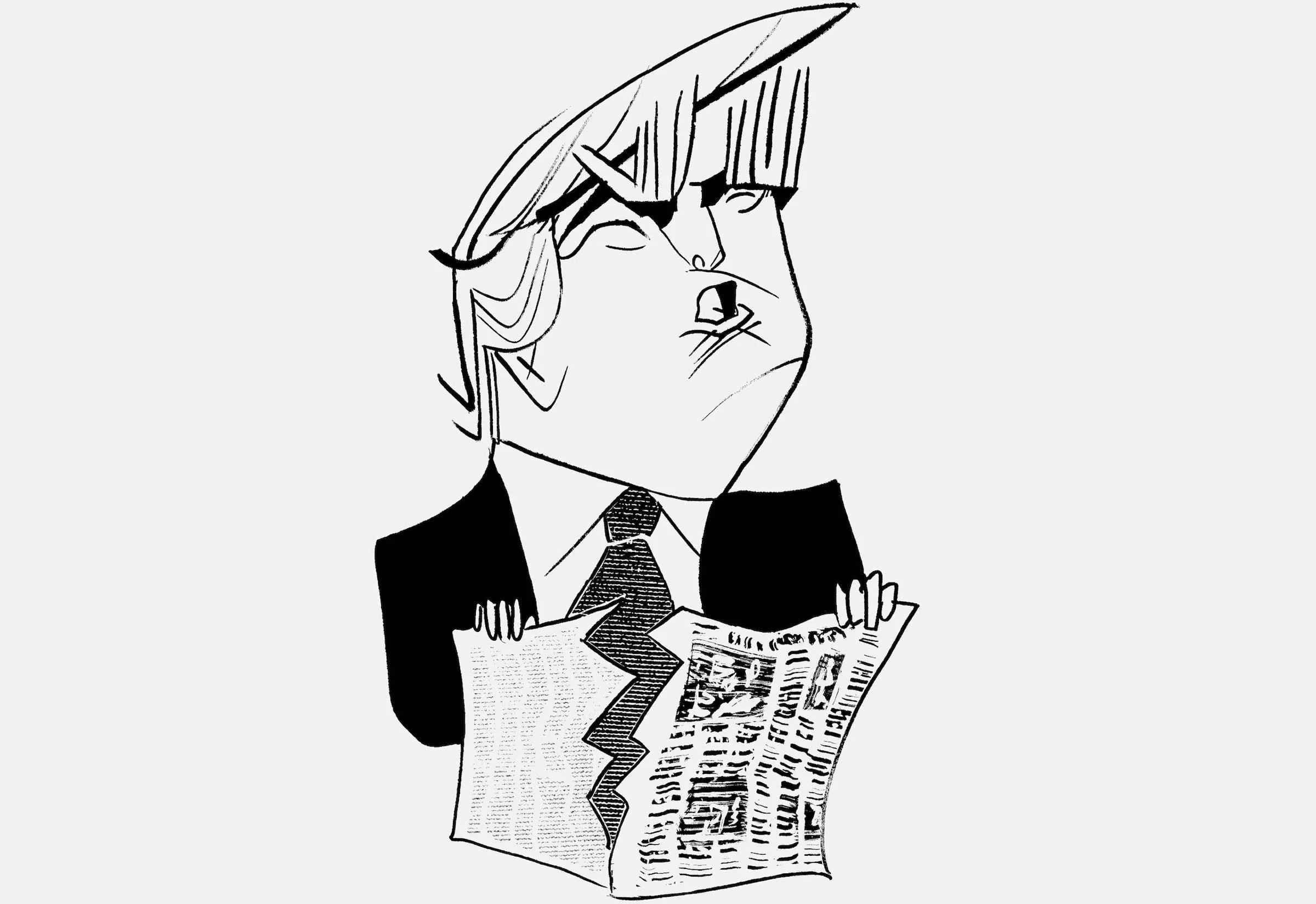
US President Donald Trump has accused news outlets of committing “virtual treason” for reporting on classified intelligence assessments that paint a far less triumphant picture of the Iran war than the White House has publicly claimed. The assessments, detailed by The New York Times and The Washington Post, indicate that Iran has retained substantial military capabilities despite weeks of intense US and Israeli bombardment.
The New York Times reported Tuesday that the Trump administration’s “public portrayal of a shattered Iranian military is sharply at odds with what US intelligence agencies are telling policymakers behind closed doors.” According to classified assessments from early this month, Iran has regained access to most of its missile sites, launchers, and underground facilities. Most alarmingly, Iran has restored operational access to 30 of the 33 missile sites it maintains along the Strait of Hormuz, a critical chokepoint for global oil shipments that could threaten American warships and tankers.
Intel Contradicts White House Narrative
The reporting follows a Washington Post story last week that detailed a confidential CIA analysis concluding Iran “can survive the US naval blockade for at least three to four months before facing more severe economic hardship.” The intelligence community also found that Iran retains about 75% of its prewar inventories of mobile launchers and about 70% of its prewar stockpiles of missiles. There is evidence that the regime has been able to recover and reopen almost all of its underground storage facilities, repair some damaged missiles, and even assemble new ones that were nearly complete when the war began.
In a Truth Social post late Tuesday, Trump—who has claimed Iran has “nothing left in a military sense”—fumed that “when the Fake News says that the Iranian enemy is doing well, Militarily, against us, it’s virtual TREASON in that it is such a false, and even preposterous, statement.” He added, “They are aiding and abetting the enemy!” and declared that Iran has “no Navy, their Air Force is gone, all Technology is gone, their ‘leaders’ are no longer with us, and the Country is an Economic Disaster.”
The gap between official rhetoric and intelligence assessments has widened further with reports that Iranian strikes have inflicted more damage on US military bases and equipment than publicly acknowledged. NBC News reported late last month, citing unnamed US officials and congressional aides, that American bases in the Persian Gulf region suffered extensive damage expected to cost billions of dollars to repair. A Washington Post analysis of satellite imagery found that Iranian airstrikes have damaged or destroyed at least 228 structures or pieces of equipment at US military sites across the Middle East, hitting hangars, barracks, fuel depots, aircraft, and key radar and air defense systems.
Phil Gordon, a foreign policy scholar at the Brookings Institution, wrote Wednesday that “10 weeks in, the strategic failure is undeniable” for the Trump administration in Iran. He warned that “having missed the opportunity to declare victory after the first few weeks, Trump can’t accept defeat and humiliation so will keep looking for the next quick fix, thereby likely only making things worse.”
The Trump administration has lashed out at news outlets for reporting assessments that contradict the Pentagon’s rosy narrative. Pentagon Secretary Pete Hegseth has condemned American media as “unpatriotic” and warned reporters to “think twice” before publishing classified information. Earlier this week, The Wall Street Journal revealed that the US Justice Department subpoenaed the newspaper’s journalists in March for records related to coverage of the Iran war, a move that raises serious press freedom concerns. For more on the administration's approach to media, see our coverage of the Trump Justice Department subpoenas journalists over Iran war coverage.
The unfolding crisis has broader implications for the Indo-Pacific, particularly as the Strait of Hormuz remains a vital artery for energy shipments to Asian economies including China, Japan, and South Korea. The Trump administration's focus on Iran has also shifted attention from other strategic priorities, such as managing the rivalry with Beijing. As the president prepares for a summit with Chinese leader Xi Jinping, the Iran war's trajectory could influence negotiations on energy security and trade. For context on the evolving US-China dynamic, see our analysis of Trump-Xi Summit: US Energy Sales to China on Table Amid Hormuz Crisis.



