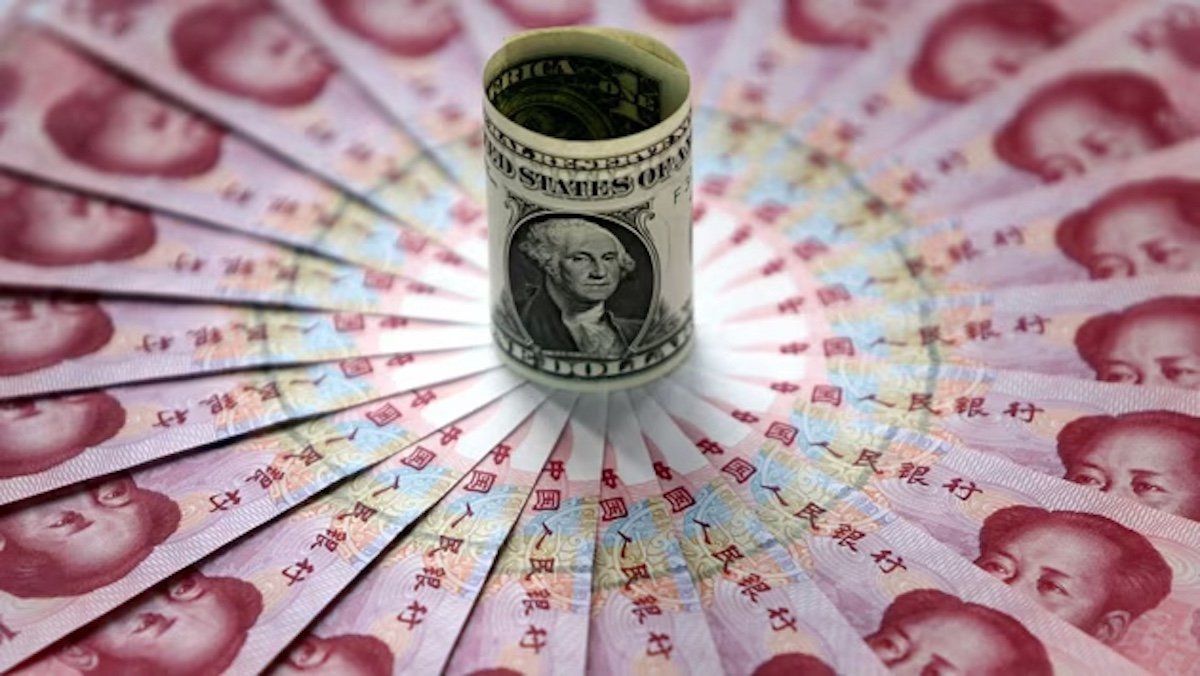
TOKYO — The dollar's long-held status as the world's primary reserve currency, often described as America's "exorbitant privilege," is facing unprecedented strain under the policies of US President Donald Trump. As Trump's tariffs and military adventurism chip away at the dollar's credibility, the beneficiary may well be China's yuan.
The term "exorbitant privilege" was coined by French finance minister Valery Giscard d'Estaing in the 1960s to criticize the dollar's dominant role in the global economy. This privilege allows the United States to sell 10-year Treasury bonds at yields around 4.1%, even as its national debt approaches $40 trillion. However, Trump's trade war with China, his regime-change gamble in Venezuela, and his collaboration with Israel to attack Iran are giving investors valid reasons to question the stability of US assets.
Trump's attacks on the Federal Reserve, the most globally respected US institution, further undermine confidence. The Fed's independence has been a cornerstone of dollar credibility, but Trump's pressure on Fed nominee Kevin Warsh to pledge loyalty raises concerns about future monetary policy. As reported in Fed Nominee Warsh's Independence Pledge Faces Scrutiny Amid Trump Pressure, this dynamic could erode trust in US financial governance.
Yuan's Ascent as a Safe Haven
China's yuan, already the world's third-largest reserve currency, stands to gain from this shift. Beijing has long sought to internationalize the yuan, and Trump's policies may accelerate that process. The yuan's stability, backed by China's massive foreign exchange reserves and controlled capital flows, makes it an attractive alternative for investors seeking safety.
Recent developments in the Middle East highlight this trend. Trump's Iran campaign, described in Trump's Iran Campaign: A Pyrrhic Victory in the Making?, has disrupted oil markets and heightened geopolitical risks. In response, some countries are diversifying their reserves away from the dollar. China's role in reviving the Iran nuclear deal, as noted in China's Role Emerges as Key to Reviving Iran Nuclear Deal and Ending Conflict, positions it as a diplomatic counterweight to US unilateralism.
Moreover, Trump's trade war has prompted Asian nations to explore alternatives to dollar-denominated trade. Japan, South Korea, and Southeast Asian countries are increasingly settling transactions in yuan or other local currencies. This trend, if sustained, could reduce the dollar's dominance in global trade and finance.
However, the yuan's path to safe-haven status is not without obstacles. China's capital controls and lack of full convertibility limit its appeal. The People's Bank of China maintains tight control over the currency's value, which can deter investors seeking free-market liquidity. Additionally, China's own geopolitical tensions, such as its disputes in the South China Sea and its military posturing near Taiwan, could undermine confidence.
Yet, as Trump's policies create volatility in US markets, the yuan's relative stability becomes a selling point. The US Navy's next-generation fighter competition, aimed at countering China's naval rise, underscores the deepening rivalry. As reported in US Navy's Next-Gen Fighter Competition Tests Carrier Aviation's Future Against China, this competition reflects the broader strategic competition that could further fragment the global financial system.
In conclusion, Trump's actions are inadvertently accelerating a shift in the global financial order. While the dollar remains dominant, the yuan's emergence as a safe haven is a trend worth watching. For investors and policymakers in Asia, this presents both opportunities and challenges as they navigate a multipolar currency landscape.