US President Donald Trump's capture of Venezuelan leader Nicolas Maduro has handed him a significant strategic advantage ahead of his April summit with China's President Xi Jinping. The operation, which resolved a decade-long global concern with surgical precision, has given Trump control over an estimated $10-20 billion in Chinese credit extended to Venezuela. This newfound leverage extends to global oil prices and bolsters US military confidence in Asia, providing potent bargaining chips in negotiations with Beijing, which holds a near-monopoly on rare-earth elements.
Iran: The Next Domino?
Protests in Iran are intensifying, and while the regime of Supreme Leader Ali Khamenei resists, it appears increasingly fragile. After the fall of Venezuela and last year's bombing of Iranian nuclear sites, Tehran cannot discount the possibility of another US surgical intervention. Such an action could cripple the government and potentially open the door for a deal with moderate factions willing to negotiate, mirroring the current situation in Caracas. Iran is even more strategically critical to China than Venezuela, given its oil reserves and its role in the Belt and Road Initiative.
In 1999, Professor Zhang Xiaodong of the Chinese Journal of Strategy and Management proposed a trade: China would cease support for Iran's Ayatollahs in exchange for the US abandoning support for Taiwan's independence. While that specific deal is no longer feasible, it underscores the deep historical connection between Beijing and Tehran. If China loses Iran after Venezuela, it would become more isolated and weaker in its dealings with Washington. Conversely, if Beijing steps in to support Tehran now, it risks embroiling itself in a crisis potentially larger than the Russian invasion of Ukraine.
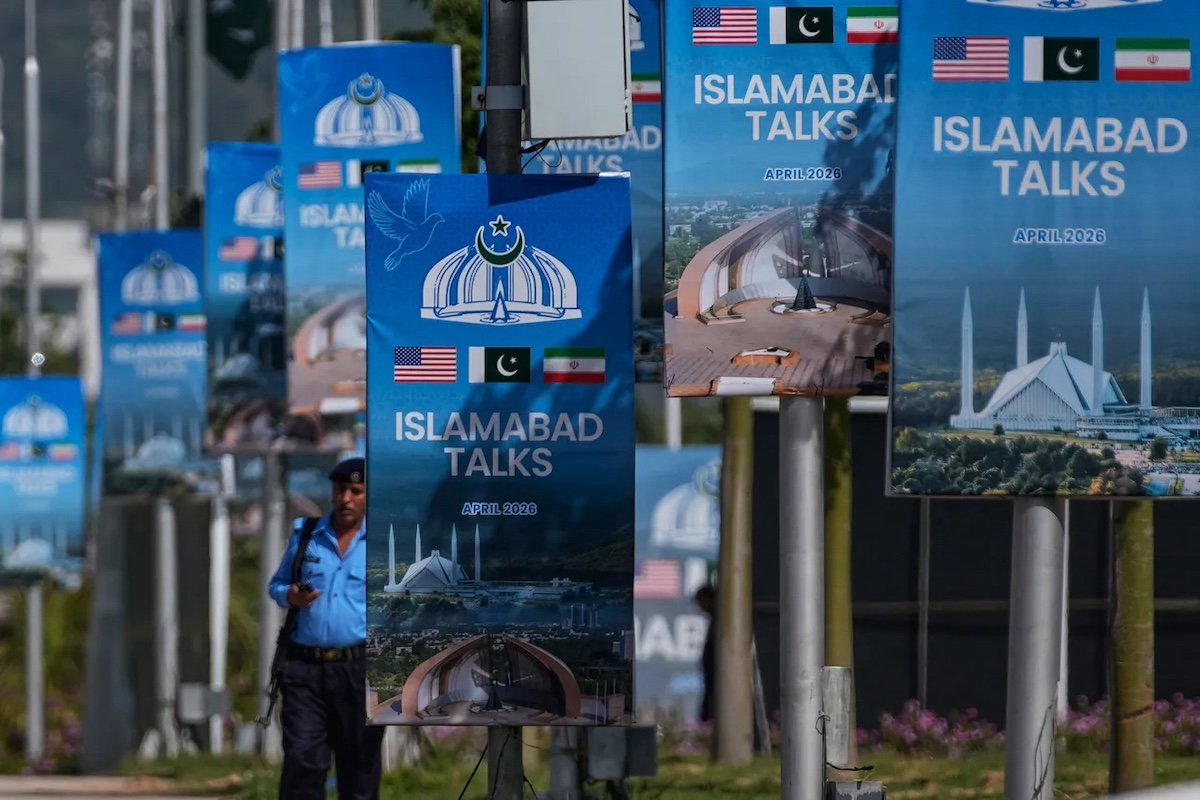
The stakes are high, as the Strait of Hormuz blockade raises tensions ahead of the Trump-Xi summit.
The Greenland Gambit: A Strategic Misstep?
However, Trump's gains could be undone by his own rhetoric. In the run-up to the summit, threats of a US takeover of Greenland—part of the Kingdom of Denmark and a NATO member—have grown louder. A unilateral move on Greenland could rapidly unravel US alliances, proving that even NATO membership offers no guarantee of protection against American aggression. Such an action would demonstrate a profound misunderstanding of the nature of power.
For 80 years, America's strength has lain in its ability to achieve goals with comparatively limited force. Pure venting of force saps strength, weakening the user as much as the adversary. As the Iliad teaches, war is not a laugh; it is suffering, and survival or glorious death are the only real rewards. The power of the Mafia, or the old feudal gentry of southern Italy, was not to beat up everybody but to whisper in a soft voice, leaving the threat hanging in the air. In The Godfather, Marlon Brando never yells a threat.
The beauty of the Venezuelan action was its surgical, minimal nature, which enhanced US might. This aligns with the concept of Macht (Power) by Niklas Luhmann, a foundational work from the Cold War era. Luhmann defines power not as an attribute of persons or countries but as a communicative medium that reduces uncertainty and enables decision-making. Crucially, the more you use power, the less you have; the less you use it, the more you have. Therefore, power must be used sparingly.
If Trump messes up the alliance over Greenland, all he has achieved in Venezuela and what could happen in Iran could come to nothing. The lesson for both China and the US is that power is a communication; it exhausts as it is used. The mantra should be to find an agreeable solution for Greenland that consolidates alliances rather than breaking them. For a deeper analysis of the risks in Iran, see Trump's Iran Campaign: A Pyrrhic Victory in the Making?.