Five and a half years after the Abraham Accords were signed on the White House's South Lawn, the initial triumphalism has given way to a more sober assessment. The agreement between Israel and the United Arab Emirates was a genuine diplomatic achievement, but it never heralded a new Middle East order. The intervening years—marked by the October 7 attacks, the devastating Gaza war, an Israeli strike on Hamas leaders in Doha, and the twelve-day Iran war that saw an Israeli Iron Dome battery deployed on Emirati soil—have made the original Washington narrative increasingly untenable.
What the Partnership Actually Delivers
The economic relationship is tangible. Bilateral trade reached US$3.2 billion in 2024 and continues to grow. Israeli technology firms have established a presence in Abu Dhabi Global Market, while Emirati capital flows into Israeli high-tech ventures. Defense cooperation has moved beyond symbolism: the Edge Group's procurement of Elbit's Hermes 900 drone represents a meaningful industrial partnership, not just an exchange of communiqués. During the Iran war, Israeli operators manning an Iron Dome battery on Emirati territory marked a novel forward defense posture in the Gulf, made possible only by the strategic alignment the Accords created.
But these are tactical achievements, not strategic transformations. To imagine they can reorder the Middle East is to misunderstand the constraints binding the UAE and the structural realities no bilateral relationship can wish away.
The Emirati Calculus
The UAE is a small federation of seven emirates with a population overwhelmingly composed of expatriate workers. Its ultimate security still rests on American extended deterrence. Concluding that Washington is an increasingly unreliable patron, Abu Dhabi has spent the better part of a decade hedging—toward Beijing, Moscow, New Delhi, and most tellingly, toward a quiet tactical reconciliation with Tehran. The decision to embrace Israel was an attempt to secure a useful junior partnership against Iranian encroachment while extracting maximum economic benefit. It was not, despite the language of press releases and Negev Forum communiqués, a decision to subordinate Emirati strategy to Jerusalem's.
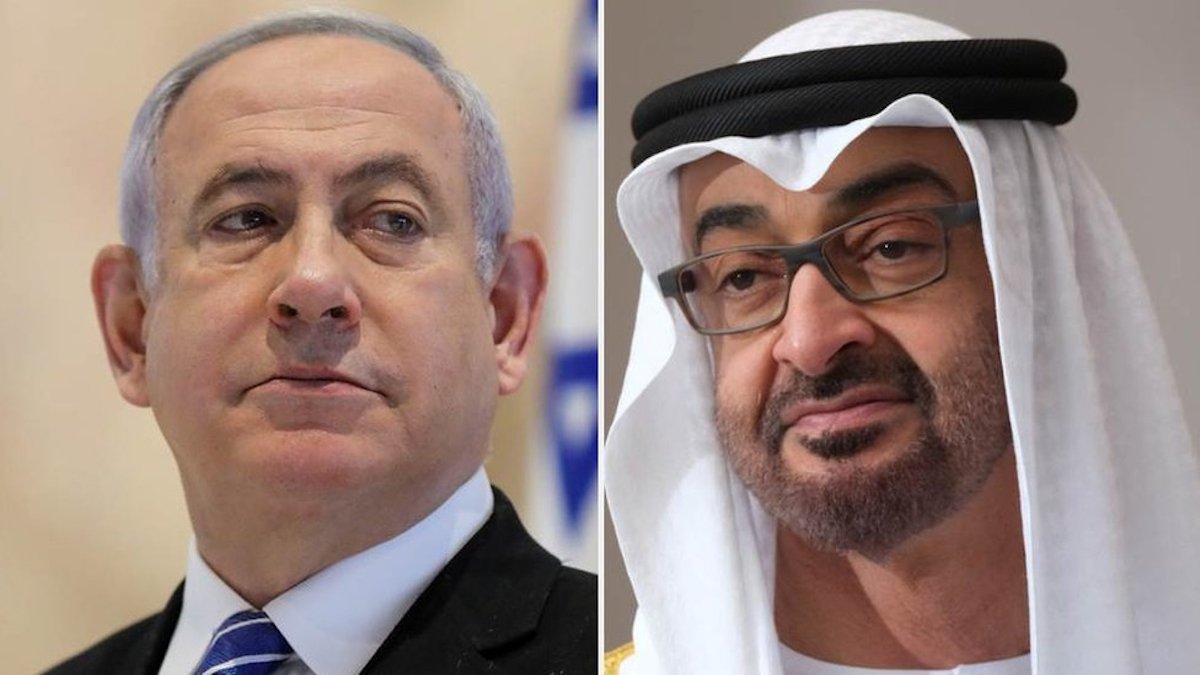
When Mohammed bin Zayed flew to Doha within hours of the Israeli strike on Hamas's leadership there, he was not betraying the Accords. He was demonstrating that the Accords had never been the sole organizing principle of his foreign policy. No rational Gulf monarch would allow them to become so.
Structural Realities
The Arab Gulf states are not, and have never aspired to be, junior partners in an Israeli-led regional order. The ideological project of an "Abraham Alliance," articulated by Benjamin Netanyahu and embraced by certain American neoconservatives, assumes a level of Emirati deference that Abu Dhabi has never granted. The Emiratis condemned October 7 promptly and unambiguously. They also kept open their humanitarian corridor into Gaza, denounced what they have publicly described as Israeli violations of international norms, canceled Israeli participation at the Dubai Airshow, and warned that annexation of the West Bank would constitute a red line. These are not the gestures of a satellite; they are the gestures of a small state hedging carefully in a turbulent neighborhood.
Without Saudi Arabia, the Accords remain a useful but limited diplomatic accomplishment. With Riyadh, they would represent a genuine reordering. But the Saudi position—that recognition requires a credible path to a Palestinian state—has hardened over the course of the Gaza war. The current Israeli coalition, dependent on partners whose maximalist views on the West Bank are a matter of public record, cannot deliver the political deliverables Riyadh requires. This is not a problem that diplomatic technique can solve. It is a problem of incompatible strategic objectives, one that the second Trump administration will discover to be more intractable than the first.
The broader regional environment has not been transformed as the Accords' architects anticipated. Iran, weakened after the collapse of its so-called Axis of Resistance and American strikes on its nuclear program, remains a regional power that cannot be wished out of existence. Turkey has expanded its influence in post-Assad Syria. Qatar, whose ties to Hamas the Israeli leadership has long sought to punish, has emerged from the Gaza war with its diplomatic stature enhanced, hosting American negotiations and Doha summits that have set parameters for conflict resolution.
The much-discussed regional realignment has produced a useful bilateral partnership, but not a new Middle East. For Asian observers, the lesson is clear: the UAE-Israel ties are a tactical hedge, not a strategic reset. As the Iran-Israel stalemate deepens and China's economic clout in the region grows, the limits of such alignments become ever more apparent.