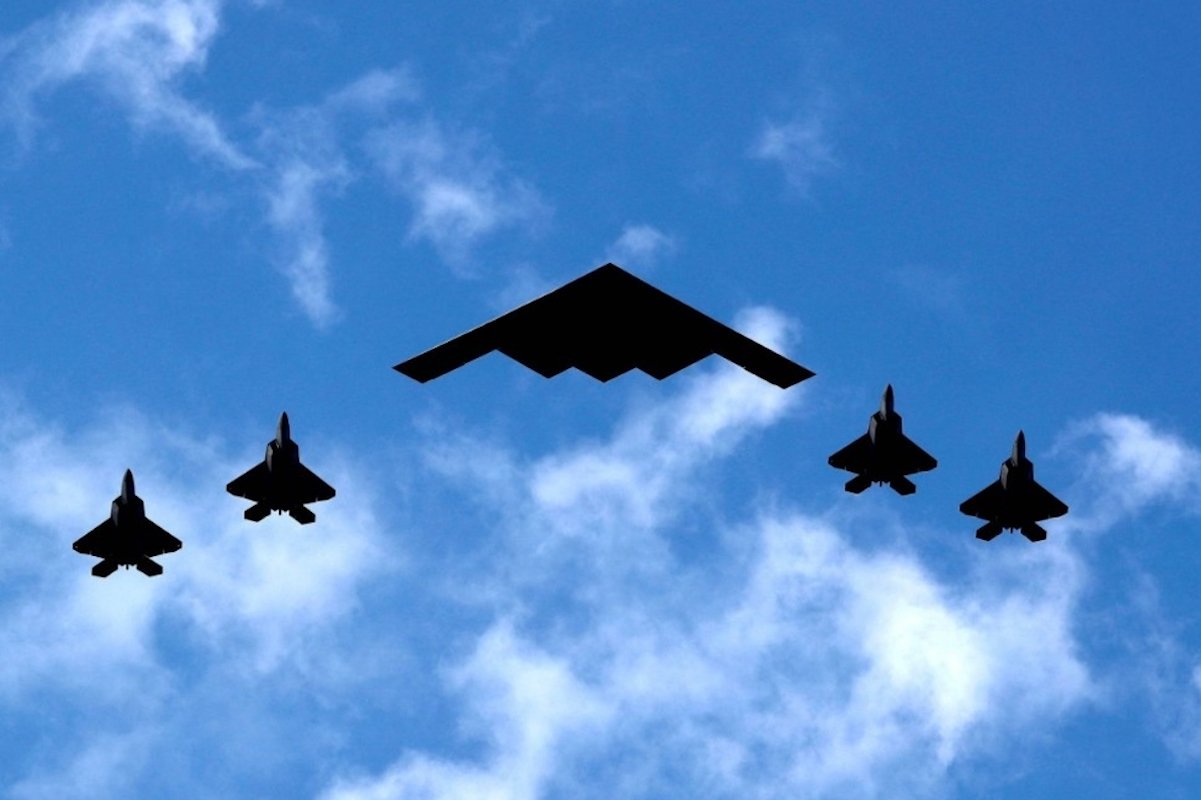
A series of recent analyses from prominent US defense think tanks paints a concerning picture of American airpower's readiness for a sustained, high-intensity conflict with China. The core issue, experts argue, is not the initial strike capability but the US Air Force's capacity to maintain combat pressure over weeks or months without exhausting critical resources or seeing its regional operations crippled.
Structural Deficiencies and a Shrinking Force
A report from the Mitchell Institute for Aerospace Studies, released this month, concludes the service is "too small, too old and insufficiently modernized" to simultaneously defend the US homeland, deter nuclear threats, and counter a major Chinese assault. The study, from the US Air & Space Forces Association's dedicated think tank, attributes this to over three decades of force reductions, deferred modernization, and budget constraints that have shrunk aircraft inventories and left munitions stockpiles dangerously low.
The report calls for a sustained funding increase over at least a decade to reverse what it terms decades of underinvestment. Its own wargaming suggests current force levels cannot sustain the operational intensity needed to defeat China's military, forcing a reliance on sporadic "pulsed" strikes that would create exploitable gaps for People's Liberation Army forces.
"Without a sustained surge in funding to expand force size, accelerate procurement of next-generation aircraft, and rebuild readiness, the US Air Force risks failing to deter or win a peer conflict," the Mitchell Institute warns. It leaves policymakers with a stark choice between investing for victory or accepting a heightened risk of defeat.
Vulnerable Forward Bases and Disrupted Tempo
The operational challenge is starkly visible in the Pacific theater. A January 2025 report from the Hudson Institute by analysts Thomas Shugart III and Timothy Walton highlights a critical lack of hardened aircraft shelters across the region. US aircraft and support systems at bases in Japan and Guam are exposed to precision missile strikes that could disable combat capabilities before they ever leave the ground.
This vulnerability extends to the runways themselves. A December 2024 Stimson Center report by Kelly Grieco and others notes that Chinese strikes on runways and taxiways could halt flight operations entirely. They estimate that Japanese bases could be rendered inoperative for about 280 hours (nearly 12 days) for fighter jets and 800 hours (over 33 days) for essential aerial tankers, with Guam facing shorter but still significant disruptions.
Even if aircraft survive initial attacks, maintaining operational tempo is a severe challenge. As Michael Blaser argued in a July 2024 article, the central tactical question is whether US sortie generation can outpace an adversary's targeting cycle—a key assumption of the Air Force's Agile Combat Employment (ACE) concept. He warns that advances in AI-enabled surveillance could compress Chinese kill chains to under 24 hours, while ACE operations may sustain only about one sortie per aircraft daily.
This technological race is part of a broader competition for military and economic dominance, similar to the high-stakes rivalry in emerging sectors like fusion energy.
The Logistics and Training Imperative
The problems are systemic. A February 2026 Hudson Institute report emphasizes that modern airpower faces disruption from integrated attacks targeting not just runways but the entire logistics network—fuel, munitions, and command-and-control systems. This echoes concerns about how new asymmetric technologies, such as drone-launched mines, could further complicate US force projection in a Taiwan scenario.
From a training perspective, a March 2026 RAND Corporation report underscores the need to prepare for time-sensitive operations amid degraded communications and limited resources. The study, led by Emmi Yonekura, highlights the importance of regular, team-based training and cross-functional coordination to maintain performance under the extreme stress of a high-end conflict.
Travis Sharp of the Center for Strategic and Budgetary Assessments (CSBA), in an April 2025 report, notes that sortie generation involves difficult trade-offs. Higher-tempo operations increase sortie rates but impose massive fuel, munitions, and maintenance demands. More dispersed basing improves survivability but reduces sortie throughput due to less efficient logistics.
The cumulative effect of these tactical and operational pressures risks collapsing the campaign rhythm necessary for success. As these defense analyses make clear, preparing for a prolonged conflict requires more than advanced aircraft; it demands resilient bases, robust supply chains, and deeply trained personnel—areas where current assessments suggest the US Air Force remains critically underprepared. The strategic implications of this readiness gap extend across the Indo-Pacific, influencing the calculations of allies and partners from Tokyo to Canberra, and resonate within broader debates about global economic and governance models as China's influence expands.