Shares of major Chinese quantum computing companies jumped roughly 20% over two trading days following Washington's announcement of a US$2 billion funding package for nine US firms. Investors anticipate that Beijing will counter with its own state-backed investments to maintain parity in the global race for quantum supremacy.
On May 22 and 25, Quantum CTEK rose 19% to 641.08 yuan (US$88.70), GuoChuang Software gained nearly 18% to 40.24 yuan, and Koal Software climbed 9.5% to 20.97 yuan. This mirrored a sharp rally in US quantum stocks: Infleqtion soared over 30%, Rigetti Computing jumped more than 63%, D-Wave surged roughly 53%, and IBM gained about 13% in the same period after the funding announcement.
China's Quantum Momentum Builds
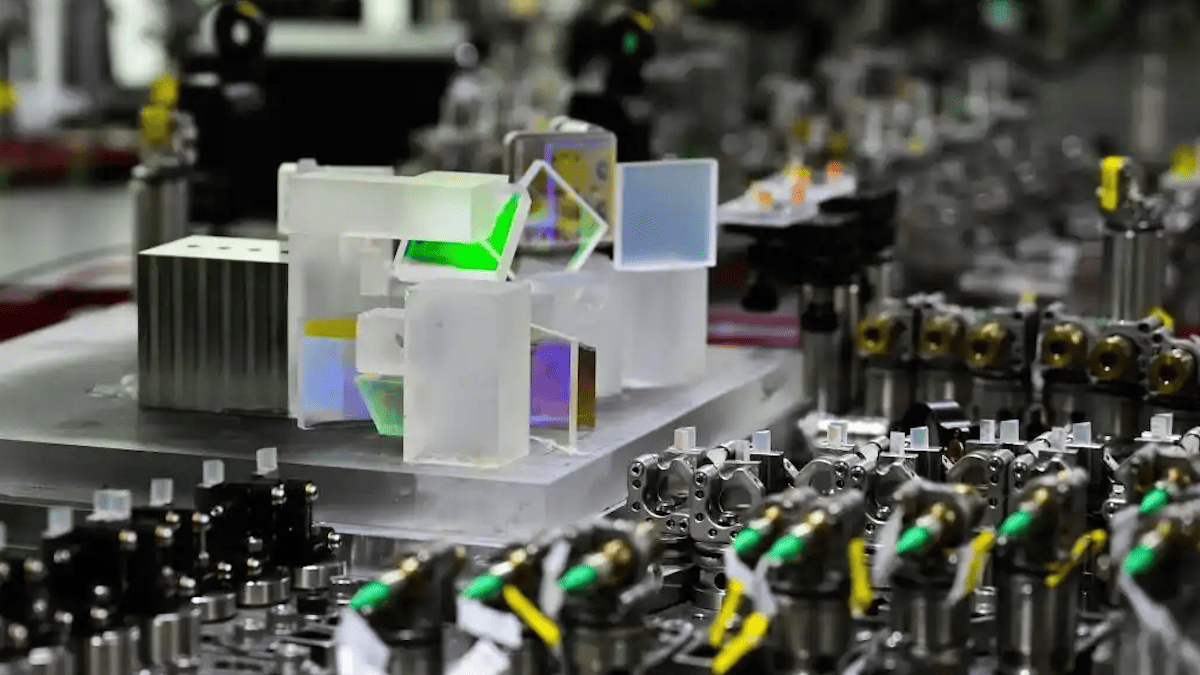
China's quantum sector had already been gaining momentum this month. Origin Quantum launched the Origin Wukong-180, its fourth-generation superconducting quantum computer. The Chinese Academy of Sciences' Cold Atom Technology (CASCA) unveiled what it described as the world's first dual-core quantum computer. The University of Science and Technology of China (USTC) released Jiuzhang 4.0, a photonic quantum computer. Analysts say this flurry of breakthroughs, combined with the US funding push, is likely to accelerate Beijing's timetable for state-backed investment in the sector.
On May 21, the US Department of Commerce announced letters of intent for the initiative, framing it as a matter of national security and economic competitiveness. The funds, totaling US$2.013 billion, were allocated under the CHIPS and Science Act to support both domestic quantum foundries and computing companies, with the government taking a minority equity stake in each recipient.
The two foundry recipients are GlobalFoundries, which will receive US$375 million to establish a domestic quantum foundry spanning multiple hardware approaches, and IBM, which will receive US$1 billion to build a new subsidiary for quantum-grade superconducting wafers. The remaining US$538 million is split across seven companies: Atom Computing, D-Wave, Infleqtion, PsiQuantum, Quantinuum, and Rigetti each receiving up to US$100 million to address specific engineering problems across different quantum modalities. Silicon spin specialist Diraq will receive up to US$38 million.
“With today’s CHIPS Research and Development investments in quantum computing, the Trump administration is leading the world into a new era of American innovation,” said US Secretary of Commerce Howard Lutnick. “These strategic quantum technology investments will build on our domestic industry, creating thousands of high-paying American jobs while advancing American quantum capabilities.”
As a condition of the awards, the Department will receive a minority, non-controlling equity stake in each recipient company, a structure designed to enhance returns for US taxpayers. The CHIPS Research and Development Office said it continues to solicit proposals from eligible applicants for research, prototyping, and commercial solutions that advance microelectronics technology in the US.
The May 21 announcement marks the first time Washington has taken direct equity stakes in quantum computing firms, a significant shift from its traditional approach of providing research grants. This move has been described as a formal escalation from a laboratory race to a state-level industrial war.
“The Trump administration’s decision to pump more than US$2 billion into nine US quantum computing firms has set off a frenzy in capital markets,” says a columnist at the National Business Daily. “In fact, Beijing had already moved early, placing quantum technology at the top of its list of six priority future industries in the 15th Five-Year Plan (2026-2030) last year.” The other five sectors are biomedical, hydrogen and nuclear fusion energy, brain-computer interfaces, embodied artificial intelligence (AI), and 6G telecommunications.
The columnist argues that quantum technology deserves to be a priority battleground for every major power, citing three reasons: national security (quantum computing and communications will profoundly impact defense and information security), underpinning other industries (quantum computing's exceptional processing power could dramatically accelerate drug development and materials design), and technological dominance (whoever moves fastest will gain the power to set the rules of the game, injecting new energy into both defense and the economy).
An Anhui-based writer notes that nearly 70% of Washington's strategic equity investment is concentrated in quantum wafer manufacturing, essentially replicating the playbook used to build up semiconductor fabs and staking out the manufacturing foundation for the next generation of computing power. He outlines three of China's core advantages: quantum communications (China holds an absolute global lead, with Quantum CTEK's quantum cryptography communications technology already commercially deployed nationwide), superconducting quantum computing (Origin Quantum operates China's only 6-inch quantum chip production line, with a daily capacity exceeding 100 wafers, a yield rate of 92%, and its 180-qubit superconducting quantum computer already available as an online service), and policy support (quantum technology tops Beijing's 15th Five-Year Plan list of six future industries).
“China’s core weaknesses lie in dedicated quantum wafer fabrication and high-end control and measurement equipment, precisely the areas Washington is targeting with its latest funding push,” he says. “Domestic quantum chips still partly rely on conventional foundries for production, which limits their performance and scalability.”
The escalating competition between the US and China in quantum technology mirrors broader strategic rivalries, such as those seen in rare earths and semiconductor supply chains. For context, Australia Balances US Alliance and China Ties in Rare Earths Push and Resource Dominance Reshapes Trump's Strategy Toward China highlight how resource and technology dominance are reshaping geopolitical dynamics. Additionally, South Korea Increasingly Seen as US Logistics Hub for Potential China Conflict underscores the regional implications of such technological rivalries.