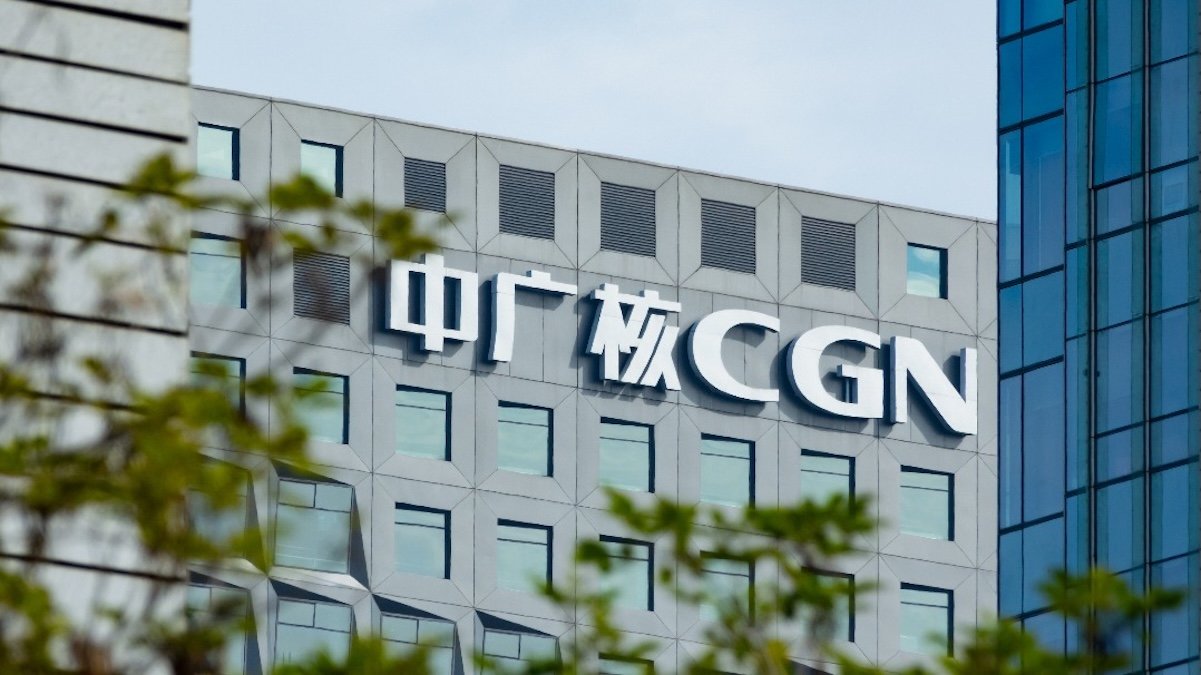
China General Nuclear Power Corporation (CGN), a Chinese state-owned energy giant blacklisted by Washington for nuclear espionage, quietly operates five power plants in South Korea with a combined capacity of 2.2 gigawatts. This presence, which includes a newly commissioned LNG facility near a major US military installation, has sparked concerns about the vulnerability of South Korea's power grid and the broader US-ROK alliance.
New LNG plant near Camp Humphreys
On July 24, 2026, CGN announced the commercial start of a 557 MW liquefied natural gas combined cycle power plant in the Daesan Industrial Complex in Seosan City, South Chungcheong Province. The facility, located about 45 miles west of Camp Humphreys—the largest US Army base in Asia—is expected to supply up to 3.9 terawatt-hours of electricity annually to the domestic grid. It also powers nearby petrochemical companies, a critical industry for the region.
This is the second unit of the plant operated by CGN Daesan Electric Power Co., Ltd., a wholly owned subsidiary of CGN. The company's expansion in South Korea is not limited to Daesan; its subsidiary CGN Yulchon Electric Power runs the 1,390 MW Yulchon Combined Cycle Power Plant in Gwangyang City, South Jeolla Province, within the same industrial complex as Hyundai Steel's Suncheon factory.
State-owned, not private
CGN, formerly known as China Guangdong Nuclear Power, has a complex web of subsidiaries. CGN Korea Holdings Co., Ltd., established in 1996 and led by CEO Ni Yanliang, oversees its South Korean energy projects. Under it, CGN Daesan Power and CGN Yulchon Power were both created in 2009, with Song Ji-ho serving as president of both. As of 2022, all three entities are 100% owned by CGN, making them part of China's state-owned enterprise system—not the private companies they are sometimes portrayed as in local media.
CGN Energy International Holdings, based in Hong Kong and founded in 2017, manages non-nuclear energy investments abroad and was involved in the Daesan project through its Korean subsidiary.
US blacklist and espionage charges
The US placed CGN on its Commerce Department's Entities List on August 15, 2019, following FBI charges against the company and two individuals for conspiring to develop special nuclear material outside the US. According to the FBI, CGN had been stealing American nuclear secrets for nearly two decades, using joint ventures and legitimate commercial practices to infiltrate the US nuclear technology network. The company is also listed by the US Department of Defense as a Chinese military company.
These actions have led analysts to view CGN as an intelligence collection platform, engaging in sophisticated economic espionage. The same tactics could be employed in South Korea, where CGN now has direct access to the national power grid and energy technology networks, including nuclear-related infrastructure.
Security implications for Seoul and Washington
The presence of a US-blacklisted Chinese state firm in critical energy infrastructure poses a grave threat, argues Tara O, PhD, founder of the East Asia Research Center and a former US Air Force officer who served at the Pentagon and the ROK-US Combined Forces Command. "With access to the power grid, CGN could sabotage power production and distribution," she warns, highlighting the risk to both South Korea and US forces stationed there.
The issue is particularly sensitive given the ongoing debates over US reliability in the region and North Korea's military buildup. Seoul's decision to allow CGN to operate within its energy sector may be seen as a strategic vulnerability, especially as the alliance faces new challenges.
While CGN's operations are legal under South Korean law, the lack of public scrutiny over its state-owned status and security implications is troubling. As the region grapples with maritime security narratives and military modernization, the quiet entrenchment of a blacklisted Chinese firm in South Korea's power grid deserves closer attention from policymakers in Seoul and Washington alike.