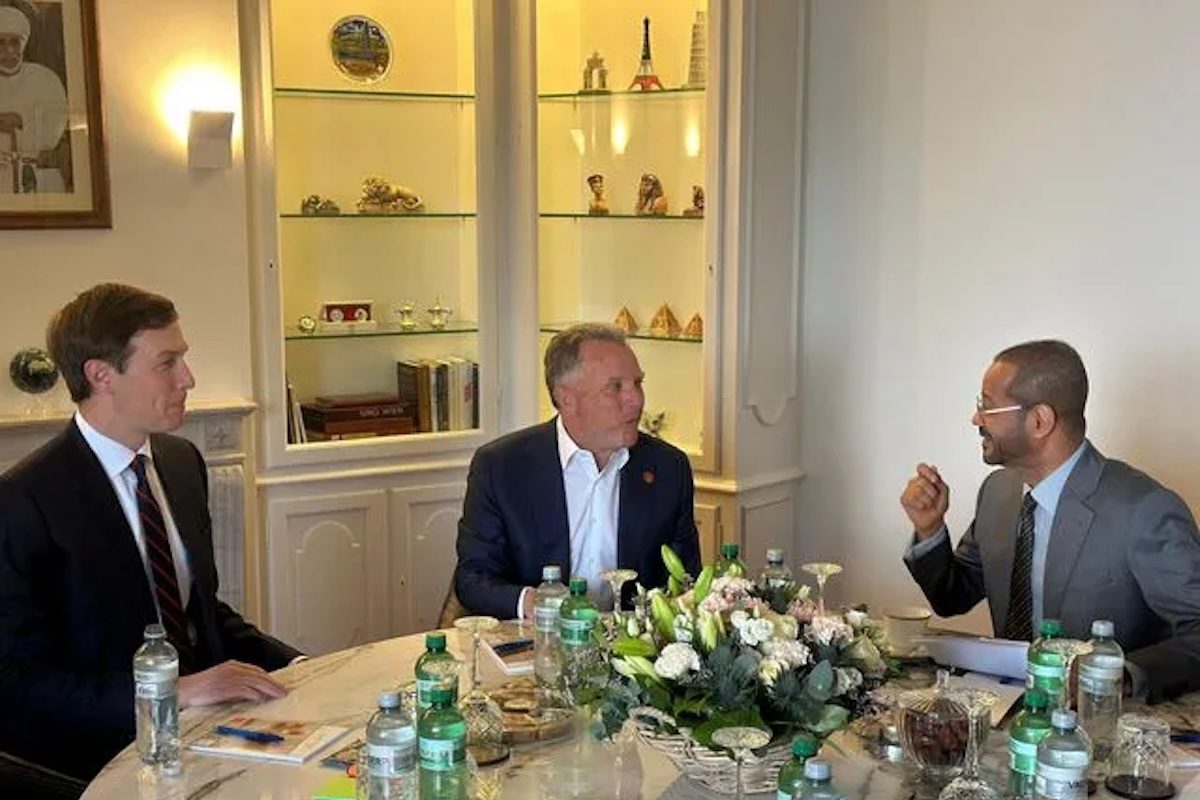
The ranking Democrat on the US House Judiciary Committee, Representative Jamie Raskin, has initiated a comprehensive investigation into Jared Kushner, the former senior White House advisor and son-in-law to ex-President Donald Trump. The probe focuses on potential conflicts of interest arising from Kushner's simultaneous roles as a private equity fund manager and a high-profile US government envoy in the Middle East.
Allegations of "Glaring" Conflict of Interest
In a letter addressed to Kushner, Representative Raskin alleges that Kushner created a "glaring and incurable conflict of interest" by soliciting billions of dollars from Gulf monarchies for his investment firm, Affinity Partners, while serving as a Special Envoy for the Trump administration. Raskin, a Democrat from Maryland, charges that this dual role has compromised the integrity of American foreign policy.
The letter highlights that Affinity Partners has amassed approximately $6.16 billion in assets, with a reported 99% of its funding derived from foreign sources. These include the sovereign wealth funds of Saudi Arabia, the United Arab Emirates, and Qatar. Notably, a $2 billion investment from Saudi Arabia's Public Investment Fund, directed by Crown Prince Mohammed bin Salman (MbS), has drawn particular scrutiny. This relationship echoes past concerns that MbS had Kushner "in his pocket" due to previous financial ties during Trump's first term.
"You cannot both be a diplomat and a financial pawn of the Saudi monarchy at the same time," Raskin wrote. "You cannot faithfully represent the United States with billions of dollars in Saudi and Emirati cash burning a hole in every pocket of every suit you own."
Broken Promises and Geopolitical Entanglements
Raskin's letter accuses Kushner of breaking public assurances that he would avoid both government service and fundraising during a potential second Trump term. Instead, Kushner has reportedly inserted himself as a chief negotiator in volatile conflicts while deepening his firm's financial reliance on foreign governments.
The congressman directly links these alleged conflicts to ongoing US policy challenges, including Washington's stance on the Gaza conflict and the broader US-Iran-Israel stalemate. Raskin asserts that Kushner's "completely irreconcilable and unethical dual roles" have been "haunting American foreign policy" since Trump's return to the White House in 2025.
The investigation aims to gather information critical to reforming US laws on bribery, conflicts of interest, and the Foreign Agents Registration Act (FARA). The committee has demanded a detailed account of Kushner's communications with investment partners and entities related to both his business and diplomatic work, setting a compliance deadline of April 30.
"This investigation will be a priority for our committee in the coming period," the letter states, demanding Kushner's "full cooperation" in providing documents on how his "business interests, family wealth and governmental duties and missions have merged and converged."
Broader Implications for Indo-Pacific Dynamics
While centered on US domestic oversight and Middle East diplomacy, the probe carries indirect but significant implications for the Indo-Pacific region. The substantial financial flows from Gulf sovereign wealth funds into Western investment vehicles managed by influential political figures underscore the deepening financial interconnectivity between the Middle East and global capital. This connectivity increasingly influences strategic partnerships and economic statecraft across Asia.
Furthermore, the scrutiny of Kushner's dealings with Gulf states occurs against a backdrop of shifting global energy and currency dynamics, where the potential rise of the petroyuan could reshape financial flows. The outcome of this congressional investigation may inform future US legislation governing foreign investments and the conduct of officials, potentially affecting how Asian capitals engage with American political and business figures.
The case also highlights the persistent challenge of opaque financial entanglements in international diplomacy, a concern relevant to Asian nations navigating great power competition. As the US modernizes its naval capabilities and competes with China in critical sectors like fusion energy supply chains, the integrity and transparency of its diplomatic corps remain under watch by allies and adversaries alike in Tokyo, New Delhi, and Seoul.