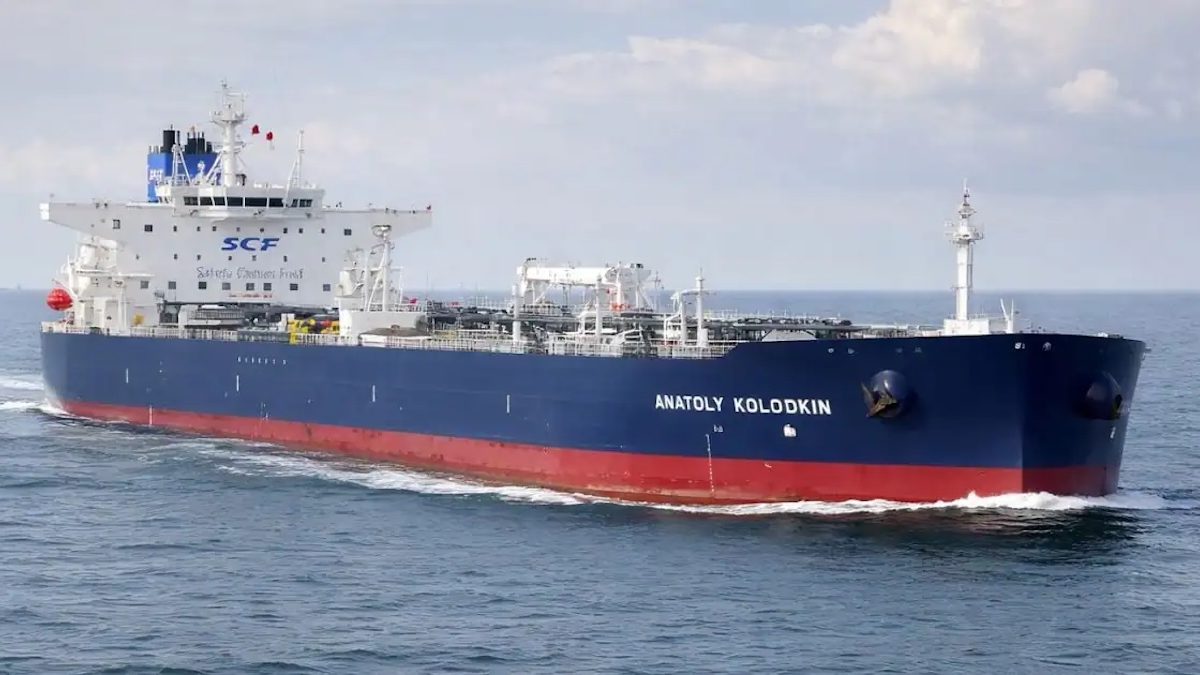
President Donald Trump announced on Sunday that his administration would permit a Russian-owned oil tanker to proceed to Cuba, marking a tactical shift in a stringent fuel blockade that has deepened the Caribbean nation's humanitarian emergency. Speaking to reporters aboard Air Force One, Trump stated, "if a country wants to send some oil into Cuba right now, I have no problem," retreating from prior threats to impose tariffs on any nation supplying fuel to Havana.
The vessel, the Anatoly Kolodkin, is carrying an estimated 730,000 barrels of oil, a quantity analysts say could sustain Cuba's crippled energy grid for several weeks. Its expected arrival offers a brief respite for a country that has received no oil imports since January 9, leading to nationwide blackouts, severe food shortages, and hospitals operating without critical supplies.
Despite the potential relief, Trump downplayed the delivery's impact. "They have a bad regime, and they have very bad and corrupt leadership," he said. "Whether or not they get a boat of oil is not going to matter." He concluded by declaring, "Cuba is finished." The decision follows a New York Times report indicating the US Coast Guard would not intercept the tanker barring direct orders to the contrary.
Regional Tensions and Legislative Pushback
Trump's comments arrive amidst heightened regional tensions. Earlier this month, he threatened to "take" Cuba by force, labeling it a "very weakened nation." Cuban President Miguel Díaz-Canel responded by vowing "impregnable resistance" to any US attempt to seize the island. Reports suggest the Trump administration views Díaz-Canel's removal as a prerequisite for negotiations with the Cuban government.
In Washington, these threats have spurred legislative action. Last week, Representatives Gregory Meeks (D-NY) and Pramila Jayapal (D-Wash.) introduced a bill to prohibit the use of federal funds for any attack on Cuba without explicit congressional authorization. "Trump has started illegal regime change conflicts in Venezuela and Iran and is now threatening Cuba," Jayapal said in a statement. She argued such actions endanger troops and civilians, waste taxpayer money, and lack public support.
Jayapal further accused the President of dishonesty regarding his foreign policy promises. "Trump promised to end forever wars – he lied," she added. "Congress alone has the power to declare war, something Trump clearly does not respect. He has no plan to improve conditions for the Cuban people or promote democracy, and we must pass this legislation to block him from acting on a whim."
The current crisis stems from a Trump administration decision in January to impose a full fuel blockade, formally characterizing Cuba as an "unusual and extraordinary threat" to US national security. This move intensified decades of US economic sanctions, strangling the Cuban economy. While international activist convoys have delivered aid, these efforts are seen as insufficient to address the systemic collapse.
The administration's aggressive posture towards Cuba is part of a broader pattern of confrontational foreign policy, which has included maintaining a naval blockade against Iran and reportedly making war preparations against Cuba. These actions have raised alarms among US allies and within Congress, reflecting deep divisions over the use of military and economic force.
For the Indo-Pacific region, the escalation of US interventions in the Caribbean and the Middle East carries significant implications. Conflicts that disrupt global energy shipping lanes or trigger wider instability can directly impact Asian economies reliant on stable oil imports. The administration's focus on multiple overseas pressure campaigns also tests the capacity and strategic priorities of the US military, with potential ripple effects for its commitments in Asia.
The passage of the Russian tanker, while a minor logistical event, underscores the complex geopolitical game surrounding Cuba. It highlights the tension between enforcing a maximum-pressure campaign and managing the humanitarian and diplomatic fallout. As the Anatoly Kolodkin docks in Cuba, the episode serves as a stark reminder of the island's precarious position, caught between a longstanding US adversary and an external patron in Moscow, while its population bears the brunt of the confrontation.