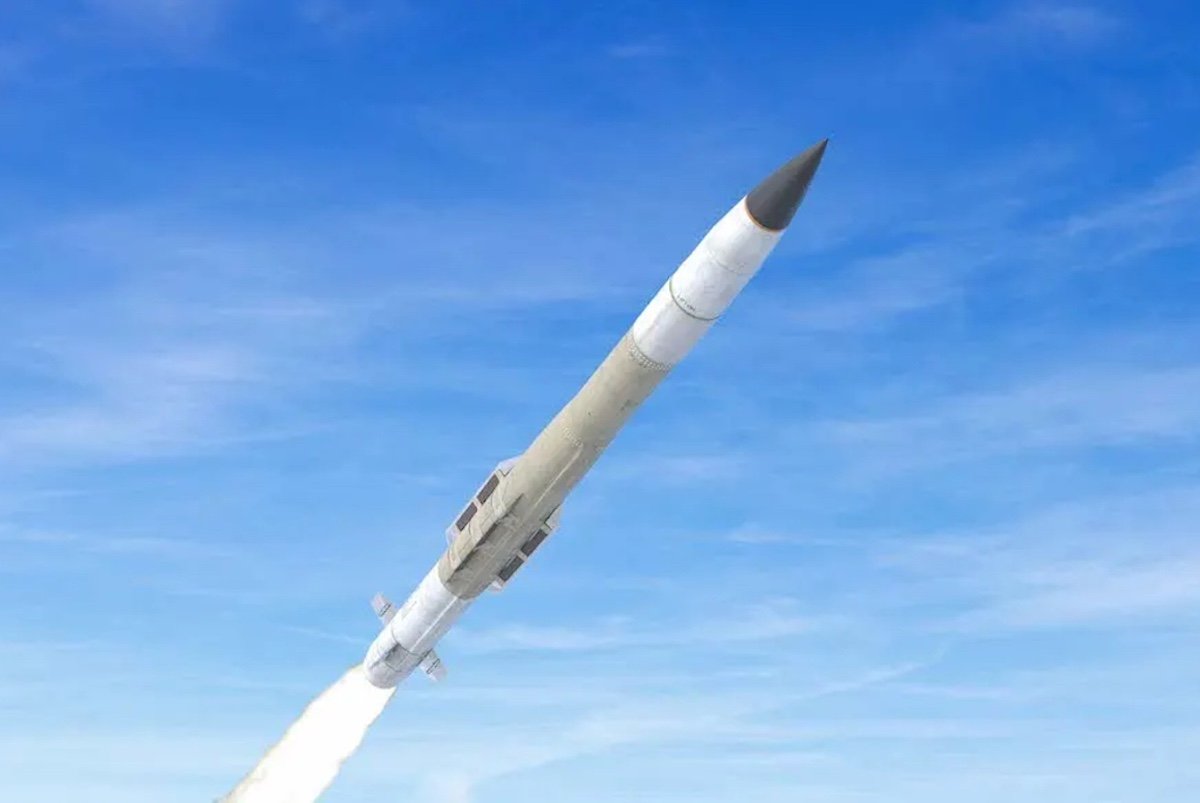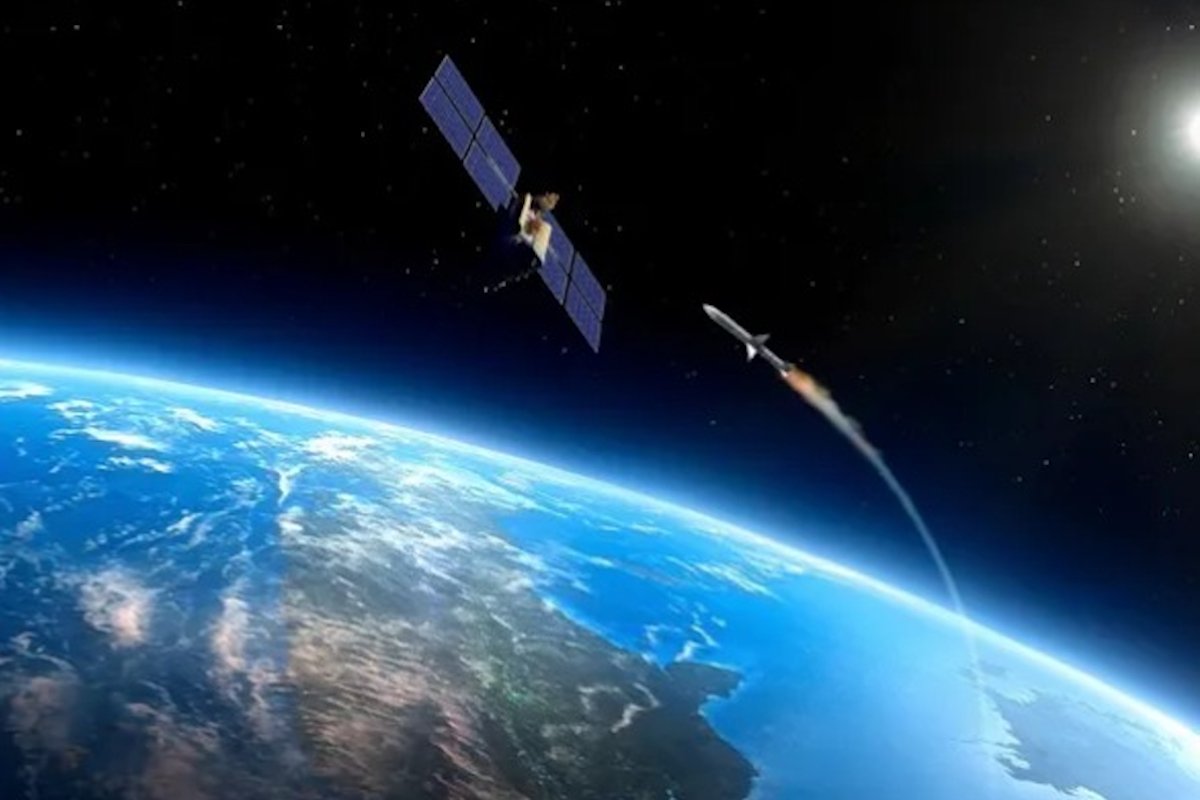
US Space Command (SPACECOM) is reorienting its priorities toward offensive space weapons, a shift that signals a new phase in the orbital competition with China and Russia. General Stephen Whiting, the commander of SPACECOM, told the Space & Missile Defense Symposium in Huntsville, Alabama, that developing kinetic and non-kinetic anti-satellite (ASAT) capabilities is now a critical military requirement for the fiscal years 2029 to 2033. He specifically highlighted “integrated space fires” and counter-proliferated low Earth orbit (pLEO) capabilities as top priorities.
The announcement comes as Beijing continues to build out a sophisticated military space architecture, including remote-sensing satellites, ground-based lasers, jammers, and maneuverable co-orbital systems such as the SJ-21. US defense officials argue that passive defense alone is no longer sufficient; the joint force must have a credible, acknowledged ability to attack and degrade adversary space assets. While the specific nature of future US space weapons remains classified, the public demand signals a clear shift from a defensive posture toward active readiness for orbital warfare.
US offensive capabilities remain limited
Despite the rhetorical shift, the United States currently possesses only one publicly acknowledged offensive ASAT system: the Counter Communications System (CCS), a ground-based jammer. In a June 2023 report for the Mitchell Institute for Aerospace Studies, Charles Galbreath noted that while the CCS can temporarily deny adversary signals without creating debris, it provides only localized, partial disruption. Crucially, Galbreath argued that the CCS lacks the capacity to hold China’s rapidly expanding space architecture at risk and cannot independently protect US space assets. He added that effectively employing the CCS requires deploying these ground systems near targeted areas, a maneuver deemed extremely challenging in highly contested battlespaces dominated by China’s anti-access and area-denial (A2/AD) networks.
The US imposed a unilateral moratorium on direct-ascent ASAT (DS-ASAT) weapons tests in April 2022, citing concerns about space debris. Beyond the debris problem, Matt Korda and Nivedita Raju argued in a Federation of American Scientists (FAS) article this month that such weapons offer limited strategic and military benefits. Space debris—spent rocket stages, satellite parts, fragments, and even paint flakes—travels at thousands of meters per second and can cause catastrophic damage to spacecraft. Korda and Raju noted that destructive ASAT tests can threaten the testing state’s own assets, offer little practical utility, and risk alienating space-reliant allies. They also pointed out that such tests make poor strategic signals because responsibility is readily attributable, potentially producing political backlash rather than coercive leverage.
Kinetic destruction, they argued, is redundant for validating ASAT capabilities, since states can demonstrate operational proficiency through non-destructive simulations or standard missile defense intercepts. Kathleen Brett, in a June 2026 Secure World Foundation report, noted that the US operates midcourse interceptor missiles with an inherent ASAT function. In February 2008, the US tested an SM-3 interceptor fired from the USS Lake Erie against a defunct reconnaissance satellite, creating significant orbital debris even at a relatively low altitude.
China and Russia field broader arsenals
Compared with the publicly acknowledged US arsenal, China and Russia possess a broader range of known ASAT capabilities. In an August 2024 article in the Journal of Strategic Studies, Jonas Vidhammer Berge and Henrik Stalhane Hiim described China’s offensive counterspace posture as designed to deter, coerce, and fight while limiting escalation. China’s arsenal combines soft-kill systems—satellite jammers, cyber capabilities, directed-energy weapons, laser dazzling, and attacks on data links—with hard-kill options, including direct-ascent ASAT missiles and co-orbital satellites capable of rendezvous, proximity operations, and grappling. Beijing prioritizes reversible, attribution-difficult soft-kill effects in early stages of conflict, reserving kinetic attacks for higher escalation thresholds.
China’s posture emphasizes “limited responses,” multiple escalation rungs, and targeting vulnerable US systems, especially GPS for conventional warfare and SBIRS early-warning satellites to strengthen nuclear deterrence against missile-defense threats during major crises. This approach presents the US with not just more counterspace tools, but more options for applying pressure at different levels of escalation.
Russia, according to Jaganath Sankaran in a June 2022 article in Contemporary Security Policy, is developing a diversified offensive counterspace arsenal that combines kinetic, co-orbital, directed-energy, and electronic-warfare systems. Moscow has repeatedly tested the Nudol direct-ascent ASAT missile; demonstrated rendezvous, proximity, projectile release, and potential satellite interception capabilities with Olymp-K/Luch and Kosmos-series spacecraft; pursued the Rudolph and Burevestnik interceptors; and developed the Peresvet and Sokol-Echelon lasers alongside the Murmansk-BN, Krasukha, and Tirada-2S jammers. Sankaran characterized Russia’s posture as primarily hedging and offsetting, maintaining counterspace options to counter US advantages.
The US shift toward offensive space weapons comes amid broader regional tensions. As Washington weighs tactical nuclear options in response to Chinese and Russian escalatory moves, the space domain is becoming another arena of great-power competition. The development of offensive ASAT capabilities, while framed as a deterrent, risks fueling an arms race in orbit. North Korea's deepening alliance with Russia further complicates the security landscape, as does China's testing of directed-energy weapons for naval defense, which could have space applications.
The key question is whether the US can translate its new emphasis on space superiority into a credible warfighting posture. With only a limited public ASAT capability, and a moratorium on debris-generating tests, the gap between rhetoric and capability remains wide. As China and Russia continue to expand their counterspace options, the risk of miscalculation in orbit grows. The international community, including space-reliant allies in Asia and beyond, will be watching closely to see whether Washington can balance deterrence with stability.