Since late February, when the United States and Israel escalated their military campaign against Iran, Tehran has retaliated by striking commercial shipping in the Strait of Hormuz. The narrow waterway, through which roughly a fifth of the world's oil passes, has become a chokepoint for global energy markets. President Donald Trump has issued an ultimatum demanding Iran reopen the strait and has called on NATO allies to assist. But despite the economic pressure, Washington has not attempted a full-scale military operation to secure the passage. Why?
Jennifer Parker, a 20-year veteran of the Royal Australian Navy and now a naval analyst, explains that the geography of the region gives Iran a decisive advantage. Iran dominates the northern Persian Gulf, the Strait of Hormuz, and the Gulf of Oman, allowing it to deploy cheap but effective weapons—drones, cruise missiles, and uncrewed surface vessels—against merchant ships. To make the strait safe, the US would need to execute a two-phase campaign.
The Two-Phase Challenge
The first phase would involve destroying Iran's ability to target ships: radar installations, command-and-control centers, and weapons bunkers along the coast. The US has the air power and surveillance to hit many of these targets. But locating and neutralizing Iran's vast arsenal of drones—which can be hidden in civilian areas or mobile launchers—would be far more difficult. Intelligence would be critical, and even a sustained bombing campaign might not eliminate the threat entirely.
The second phase is a reassurance campaign: stationing airborne early warning aircraft, maritime patrol planes, and fighter jets above the strait and the Gulf of Oman, while deploying warships to escort convoys. If mines are present—or even suspected—the US would need a time-consuming mine-clearance operation involving divers or remote vehicles. As Parker notes, Iran does not need to actually lay mines; the mere suspicion is enough to deter commercial shipping.
Four Reasons the US Hesitates
Parker identifies four key reasons why the US has not attempted to militarily secure the strait:
- Resource diversion: Aircraft and naval assets needed for the broader campaign against Iran would be tied up in escort and patrol duties, weakening the overall war effort.
- Land control required: Securing the strait means controlling not just the water but the coastline on both sides. This would likely require ground forces or raiding parties on Iranian territory—a risky and complex operation.
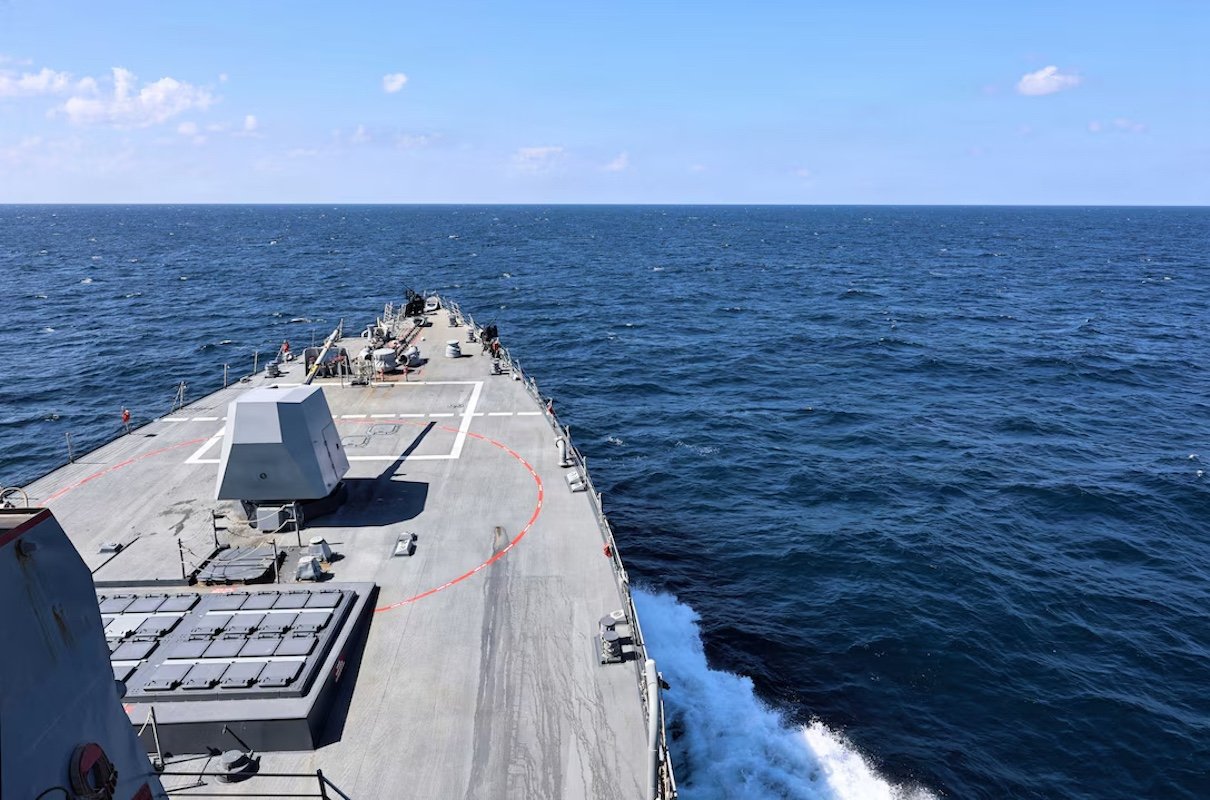
- Naval vulnerability: A single escort operation would need one or two warships. Larger convoys would be more vulnerable to attack unless Iran's strike capability is drastically reduced. A US warship carries over 200 personnel; losing one would be a major blow.
- Risk versus benefit: Before the coastal threats are neutralized, putting warships and aircraft in harm's way for the sake of commercial shipping may not be worth the cost. As Parker puts it, “Is it worth putting those personnel at risk before you’ve reduced the threats from Iran’s coastline?”
The Trump administration has ordered reinforcements—two naval groups with around 4,500 marines and dozens of aircraft—into the Middle East. But these assets are likely being held for offensive operations rather than defensive escort missions.
Mines: A Complicating Factor
Iran has not confirmed laying mines in the strait, but the possibility alone creates a major deterrent. Parker notes that Iran's own economy depends on shipping oil from Kharg Island through the strait; mining would disrupt its own trade. Moreover, acoustic mines—which detonate based on a ship's sound signature—would be hard to calibrate to distinguish Iranian vessels from others, posing a risk to Tehran's own fleet. Still, the uncertainty is enough to keep commercial insurers and shipping companies wary.
The standoff in the Strait of Hormuz has broader implications for Asia, which relies heavily on Middle Eastern oil and liquefied natural gas. Countries like Japan, South Korea, India, and China are major importers. Disruptions threaten not only energy prices but also fertilizer supply chains and food security across the region. The stalemate is reshaping Asian energy security, forcing governments to reconsider strategic reserves and alternative routes.
For now, the US appears to be betting that economic pressure and targeted strikes will eventually force Iran to relent, rather than committing to a risky and resource-intensive naval campaign. But as Parker warns, “The geography gives Iran the advantage, and that advantage is not easily overcome.”