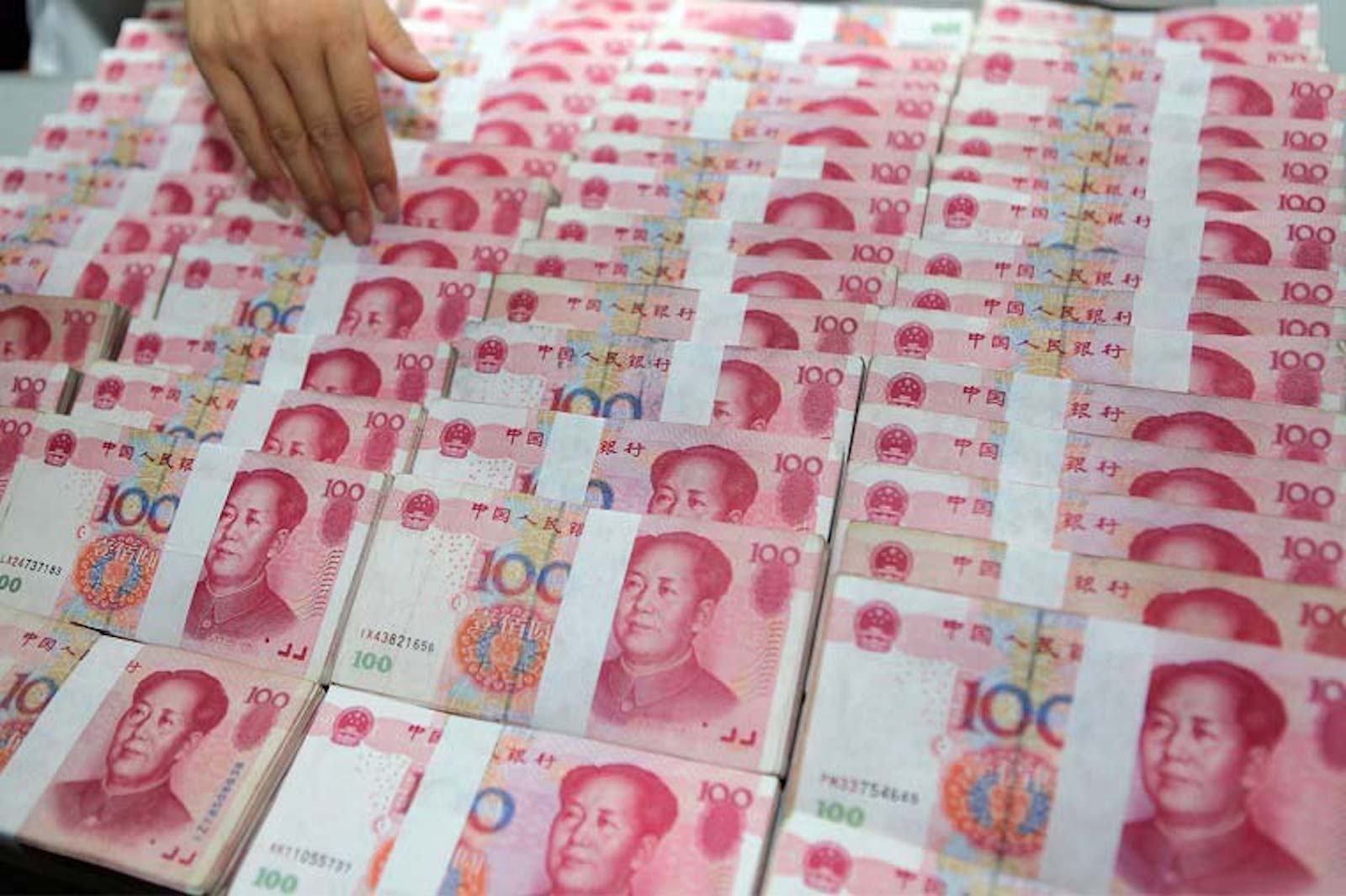
Beijing's latest attempt to shore up its faltering economy is to tighten the cage around capital outflows. In recent weeks, the China Securities Regulatory Commission (CSRC) has moved against unlicensed brokers funneling mainland investor money into foreign markets, pressing brokerages in Hong Kong and Singapore to wind down cross-border securities and futures businesses. The official target is illicit flows, but the broader effect is a chilling signal to Asia's largest economy.
The metaphor of a birdcage runs deep in Chinese political culture: markets, like captive birds, need defined limits or they descend into chaos. But President Xi Jinping's effort to wall in Chinese citizens' money is unlikely to achieve its intended stability. As Ashwin Binwani, founder of Singapore-based Alpha Binwani Capital, notes, the risk is that the crackdown turns "significantly worse," spreading into a broader, market-spooking clampdown. Economist Gary Ng at Natixis adds that the "biggest problem is that you never know how far the crackdown on cross-border capital flow can go," which will reverberate through Hong Kong's financial sector.
Historical Echoes and Market Fears
These actions do not occur in isolation. They follow the fallout from the crackdown on Jack Ma's Alibaba and China's internet giants, and last month's revelation that Beijing is micromanaging the travel of AI researchers—a practice reminiscent of the Soviet-era "birdcaging" of academics and athletes. Such moves sit awkwardly beside Xi's 2013 pledge to let market forces play a "decisive" role in economic life, and they treat symptoms rather than root causes.
In the short term, the effect is corrosive. Eurasia Group analyst Dominic Chiu notes that major banks are already quietly tightening or freezing account openings for mainland clients. Longer term, the strategy looks less like financial progress than like fear—odd timing for a country that wants the yuan taken seriously as a reserve currency. This pattern of control echoes concerns about China repeating Japan's zombie economy mistake, where prolonged intervention stifled growth.
A Glimmer of Reform at the PBOC
There is, however, a genuine bright spot at the People's Bank of China (PBOC). On June 17, Governor Pan Gongsheng told a business forum that the PBOC may shift toward a Fed-style overnight policy rate—a move that would sharpen Beijing's control over short-term funding costs and bring China's central bank closer to global peers. Since July 2024, the PBOC has formally adopted a framework centered on the 7-day reverse repo rate as its primary policy rate, improving the transmission of monetary tweaks from short-term rates to longer-term borrowing costs.
If the PBOC shifts to an overnight rate policy, it would gain more influence over markets through greater transparency. This could mean eventual scheduled decision meetings, forward guidance, and published minutes—reducing the policy opacity surrounding Chinese assets. It would also increase foreign participation in onshore bond markets, already swelling thanks to the Bond Connect program. As Dong Ximiao, chief economist at CMB-China Unicom Consumption Finance, puts it, "Measures to improve the short-end interest rate control mechanism represent a crucial step in the transition of China's monetary policy toward a price-based approach."
The Limits of Reform
Yet true independence for the PBOC remains elusive. For the yuan to seriously rival the dollar or the euro, Pan's institution needs real authority over monetary policy, not just an advisory role beneath the State Council. Until Team Xi is willing to insulate the PBOC from political pressure, a shift to a Fed-style communication framework has limited impact. Adopting a more G7-like toolkit is a good start, but it's only that.
This global moment seems ripe for China to position the yuan for a bigger role. With US national debt approaching $40 trillion and inflation rising amid geopolitical tensions, there are ample reasons for global investors to crave an alternative. As JPMorgan warned in late 2025, "Increased polarization in the US could jeopardize its governance, which underpins its role as a global safe haven." But Beijing's instinct to control rather than reform may undermine that opportunity. The birdcage, however well-built, cannot substitute for the confidence that comes from genuine openness.