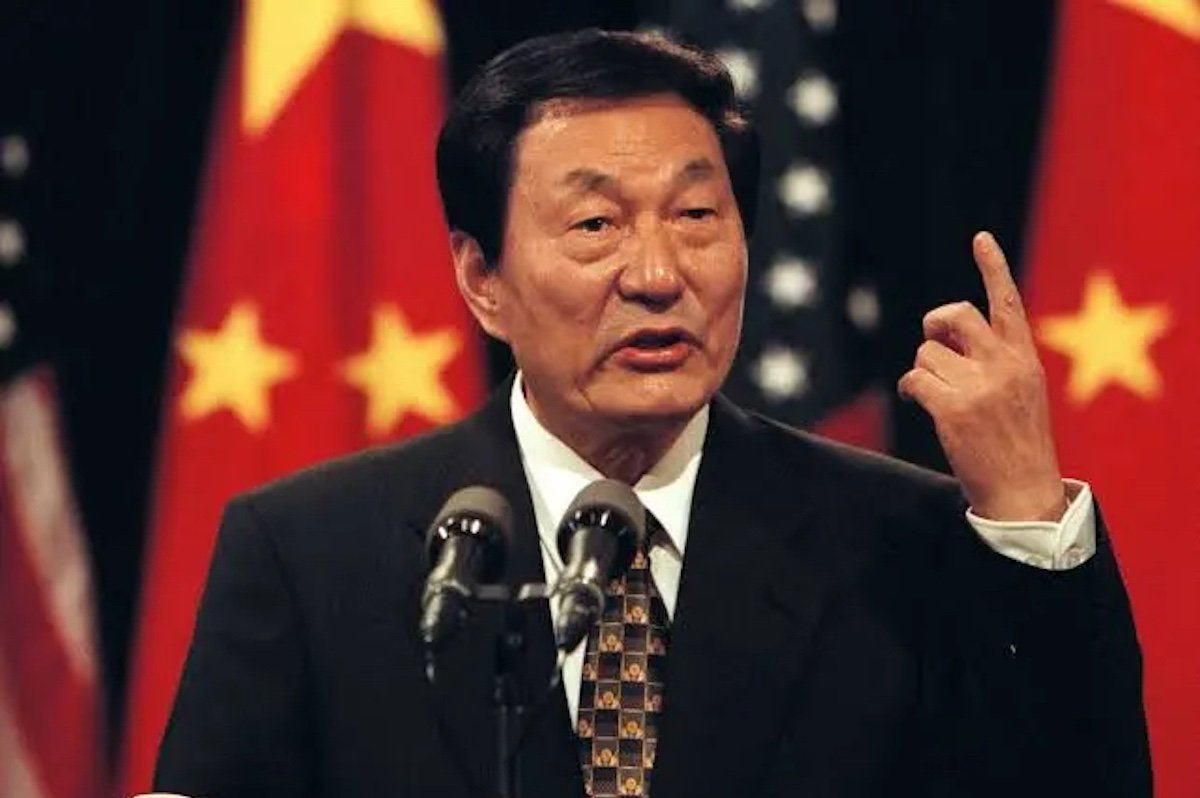
When Zhu Rongji passed away in Beijing on August 12 at the age of 97, Asia lost one of its most consequential public servants. As China's premier from 1998 to 2003, he engineered the country's entry into the World Trade Organization in December 2001, ending nearly 15 years of negotiations. The tributes have focused on the scale of his achievements, but his most enduring contribution is a practical method that any government in the region can adopt: make a binding commitment to the outside world, then use it to overcome domestic resistance.
An engineer's approach to governance
Zhu trained as an electrical engineer at Tsinghua University, and his governance reflected that discipline. He avoided ideological rhetoric, instead asking what was broken and what would hold. As vice premier from 1991, he curbed inflation by cutting credit to loss-making state enterprises. In 1994, he overhauled the tax system to channel revenue to Beijing. As premier, he pushed banks, airlines, and oil companies to operate as genuine businesses without privatizing them, and built a private housing market from scratch.
His motivation was not free-market ideology but a desire for a system that would not fail. The WTO accession fit that instinct. One of Beijing's negotiators later compared the talks to bargaining in a vegetable market, but the real prize was domestic reform. Membership turned openness into a national promise, enshrined in international law. That gave Zhu leverage against officials who protected favored firms and a state sector resistant to change. Reformers expected WTO rules to force improvements in banking, corporate law, and the judiciary that were otherwise too difficult to achieve alone. This was reform by treaty: borrowing external pressure to accomplish hard internal tasks.
Zhu understood the costs and said so openly. His restructuring left an estimated 40 million state workers unemployed, with critics calling it surgery without anesthesia. Import tariffs on cars and other goods fell from over 100% to no more than 25%, prompting accusations at home that he was giving away the country. On taking office, he vowed to proceed whether the path led through a minefield or an abyss. He meant it.
He did not abandon those workers. As state jobs disappeared, state apartments were sold to occupants for nominal sums, cheap mortgages followed, and basic welfare and unemployment insurance were introduced. The system was imperfect, and Zhu would have admitted it, but a generation that lost its jobs gained, for the first time, something of its own.
Perhaps his rarest quality was his willingness to apologize. After floods killed 4,150 people in 1998, he said dikes built with embezzled funds were no stronger than bean curd. Three years later, he went on national television to take responsibility for a school explosion that killed at least 42 people, most of them children. A leader who publicly owns a failure sends a clear signal to citizens and markets alike: the numbers will not be massaged. Trust is built that way, and little else builds it.
Legacy and limits
An honest assessment must note what came later, most of it after his tenure. The fiscal system he designed left local governments dependent on land sales, which eventually contributed to the property crisis that erupted in 2021. The financial opening promised at WTO accession was never completed, and the government procurement market pledged in 2001 remains closed. But Zhu retired in 2003: treaties set boundaries, and successors decide what happens within them.
For China's neighbors, the gains were never going to be equal, and Zhu never promised they would be. World Bank economists predicted before accession that the biggest benefits would go to China and to countries supplying its factories with parts, machines, and raw materials, while those competing directly with Chinese manufacturers would feel the squeeze. That is roughly what happened. Preparation, not membership, determined who came out ahead—a lesson within reach of every government in the region.
Today's debates over overcapacity and China's record trade surplus of nearly $1.2 trillion are real, but they stem from choices made in the decades since Zhu left office, not from the bargain he struck. The tribute he would have wanted is not nostalgia but use. Asia's next great bargains—deepening the Regional Comprehensive Economic Partnership (RCEP), widening the Comprehensive and Progressive Agreement for Trans-Pacific Partnership (CPTPP), and writing rules for digital trade, green goods, subsidies, and data—all hinge on the same question: Do governments have the nerve to sign an agreement abroad precisely because it breaks a deadlock at home? That approach works in Jakarta, Delhi, Hanoi, and Seoul as surely as it worked in Beijing.
His quietest legacy points the same way. As founding dean of Tsinghua's school of economics and management, he trained the economists and finance officials who served China for decades afterward. People and institutions outlast tariff schedules. He once joked that an official photograph made him look like a dead man. The man is gone now, and the region is poorer for it. His idea is not. It remains on the table, waiting for the next reformer with a fraction of his courage to pick it up.
For more on how Zhu's methods shaped China's economy, see this profile of his reforms. And as Beijing's current leaders face new economic strains, their interventions in tech stocks show how far they are from his playbook. Meanwhile, the turn inward by Washington and Beijing underscores the relevance of Zhu's outward-looking strategy.