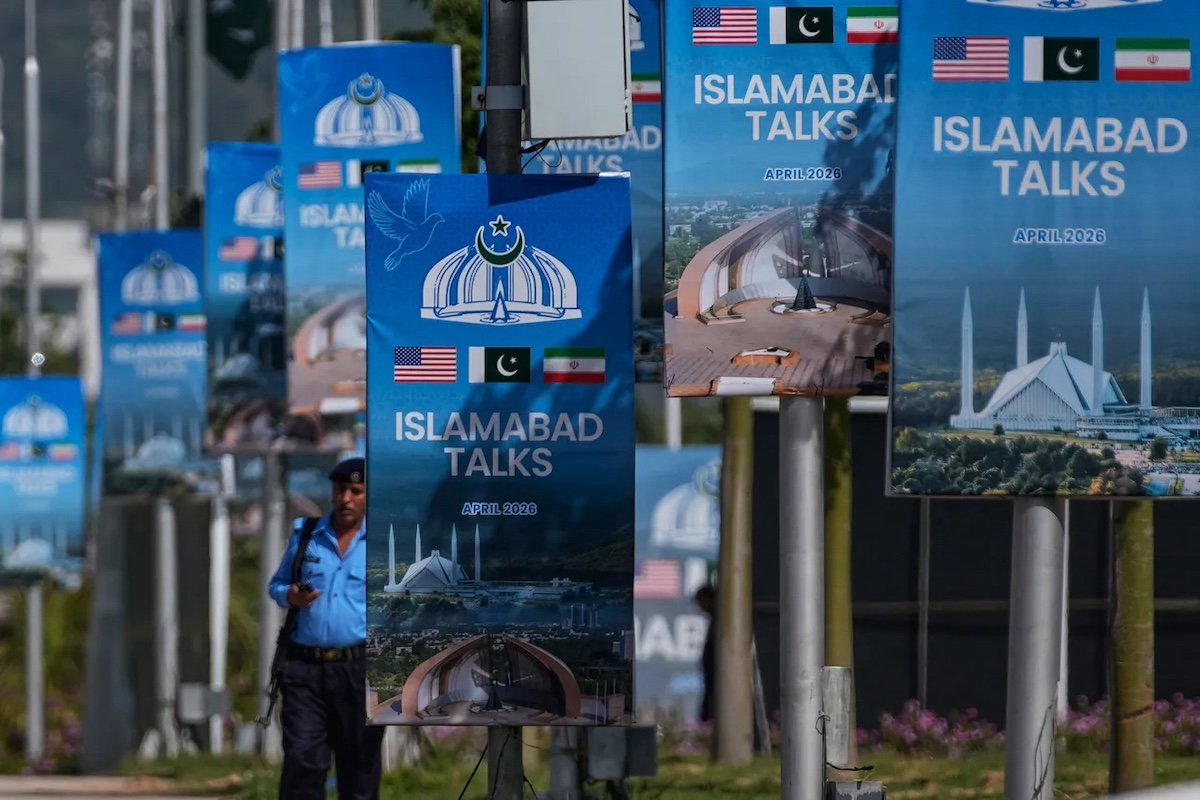
The events of Sunday, April 13, reshaped global geopolitics in a single day. Hungary's Viktor Orbán suffered a landslide defeat, signaling a democratic revival in the EU. Meanwhile, in Islamabad, talks between the United States and Iran collapsed after 24 hours of negotiations. President Donald Trump responded by ordering a US Navy blockade of the Strait of Hormuz, through which one-fifth of the world's oil supply transits daily. To cap the day, Trump launched a verbal attack on Pope Leo XIV for advocating peace over war.
While Hungary's election offers a glimmer of hope for European democracy, and the papal criticism suggests the Catholic Church is taking a principled stand, the US-Iran confrontation presents far graver risks. The blockade, a countermeasure to Iran's own threats to control the strait, could be a bold gambit to force Tehran's hand. But it also introduces three dangerous possibilities: Iran might attempt to sink an American warship; the US could face a direct confrontation with Chinese vessels; and the energy crisis could deepen and prolong.
Asia's Energy Security at Stake
For Asian economies—from Japan and South Korea to India and Southeast Asia—the stakes are immense. The Strait of Hormuz is a critical chokepoint for oil imports. A prolonged blockade would disrupt supply chains, drive up energy prices, and strain already fragile economies. Japan's supply chains are particularly vulnerable, as the country relies heavily on Middle Eastern crude. Similarly, India and China, the region's largest oil consumers, would face immediate pressure.
If the US Navy intercepts tankers leaving Iranian ports, most will be Chinese or carrying oil destined for China. Trump may hope this pressures President Xi Jinping to urge Iran back to negotiations. Yet the risk of a direct US-China confrontation at sea is real, especially as Trump's summit with Xi in Beijing on May 14-15 approaches. The blockade raises the stakes for that meeting, potentially turning it into a crisis management session.
Iran's Options and Regional Fallout
Iran, already economically weakened by sanctions, could retaliate by attacking Saudi Arabia, the United Arab Emirates, and other Gulf states with missiles and drones—a threat it has already made. More dangerously, it might target US warships directly, aiming to prove that only Tehran can guarantee safe passage through the strait. This could provide Trump with a pretext for the massive bombing campaign he threatened before the two-week ceasefire. That threat, which Pope Leo criticized as genocidal, now seems closer to reality.
Israel's Prime Minister Benjamin Netanyahu may be urging Trump to resume hostilities. The ceasefire has always been fragile, and the blockade—an act of war under international law—violates its terms. If fighting resumes, the best outcome would be another fragile truce, leaving the region in a cycle of destruction.
Global Energy Crisis, Avoidable but Real
The broader consequence is an unnecessary energy crisis. Russia stands to benefit from higher oil and gas prices, compensating for the loss of Orbán's support in the EU and damage to its own export infrastructure from Ukrainian strikes. But Europe and most of Asia would suffer. Competition between the US and China over fusion energy supply chains highlights the long-term need for alternatives, but in the short term, oil-dependent nations have few options.
Governments may encourage energy conservation while simultaneously subsidizing fuel costs—a contradictory policy that reflects the lack of easy solutions. The crisis could also prompt Indo-Pacific nations to reassess nuclear energy and security postures, as recent analyses suggest.
The reality is that this crisis was avoidable. The failure of Islamabad talks, the blockade, and the threat of escalation all stem from political choices, not necessity. For Asia, the cost is measured in disrupted supply chains, higher prices, and the specter of a wider war. Whether Trump's latest bluff leads to escalation, stalemate, or renewed diplomacy remains uncertain, but the region's energy security hangs in the balance.