US President Donald Trump's recent threats against Iran—warning it could be "blown off the face of the earth" if it attacks American ships in the Strait of Hormuz—reflect a profound misunderstanding of Iranian history. For millennia, Persia and its successor state, Iran, have faced foreign aggression and emerged with their civilization intact. This legacy of resilience is not merely historical; it underpins the strategic calculus of leaders in Tehran today.
The narrative of Persian defiance begins with the Greco-Persian Wars (499–449 BCE), when the Achaemenid Empire clashed with Greek city-states. Western historiography often frames battles like Marathon and Salamis as triumphs of freedom over despotism. Yet Persia's influence on Greek affairs persisted: Persian gold helped Sparta defeat Athens in the Peloponnesian War, and Persian mediators often settled Greek disputes. The idea of Persia as the West's "other" obscures its role as a sophisticated, multicultural empire that tolerated diversity and even facilitated the return of exiled Jews to Jerusalem in 538 BCE.
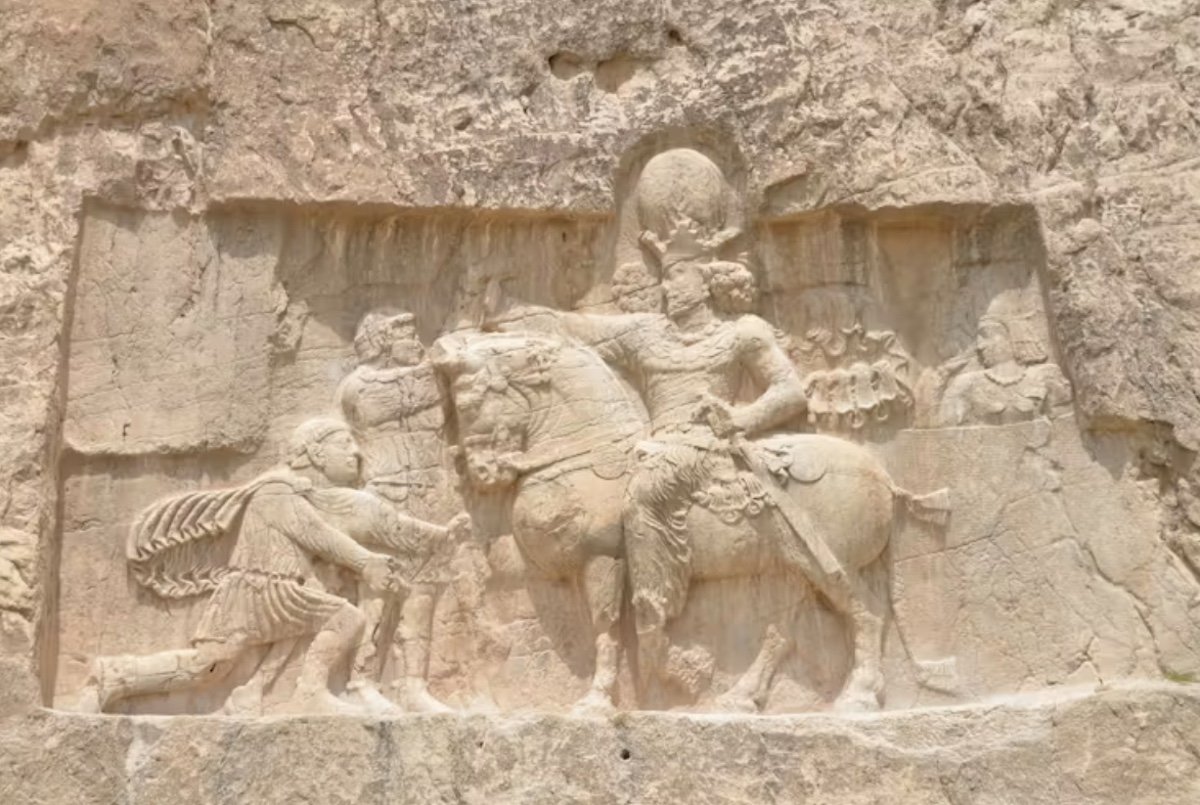
Later Persian empires, the Parthians and Sasanians, challenged Rome directly. In 260 CE, Sasanian Emperor Shapur I captured Roman Emperor Valerian—a humiliation rarely mentioned in Western accounts. A century later, Shapur II's forces killed Emperor Julian during his invasion of Persia. These episodes remind us that Persia repeatedly bested the greatest Western power of antiquity.
The Arab conquest in the 7th century brought Islam, but Persian culture endured. Islamic rulers preserved the Persian language, kept pre-Islamic festivals like Nowruz, and adapted Zoroastrian concepts into Shiite Islam's emphasis on resistance to tyranny. The Mongol invasions of the 13th century devastated Iran, yet Persian civilization survived and flourished again under the Safavid dynasty (1501–1736).
During the Qajar era (1789–1925), Persia was squeezed by Anglo-Russian rivalry in the Great Game but never colonized. World War II saw British and Soviet occupation, yet both powers pledged to respect Iran's sovereignty—a promise that fueled postwar nationalism. In 1951, Prime Minister Mohammad Mossadegh nationalized the Anglo-Iranian Oil Company, sparking a crisis with London. The CIA and MI6 overthrew him in 1953, restoring the shah, who then deepened ties with Washington. As recent tensions over the Strait of Hormuz show, oil remains a flashpoint.
The 1979 Islamic Revolution toppled the shah and brought Ayatollah Ruhollah Khomeini to power, establishing an anti-US, anti-Israel Islamic Republic. Khomeini and his successor, Ayatollah Ali Khamenei, blended Shiite political Islam with Iranian nationalist pride, especially against foreign aggression. This fusion explains why threats from Washington often backfire, strengthening hardliners in Tehran.
Today, as Trump threatens to send Iran back to the "Stone Age," he ignores a civilization that has survived Alexander the Great, the Mongols, and the British Empire. The poet Ferdowsi captured this spirit: "Iran is my land, and the whole world is under my feet. The people of this land have no fear of roaring lions." For Iranians, standing firm is not a choice—it is a tradition.
This history also resonates beyond the Middle East. In Asia, nations like China and India have their own narratives of resisting colonialism and asserting sovereignty. The evolving US-China relationship and Chinese firms' use of international tribunals reflect similar themes of resilience and legal pushback. Iran's story is a reminder that ancient civilizations do not easily bow to modern ultimatums.