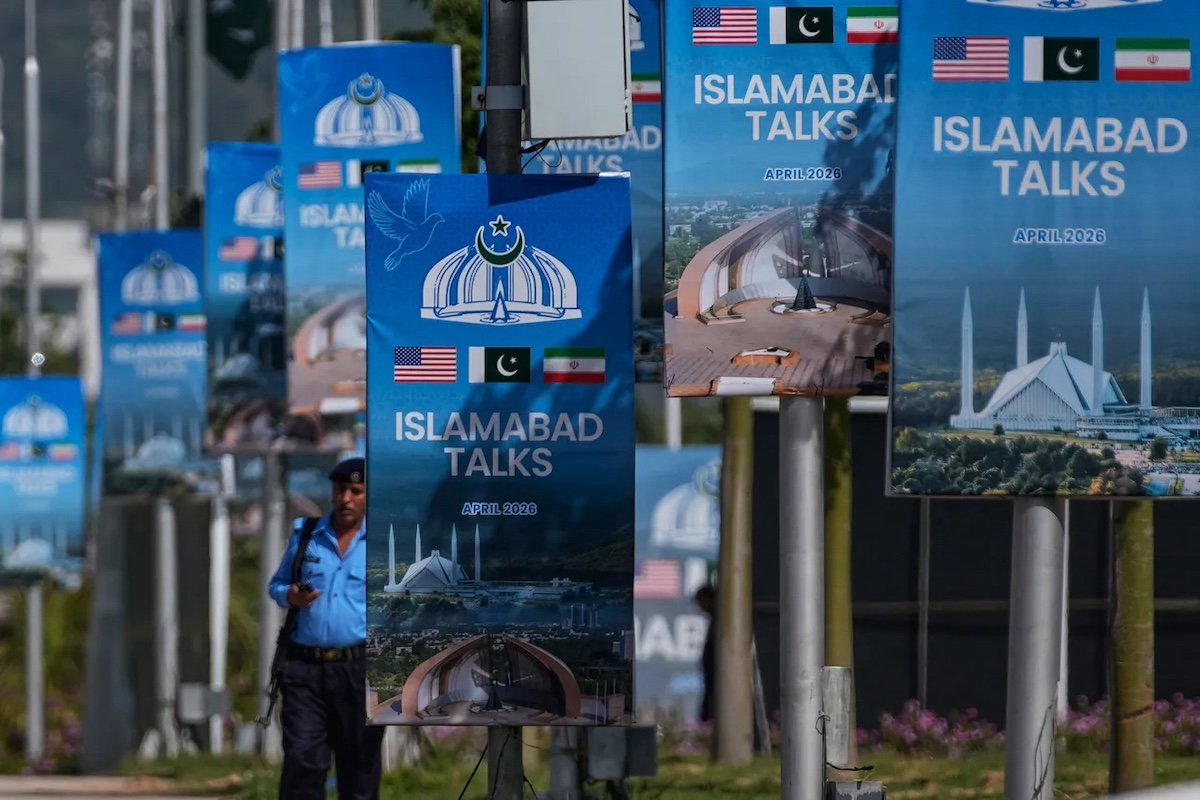
Israeli Security Minister Itamar Ben-Gvir declared on Tuesday that his government will not allow a peace agreement between the United States and Iran, as Israel launched a fresh wave of airstrikes across Lebanon. Speaking at a press briefing, the far-right settler-politician asserted that Prime Minister Benjamin Netanyahu and the entire cabinet are united in opposing any deal that could emerge from talks between US President Donald Trump and Iranian leaders.
“I know that Prime Minister Netanyahu and all of us members of the Cabinet … as the government of Israel cannot allow this to happen,” Ben-Gvir said in Hebrew. “This is an agreement that can harm the state of Israel, and we will not allow this to happen.” His remarks came as Trump pursued what he described as promising ceasefire negotiations with Iran, talks that notably excluded Israeli participation.
The timing of Israel's renewed bombardment—more than 120 airstrikes across southern Lebanon and the eastern Bekaa Valley—has fueled accusations that Jerusalem is deliberately trying to sabotage the US-Iran dialogue. The strikes violate a 45-day ceasefire that took effect last month, and Lebanese health authorities reported 31 people killed, including two children and three women in the southern town of Burj al-Shamali. Since Israel's offensive began in early March, over 3,200 people have died and more than 9,700 have been wounded, according to Lebanon's health ministry.
Iran's Stance and US Negotiations
Despite its foreign ministry condemning recent US attacks as “bad faith” and “definitive violations” of the ceasefire, Iran has not walked away from the negotiating table. Citing Iranian state TV, Reuters reported that Tehran received an unofficial US framework proposing a one-month restoration of commercial shipping through the Strait of Hormuz to pre-war levels, in exchange for a US troop withdrawal from Iran's vicinity and the lifting of the naval blockade. The US has disputed this account. Trump has previously demanded major upfront concessions on Iran's nuclear program, but those issues appear to have been deferred to future talks.
Iran continues to view an end to Israel's assault on Lebanon as essential for any durable peace, even though that issue has not been central to the latest round of negotiations. Shaiel Ben-Ephraim, a former Israeli Foreign Ministry diplomat now a prominent critic, argued that by moving deeper into Lebanon, Israel is “moving to bury not only the supposed ceasefire in Lebanon but also talks on Iran” because its policy “is an endless and wide regional war.” He added, “Israel forced the US into war and won’t let us end it.”
Israeli Defense Minister Israel Katz has described the expanded occupation of southern Lebanon—now extending 5 to 10 kilometers inside the country—as a renewal of the “Gaza model.” Before last month's truce, Israel had demolished or damaged more than 40,000 homes in southern Lebanon, and destruction has continued since. Over 1 million people have been displaced by forced evacuation orders and bombardments. Hezbollah responded on Tuesday with drone attacks on Israel, which it had been launching for weeks in response to what it calls persistent ceasefire violations.
Other far-right cabinet members have escalated rhetoric. Finance Minister Bezalel Smotrich suggested that for each drone attack, Israel should destroy 10 buildings in Beirut, and if none remain, expand demolitions to Tyre, Sidon, and the Bekaa Valley. Ben-Gvir called for cutting off electricity in Lebanon, occupying territory up to the Zahrani River, and returning to “massive war.”
The developments come amid broader regional tensions. Trump's efforts to broker a deal with Iran have drawn skepticism, as noted in GOP Hawks Sound Alarm as Trump Weighs Deal to End Iran Conflict, while the administration's military posture has raised questions about strategic overreach, as explored in Trump's $1.5 Trillion Military Budget Risks Strategic Overreach in Asia. Meanwhile, the long-stalled two-state solution remains a ritual without reality, as discussed in Two-State Solution for Israel-Palestine: Washington's Ritual Without Reality.
In a separate but related development, the Global Sumud Flotilla called for an investigation into US complicity in the alleged abduction, torture, and sexual assault of 428 activists, journalists, and medical professionals by Israeli forces during the latest attempt to break the siege of Gaza. The flotilla noted that the vessel used for detention, the INS Nahshon, was built by Bollinger Mississippi Shipbuilding in Louisiana and fully financed by the US government. “This role goes beyond the State Department’s diplomatic shielding and the US Embassy’s refusal to assist American families seeking information,” the group said in a statement, adding that it includes the ship itself and the weapons used to inflict trauma.