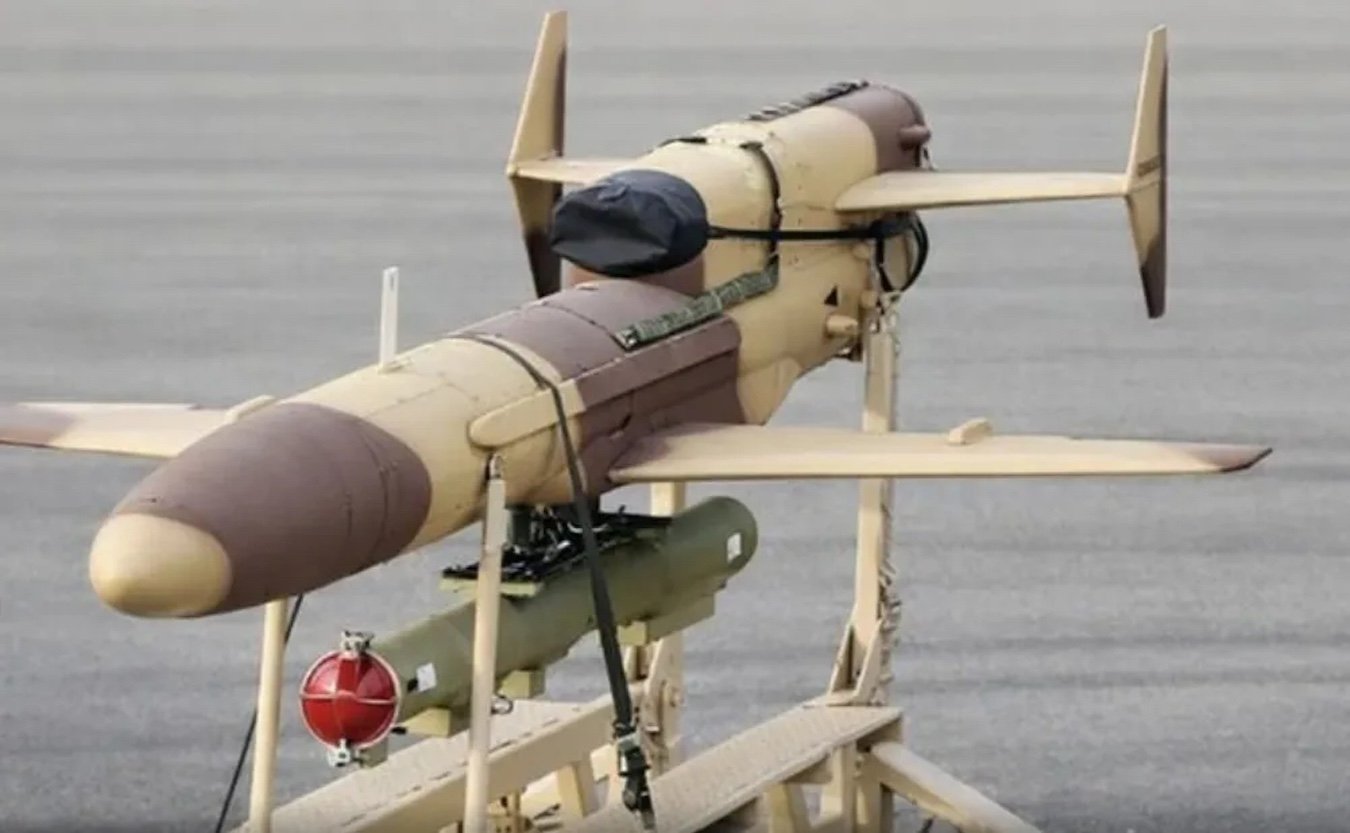
The air war over Ukraine has entered a new phase with Russia's deployment of the Geran-5, a jet-powered drone that is proving significantly harder for Ukrainian forces to shoot down. Ukrainian Air Force spokesperson Colonel Yuriy Ihnat told the Financial Times on September 14 that interception rates for the Geran-5 have fallen to around 60%, compared with 95% for earlier drone models.
The Geran-5's design marks a departure from previous drones. Its cylindrical fuselage and straight wings give it the profile of a cruise missile, and Russian sources indicate a range of up to 1,000 kilometers and a maximum operating altitude of about 6,000 meters—higher than earlier versions. With an estimated top speed of 600 kilometers per hour, it is significantly faster than the propeller-driven Geran-2, which travels at roughly 185 km/h.
What makes the Geran-5 particularly challenging is its anti-jamming capability, which resists electronic warfare measures that have been effective against other drones. Ihnat said Ukraine has been forced into "very intensive use" of its fighter jets since August, with pilots directly engaging these drones in flight.
Beyond its speed and altitude, the Geran-5 incorporates machine vision linked to a digital terrain map, according to Yuri Knutov, a Russian military expert. This allows the drone to identify and select targets autonomously, reducing reliance on external guidance that could be jammed.
Evolution of the air war
Since Russia's full-scale invasion in 2022, the air war has shifted from manned aircraft to stand-off weapons and, increasingly, drones. Glide bombs, launched from beyond most air defenses, became a staple for Russia from 2023. But drones have emerged as the dominant tool, offering low cost and no risk to crews.
The earlier Geran-1 and Geran-2, based on Iran's Shahed-136, were slow and vulnerable. The first jet-powered model, the Geran-3, appeared in 2025, with a top speed of 330 km/h and a range of 600 km. The Geran-4 followed later that year, reaching 500 km/h and 850 km. The Geran-5, operational since August 2026, combines even higher speed with extended range.
Ukraine's military intelligence has published details of the Geran-5's components, revealing a global supply chain that includes a Chinese-supplied jet engine, US-made digital processors, and German transistors. This suggests Russia has built resilient procurement networks that circumvent Western sanctions, sourcing commercially available technology from multiple countries before final assembly domestically.
Russia is now prioritizing production of the Geran-4 and Geran-5, according to Ukrainian intelligence, building stocks for an autumn and winter campaign. This comes as Ukraine faces a shortage of Western-supplied Patriot interceptor missiles, which are the only truly effective counter to the Geran-5. Major General Vadym Skibitskyi, Ukraine's deputy head of military intelligence, said in August that Kyiv needs new interceptor missiles "with the appropriate speed" to counter the latest jet-powered drones.
The development has broader implications for the region. As autonomous combat drones become more prevalent, the lessons from Ukraine are being watched closely by militaries across the Indo-Pacific. The use of foreign components, including Chinese engines, also raises questions about technology transfer and export controls. Meanwhile, reports of North Korean workers at Russian drone plants highlight the growing international dimension of this conflict.
For Ukraine, the immediate challenge is adapting to a new threat that is faster, smarter, and harder to kill. The reliance on fighter jets to intercept drones is costly and unsustainable in the long term, and the depletion of Patriot missiles could leave cities more exposed. As the war enters another winter, the Geran-5 represents a significant escalation in the technological arms race between the two sides.