Speculation that South Korea might join the Quadrilateral Security Dialogue has intensified following reports it would attend the upcoming summit as an observer—a claim later denied—and remarks by Major-General Jung Hae-il, president of Korea National Defense University, at the Raisina Dialogue. While Seoul's advanced industrial-military complex and democratic credentials make it an attractive addition, the notion that it could replace India fundamentally misreads the strategic landscape.
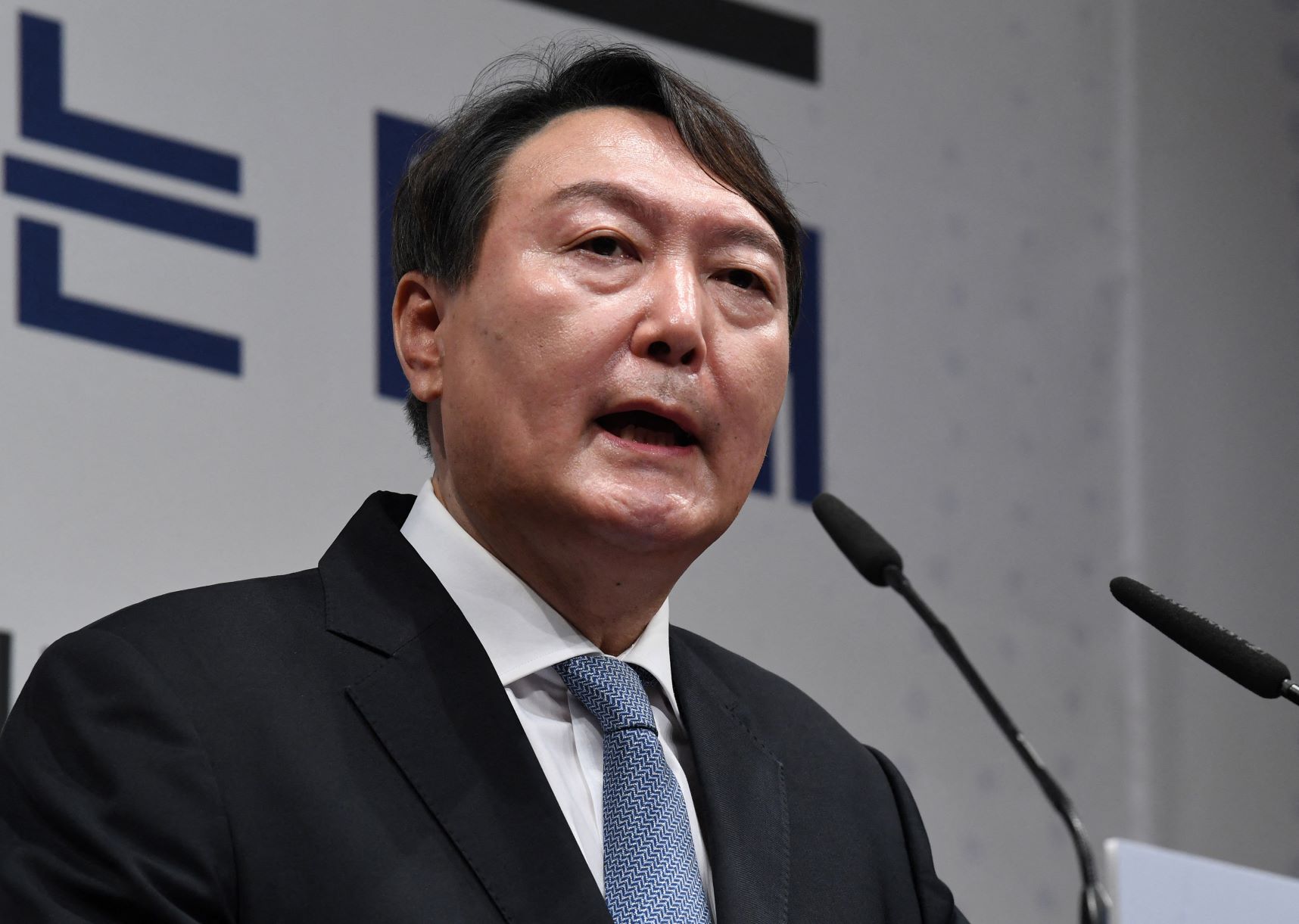
South Korea's newly elected President Yoon Suk-yeol has signaled a more assertive foreign policy, particularly regarding North Korea, and expressed interest in deploying advanced US weaponry such as the Terminal High Altitude Area Defense (THAAD) system. Yet Seoul's primary security focus remains the Korean Peninsula, not the broader Indo-Pacific balancing act the Quad is designed for. China is South Korea's largest export market, accounting for 25% of total exports in 2020, and the two countries share bilateral trade agreements and participate in the Regional Comprehensive Economic Partnership (RCEP). Beijing also exerts significant influence over Pyongyang, making Seoul reluctant to join a forum that openly seeks to contain China.
South Korea has long been evasive on the South China Sea territorial disputes and has avoided confrontational responses to Chinese airspace and maritime incursions into its own territory. Even under Yoon, there is no indication Seoul aims to challenge Beijing directly. As South Korea's alliance with the US faces a reckoning over cost and reciprocity, its strategic autonomy remains a key constraint.
Why India Remains Indispensable
India's geographic location, size, and military capabilities—the world's second-largest army, ranked fifth overall—give the Quad a unified front against China's assertiveness. According to the Lowy Asia Power 2021 Index, India is the fourth most powerful military in the Indo-Pacific, behind only the US, China, and Russia. Its formidable presence in the Indian Ocean provides the Quad with a strategic depth that South Korea, confined to Northeast Asia, cannot match.
Unlike Seoul, New Delhi's stance on China is clear and consistent, as demonstrated by its position on AUKUS. Even when India disagrees with Quad partners—such as its abstention from the UN resolution condemning Russia over the Ukraine war—its non-aligned tradition and strategic autonomy lend the grouping legitimacy among nations outside the Quad. This suggests the US does not have carte blanche, and the Quad can act on actual rather than imaginary threats in the region.
India's strong ties with Russia, while occasionally complicating Quad cohesion, also provide a diplomatic bridge that South Korea lacks. As India's Gulf diplomacy illustrates, New Delhi's ability to maintain relationships across rival camps is a strategic asset, not a liability.
South Korea would be a valuable Quad Plus member, but it cannot substitute for India. The grouping would lose a partner whose size, location, and independent foreign policy make it a credible counterweight to China. Imagining a scenario where India swings toward Beijing—as some analysts have suggested—would have severe political and security ramifications for the Quad, underscoring that New Delhi's role is irreplaceable.
For now, Seoul must first resolve its frosty relations with Tokyo, burdened by the legacy of World War II and ongoing disputes over trade and the comfort women issue. Yoon has proposed a future-oriented relationship, but before joining the Quad, South Korea needs significant catharsis. As Lee Jae-myung's India visit tests a strategic partnership at a crossroads, the contrast between Seoul's cautious approach and New Delhi's strategic clarity is evident.