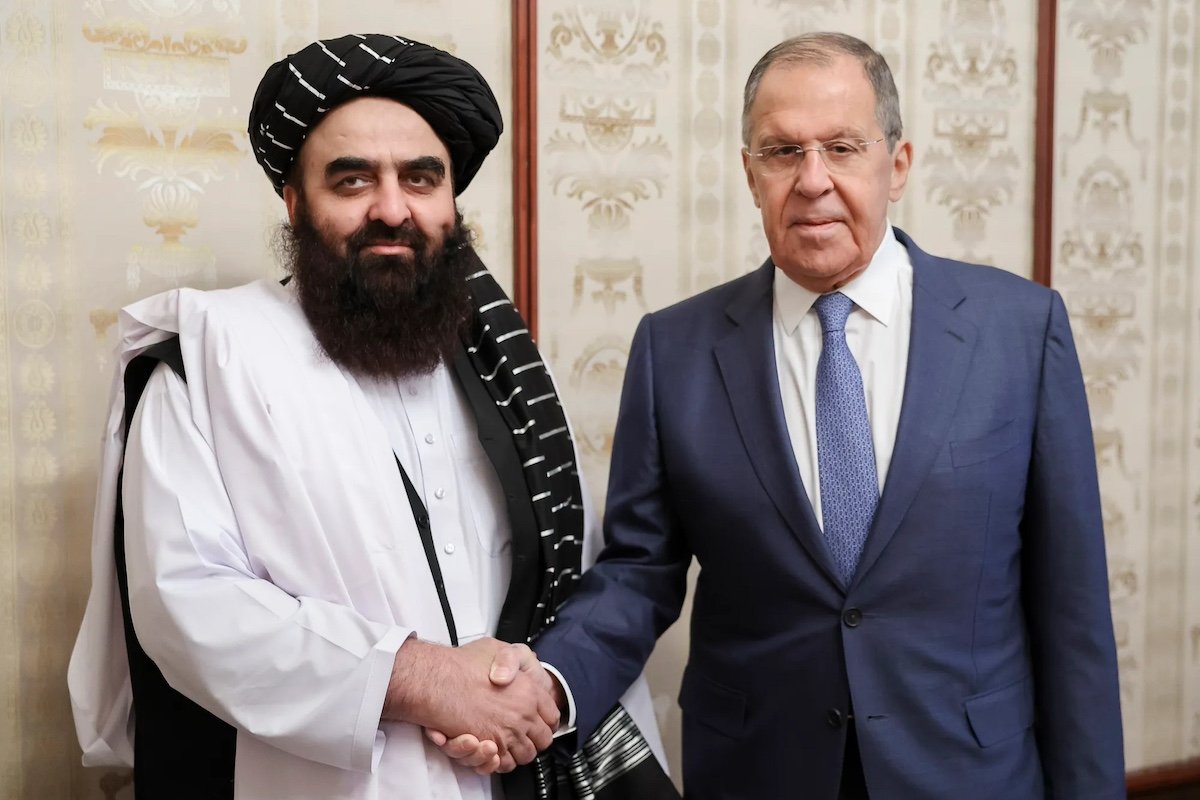
When Russian Deputy Prime Minister Alexei Overchuk landed in Kabul on November 12 for trade and investment talks, he carried a figure designed to impress. An Afghan government statement quoted him saying bilateral trade had reached US$349 million in the first eight months of 2026—more than double the level from a year earlier. The sum is modest, but the symbolism is not.
Afghanistan remains largely isolated. Russia is the only country to have formally recognized the Taliban government, doing so in July 2025. Yet Kabul is quietly assembling something more pragmatic than the broad international reconciliation once anticipated after the Western withdrawal: a network of transactional relationships with neighbors whose economic interests and security anxieties now outweigh their qualms about the Taliban. Each partner wants something different, and that is precisely why the pattern matters for Pakistan.
A web of interests
Moscow seeks influence in Central Asia, security cooperation, and a stake in new transport corridors. India, which pulled its diplomats out in 2021, upgraded its technical mission in Kabul to an embassy in October 2025—without recognizing the Taliban government. New Delhi is protecting its ties to the Afghan population and preserving a seat at the regional diplomatic table. China continues to talk with Kabul about minerals, infrastructure, and connectivity, but cautiously; Beijing's concerns about militancy on its western border and the safety of its investments limit how far it will go.
None of this adds up to a bloc. But it adds up to options—and options are what the Taliban have lacked until now.
Pakistan once held most of the cards. Geography, trade routes, refugee flows, and decades of contact gave Islamabad unmatched influence over Afghan affairs. Today, relations are among the worst in years. Islamabad accuses Kabul of harboring the Tehreek-e-Taliban Pakistan (TTP), the group known as the Pakistan Taliban, and demands verifiable action against it. Kabul denies the charge. Pakistan has conducted airstrikes inside Afghanistan, most recently in early October, targeting what it says are militant hideouts.
The Moscow Format meeting on October 5 exposed the depth of the rift. Pakistan's envoy made terrorism the centerpiece of his case, while the Taliban's foreign minister accused Islamabad of relying on military pressure instead of diplomacy. For the first time since the forum began in 2017, it ended without a joint statement. Russia's envoy said the Afghan side objected to a draft that mentioned Afghanistan too often in a terrorism context. A bigger table did not produce consensus on responsibility.
Yet it would be a mistake to read Kabul's successful outreach purely as a defeat for Islamabad. The Taliban are seeking trade and legitimacy without depending on any single neighbor, and Pakistan's own policies have accelerated the trend. Prolonged closures of the Torkham and Chaman crossings since October 2025 pushed Afghan traders toward Iran and Central Asia—and hurt Pakistan in the process. In July, Pakistan and Uzbekistan agreed in principle to route some of their transit trade through China, because routes through Afghanistan had stalled and those through Iran had become unreliable.
Geography still sets hard limits. Kazakhstan, Uzbekistan, and the United Arab Emirates signed a memorandum on September 30 to advance a Trans-Afghan railway to Pakistan's ports. Pakistan remains the shortest route to the sea, and Iran's corridors carry their own risks. But a railway is not a policy, and a transport hub requires predictable borders, security, and investor confidence—none of which can be declared into existence by diplomatic communiqués.
The question is whether overlapping economic interests can evolve into political cooperation. That depends on all sides. Islamabad has legitimate security concerns and demands. It should pursue them in ways that win partners rather than lose them. A standing channel with Kabul, a credible and checkable counterterrorism arrangement, and reliable commercial access would deliver more than recurring confrontation. As Pakistan's transactional approach to major powers has shown, short-term gains often come at the cost of long-term leverage.
Kabul, for its part, cannot treat new partners as a substitute for addressing its neighbors' concerns. Russia and China, now closer to the Taliban than any other major powers, hold leverage they have so far used sparingly. Both know that investment announcements will not stop cross-border militancy. Russia's dual strategy—courting the Taliban while arming Tajikistan—illustrates the limits of transactional engagement.
Nor can Afghanistan's domestic situation be ignored. An estimated 2.4 million girls remain excluded from secondary education, and the Taliban have restricted women's employment and travel without a male guardian. Political parties are outright banned. In June, the UN Security Council unanimously called on the Taliban to reverse their crackdown on women and to act against militant groups that Pakistan accuses of cross-border attacks.
Governments may prefer pragmatism, but normalization that ignores these conditions separates economic engagement from the welfare of ordinary Afghans and weakens the stability everyone claims they want. The region faces a stark choice. Afghanistan's expanding partnerships can deepen existing mistrust among rivals, or they can become the basis for inclusive cooperation built on verifiable security commitments, protected trade corridors, humanitarian access, and projects whose benefits reach beyond the elite.
Kabul's tentative new partnerships are not the same as stability or legitimacy. The test of Kabul's new diplomacy is whether it actually improves regional security and the lives of Afghans. For Islamabad, the test is whether it can adapt to a changed neighborhood—one where its traditional dominance is gone, but its geographic advantages remain. The coming months will show whether either side is ready to pass.