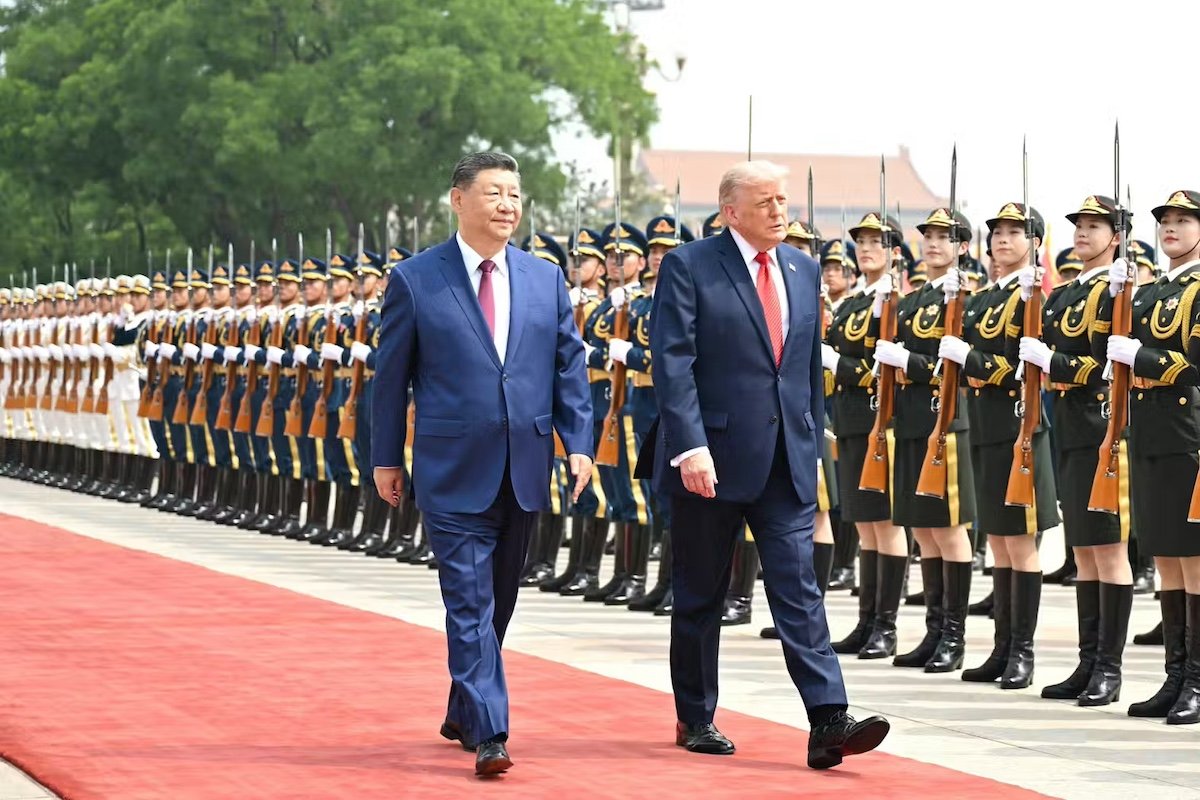
When American and Chinese presidents meet, the script usually casts Beijing as the supplicant, eager for recognition from the world's dominant power. But when Donald Trump lands in Beijing on May 14 for his first of four planned meetings this year with President Xi Jinping, the roles will be reversed. Trump arrives in a position of weakness, driven by his need for Chinese assistance to extricate himself from a costly war with Iran.
This summit was originally framed as the moment Trump and Xi would cement the trade-war truce they declared last October. The Peterson Institute for International Economics estimates that tariffs have settled at an average of 47.5% on Chinese imports to the United States and 31.9% on American goods entering China. A new dispute-resolution mechanism may still emerge, but trade is no longer the headline issue.
Iran Takes Center Stage
The core of the Beijing talks will be Iran: how to manage Tehran's nuclear ambitions and how to secure a deal that allows oil tankers to transit the Strait of Hormuz, currently blockaded by both Iranian and American forces. Trump's war, launched more than two months ago, has spiraled into a strategic quagmire. As Trump's Iran war claims unravel, he needs a face-saving exit.
China is uniquely positioned to deliver. It is the only major power that maintains strong ties with Iran and has the capacity to oversee a nuclear agreement. Unlike Russia, which has been a direct military partner to Tehran, China has preferred indirect influence. It continues to buy Iranian oil, and it has encouraged Pakistan to act as a mediator. On May 6, Beijing hosted Iranian Foreign Minister Abbas Araghchi for talks that were clearly not a courtesy call. Pakistan's role as a Chinese proxy in the Gulf adds another layer to Beijing's quiet diplomacy.
It would not serve China's interests to humiliate Trump by flaunting its leverage. As the world's largest oil importer, China shares with the United States, Europe, and others a desire to reopen the Strait of Hormuz and stabilize oil prices. Demonstrating a willingness to cooperate on nonproliferation also helps Beijing burnish its image as a force for stability—a reputation badly tarnished by its support for Russia's war in Ukraine.
The Taiwan Question
The danger is that Xi's newfound leverage over Trump could embolden him on Taiwan. An overconfident Xi might press for reduced American arms sales to Taipei, or even consider a blockade or invasion. Yet the examples of Russia in Ukraine and America in Iran have shown the costs of military adventurism. Xi is more likely to wait for Taiwan's next presidential election in January 2028, hoping for a leader more amenable to Beijing than the pro-independence figures of the past decade.
In private, Xi will likely press Trump to scale back weapons sales to Taiwan as an unstated quid pro quo for help on Iran. The summit's agenda thus weaves together oil, nuclear proliferation, and the future of cross-strait relations.
Neither Giant Is Strong
The irony of this supposed summit of giants is that neither country is in a strong position. For years, Xi's propaganda machine has pushed the narrative of American decline and Chinese ascent. But the economic data tells a different story. China's GDP peaked at 77% of America's in 2021 and has since fallen to just over 60%, dragged down by a property crash and demographic decline. The United States, powered by technology investment, has pulled ahead.
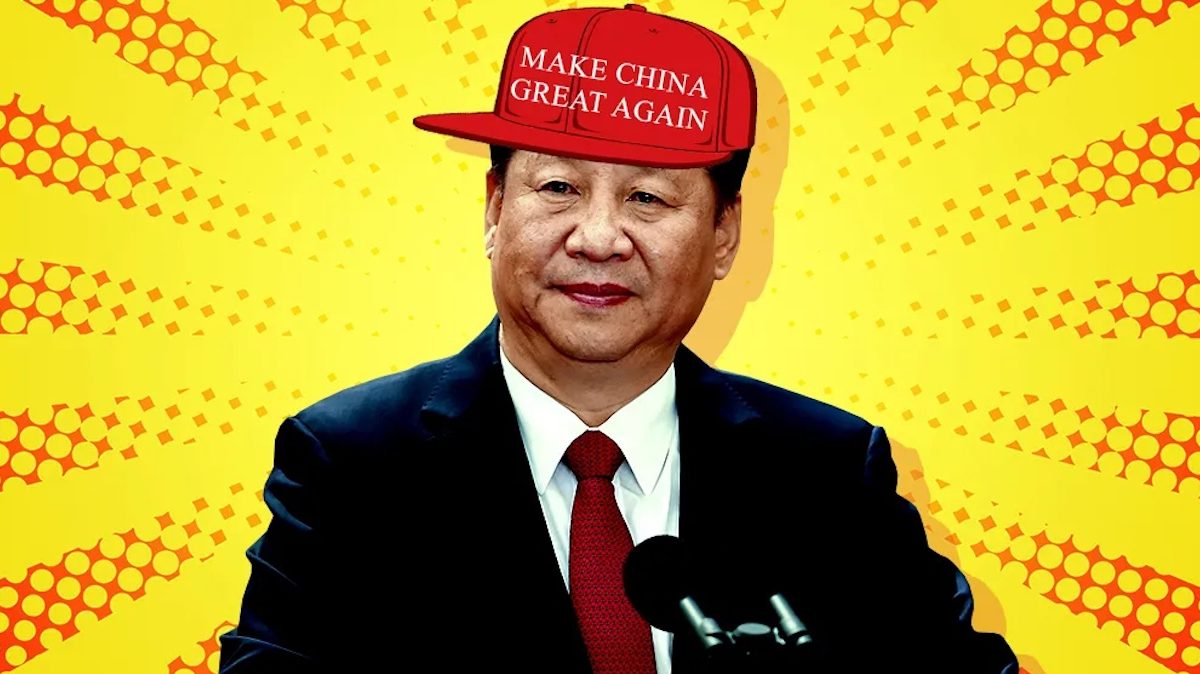
Yet Trump's own actions have given the Chinese narrative a veneer of credibility. His "Make America Great Again" agenda has systematically damaged the security alliances in Europe and Asia that underpinned American power for 80 years. He has made the United States appear less reliable, less predictable, and less willing to lead. The summit reflects US strategic drift more than it does Chinese ambition.
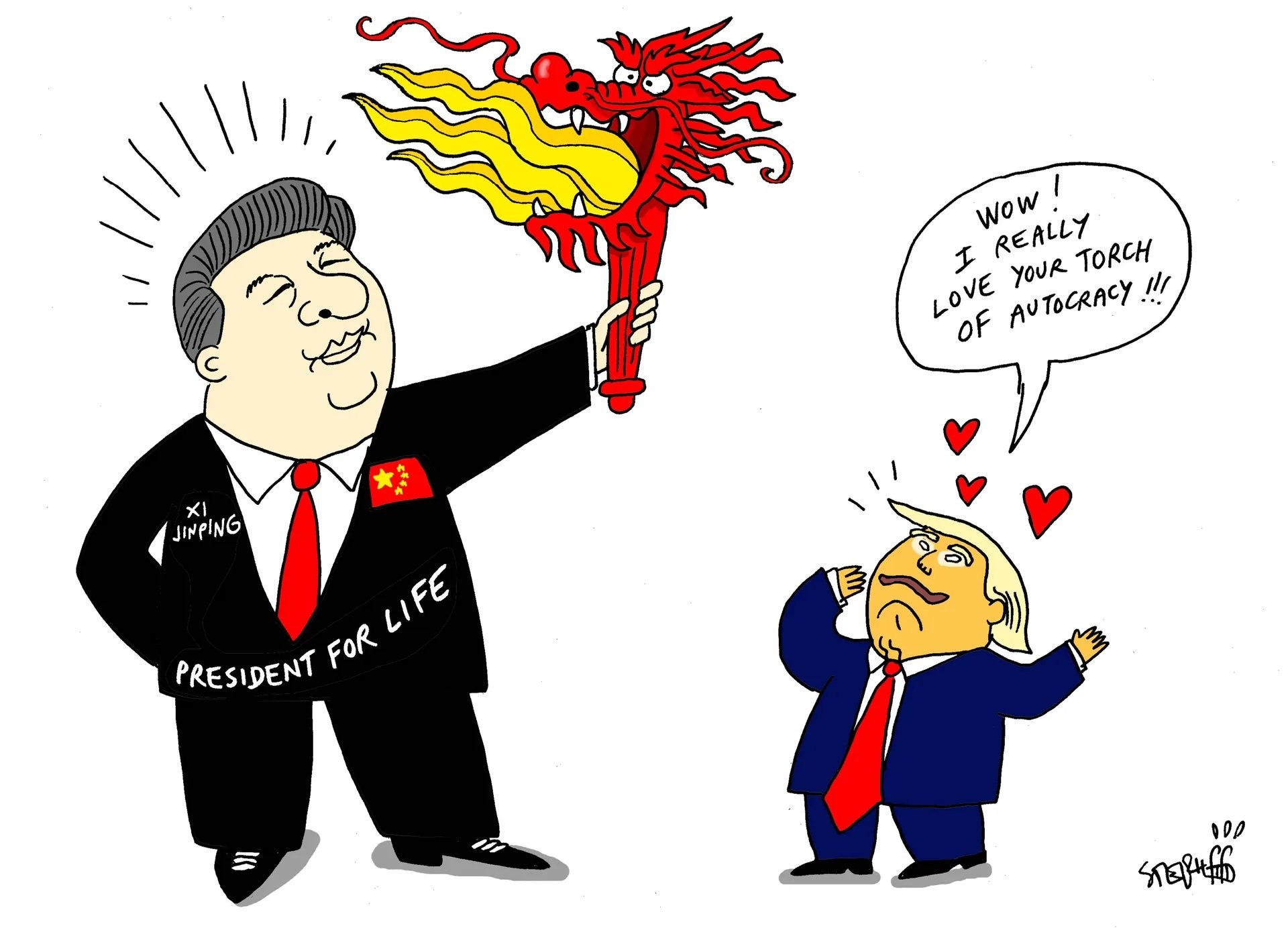
Trump arrives in Beijing not as a master of the universe, but as a leader in need of a lifeline. Xi, for his part, will offer help—but at a price. The question is whether that price includes Taiwan's security, and whether Trump is willing to pay it.