Since 2014, analysts have debated whether China seeks to establish its own version of the Monroe Doctrine, asserting dominance over the South China Sea and beyond. Early skeptics pointed to Deng Xiaoping's principle of "hiding strength and biding time," suggesting Beijing aimed for benign global integration. But the evolution of Xi Jinping's Belt and Road Initiative from an economic project into a strategic tool for power projection has shifted the calculus. Today, China's militarization of the South China Sea and its claims to over 80% of the waterway leave little doubt about its intentions.
President Donald Trump's second term has accelerated this trajectory. His administration's 2026 National Defense Strategy effectively concedes Chinese influence up to the First Island Chain, seeking a "decent peace" rather than confrontation. The US military quagmire in Iran—a war widely criticized as illegal—has exposed the limits of American power and left Washington scrambling. Trump's redeployment of three carrier strike groups and two expeditionary strike groups to the Middle East has drastically reduced the US naval presence in the Indo-Pacific, including the removal of THAAD missile defense systems from South Korea and Patriot batteries from around the region.
China's Strategic Exploitation
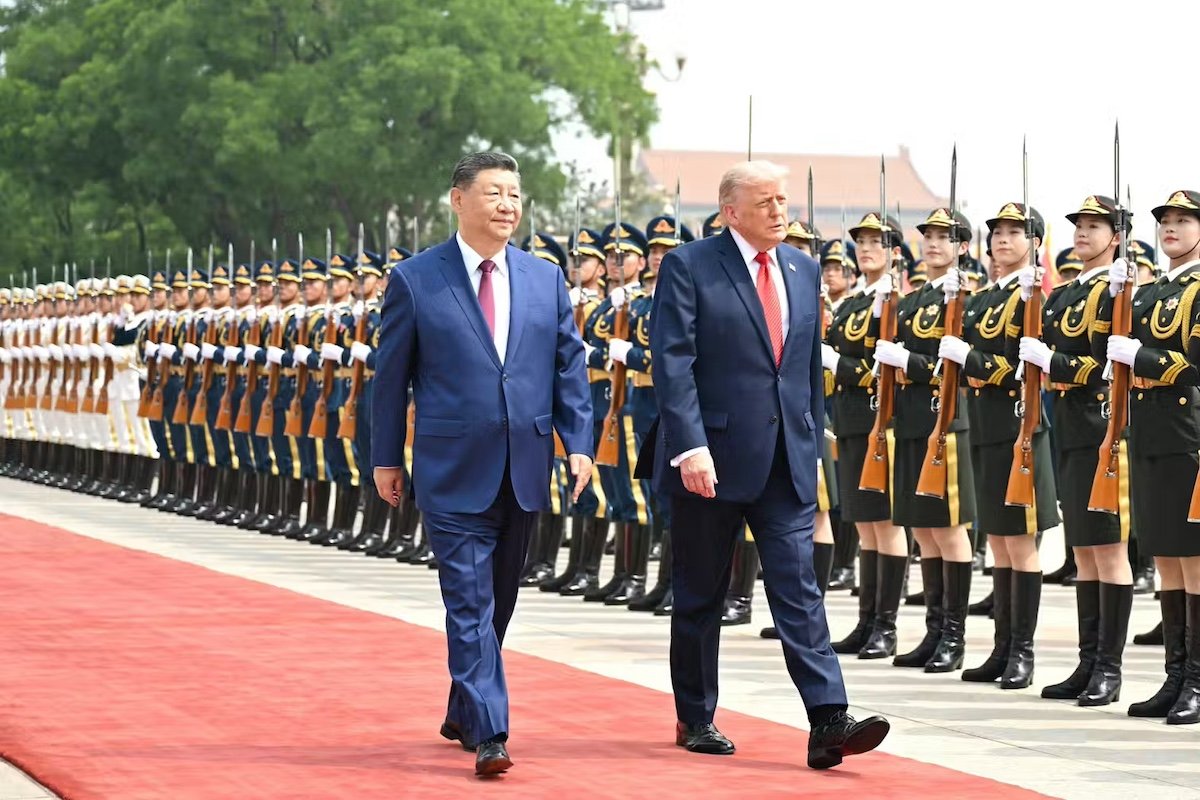
Beijing is capitalizing on this vacuum. Satellite imagery confirms rapid, large-scale land reclamation on Antelope Reef in the Paracel Islands, just 162 miles from Sanya Port in Hainan. This expansion, coupled with continued militarization of the South China Sea, signals China's intent to push its influence toward the Second Island Chain. The Trump-Xi summit in Beijing will thus be a meeting of a weakened US president and a strategically patient Chinese leader.
Trump's personal failings compound the problem. A reality TV star and real estate investor, he lacks the temperament for global leadership. His second-term cabinet, filled with sycophants from his favorite TV channel, lacks the restraining "adults in the room" of his first term. Secretary of War Pete Hegseth, a former Fox News host, has hectored allies and gloated over destruction, further alienating partners. The administration's surprise at Iran's weaponization of the Strait of Hormuz—and the farcical "Project Freedom" operation, announced on May 4 and paused within 48 hours—underscores its incompetence.
Trump's war of choice against Iran has become a quagmire. Despite his repeated claims of victory, the Strait of Hormuz remains contested, and his poll numbers are eroding even among supporters. The international order is perturbed, with some commentators comparing the instability to pre-World War II tensions. Trump's failure to consult NATO allies before attacking Iran—and his subsequent complaints about their lack of cooperation—has further damaged US credibility.
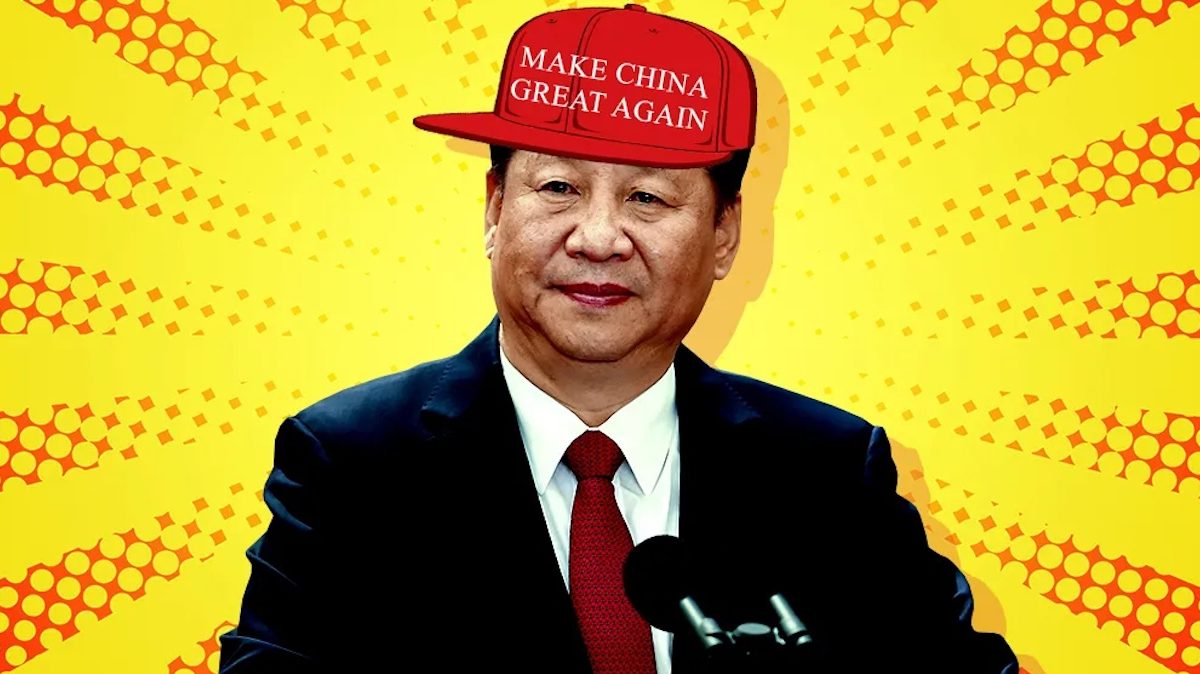
For China, this is a historic opportunity. The summit will likely see leverage economics replace the rules-based order, as Beijing pushes for recognition of its sphere of influence. The US pivot to Asia, initiated under Barack Obama, has been abandoned. Trump's visit to Beijing will not replicate Nixon's 1972 breakthrough; instead, it will highlight a power shift in the Indo-Pacific.
China's ambitions are not limited to the South China Sea. The rise of the petroyuan amid the Iran war threatens the dollar's dominance, while new US sanctions on Chinese firms may backfire as leverage. As the US Navy focuses on the Middle East, China continues to build its blue-water navy and expand its influence from the Indian Ocean to the Pacific. The Trump-Xi summit in Beijing is not just a diplomatic meeting; it is a recognition that the era of Pax Americana in Asia is giving way to a new order.