The US-Israel military campaign against Iran has not merely diverted attention from other global crises but has acted as a brutal accelerator of history, fundamentally rupturing the Middle East's security architecture and accelerating the very realignment it sought to prevent. In the war's destructive wake—marked by the paralysis of the Strait of Hormuz, oil prices spiking above US$110 per barrel, and Iranian retaliation striking deep into Gulf territories—the longstanding bargain that defined the region has collapsed.
The premise that the United States would guarantee Gulf security in exchange for the petrodollar has been exposed as a mirage. US assets came under direct attack, and its protective umbrella proved unable to prevent an existential economic shock to its allies. Consequently, the outlook for China becoming the Gulf states' principal economic and political partner—the United Arab Emirates being the sole exception—has shifted from a distant possibility to a near-term imperative. The petroyuan is emerging as a viable successor to the petrodollar, with Iran and Russia playing pivotal, albeit contrasting, roles in this new order.
Security Guarantee Unravels
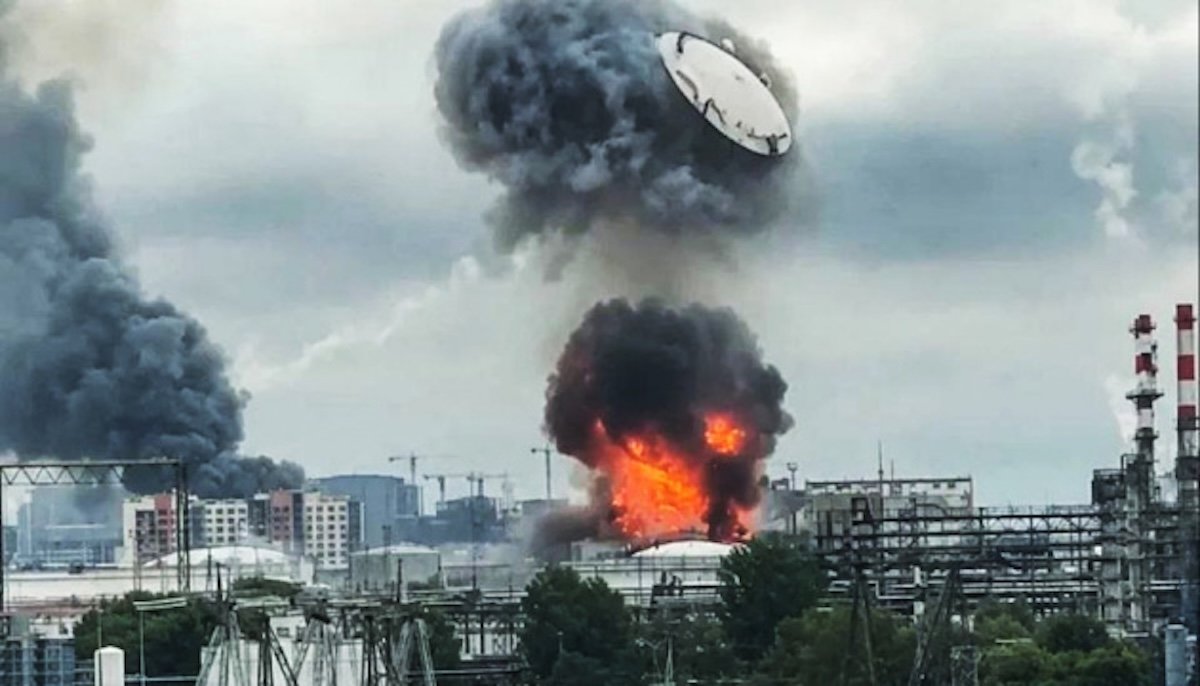
The war has fundamentally reset threat perceptions across the Gulf, shredding the previous logic of strategic hedging between Washington and Beijing. For decades, Gulf states assumed that while they traded east, their security ultimately resided with the US fleet. The 2026 conflict has shattered that assumption. The closure of the Strait of Hormuz, through which one-fifth of global oil passes, and Iranian strikes on ports, energy terminals, and even commercial landmarks in the UAE—including the Burj Al Arab hotel—demonstrated that the US was either unwilling or unable to prevent retaliatory devastation of the Gulf's economic crown jewels.
With 13 US bases in the region rendered vulnerable or nearly uninhabitable at the peak of the fighting, the security guarantee proved a strategic liability rather than an asset. This has created a power vacuum that Gulf states are desperate to fill, not necessarily with a new security umbrella, but with a diversified set of partnerships that guarantee de-escalation. China, which avoided military entanglement while maintaining open channels to Tehran, has emerged as the indispensable diplomatic broker. Beijing's consistent call for dialogue and its refusal to endorse unilateral Western drafts at the UN Security Council, preferring instead to co-sponsor resolutions with Russia, positions it as the only major power trusted by both sides to manage the post-war transition.
Petroyuan as Conflict-Driven Necessity
Within this devastated landscape, the economic transition from the petrodollar to the petroyuan is no longer a theoretical, gradual shift but an immediate, conflict-driven necessity. The war has become the catalyst Deutsche Bank warned of, forcing a fracture of the global oil pricing system along geopolitical corridors. During the hostilities, Iran began conditioning safe passage for oil tankers through the Strait of Hormuz on payments made in Chinese yuan, effectively weaponizing the currency to break the dollar's monopoly. This tactical move has structural implications for oil trading. With Saudi Arabia now selling four times as much oil to China as to the US, the logic of settling those massive transactions in dollars is increasingly tenuous.
The physical damage to Gulf infrastructure—including Qatar's Ras Laffan LNG facility and Saudi Arabia's Ras Tanura refinery—has necessitated a massive influx of reconstruction funds, capital China is ready to provide through Belt and Road financing denominated in yuan. Furthermore, the war has accelerated the operationalization of alternatives such as mBridge, a blockchain-based platform linking the Chinese and UAE central banks, enabling direct non-dollar settlements. With the US having demonstrated its willingness to weaponize the SWIFT transfer system and the dollar, Gulf states are now actively pursuing a multipolar financial system as an insurance policy. The petrodollar is not yet dead, but its dominance has been mortally wounded; the petroyuan, already accounting for a meaningful share of sanctioned oil flows, is poised to become the principal currency for Asia's energy trade corridor.
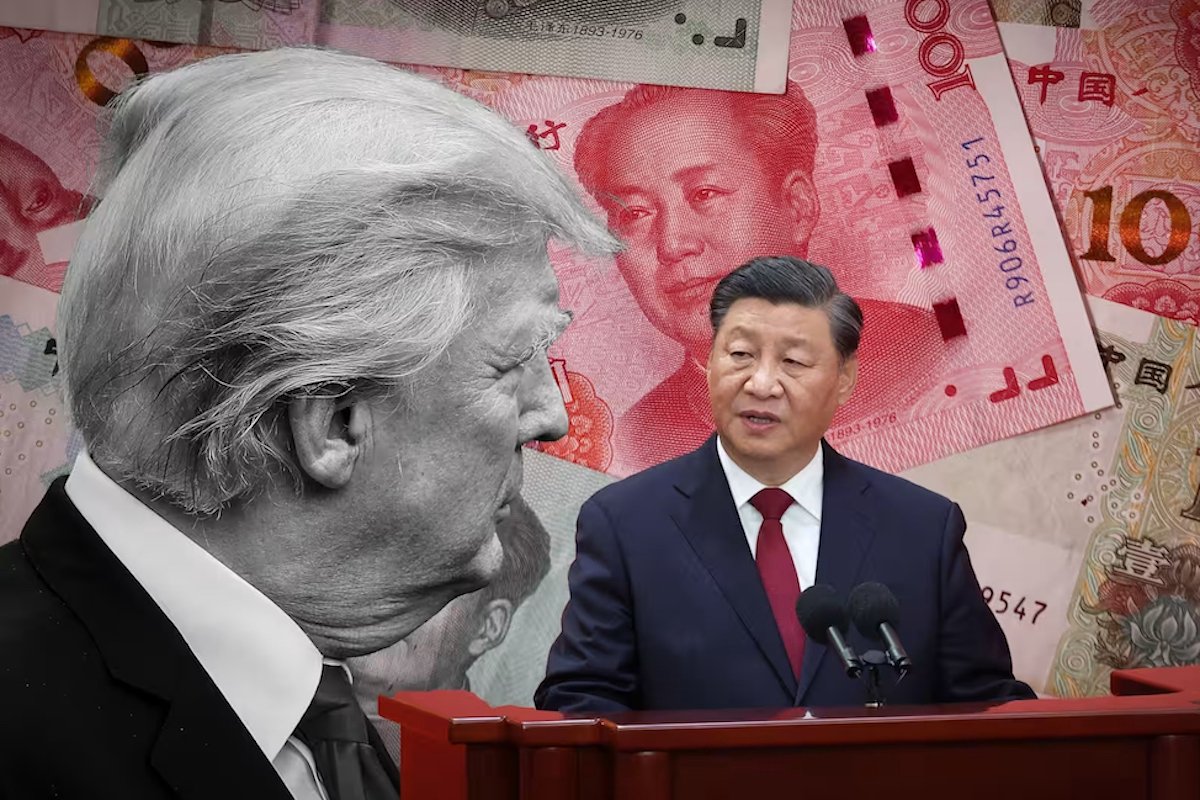
This shift is directly relevant to the upcoming Trump-Xi summit in Beijing, where Iran oil, Taiwan, and trade tensions are on the agenda. The petroyuan's rise adds a new dimension to US-China economic competition.
Iran and Russia: Antagonists and Architects
In this reshaped environment, Iran and Russia play both antagonistic and essential roles. For Iran, devastated by the war and the loss of its Supreme Leader, survival depends on cementing its relationship with China. Tehran views the post-war Neighborhood Policy in the Gulf through a distinctly Chinese lens: it is not friendship but a managed detente necessary to prevent a unified Arab-Israeli air defense system backed by the US. While Iran has attacked UAE and Qatari targets fiercely, it has shown restraint toward Saudi Arabia and Oman, recognizing that Beijing needs overall regional stability. Iran's proposal for joint maritime patrols in the Strait of Hormuz—potentially including tolls paid in yuan—represents a Chinese-mediated compromise to reopen the waterway without handing full control back to the US Navy.
Russia, meanwhile, acts as the co-architect of the resistance axis and a military spoiler. Unlike China, Russia has shared intelligence and military technology with Iran during the conflict to bleed US resources, viewing Tehran as a partner in defiance in a broader war against Western unipolarity. However, Russia lacks the financial capacity to reconstruct the Gulf. Instead, Moscow plays a negative role: leveraging its veto power in the UN alongside China to block resolutions unfavorable to Tehran, while selling advanced weaponry to Gulf states as an alternative to US systems. The Gulf will turn to China for economic security, but may rely on Russia for a counter-hegemonic political voice and arms diversification.
This dynamic is further complicated by new US sanctions on Chinese firms, which could be leverage for Trump or overreach before the summit. The petroyuan's rise, as detailed in Iran's use of petroyuan tariffs, is reshaping global energy trade.
In conclusion, the aftermath of the US-Israel war on Iran has accelerated the collapse of the old US-led order and cleared the path for a Chinese-centric economic architecture in the Gulf. The petroyuan's rise, driven by conflict, is now a tangible reality that will dominate discussions at the Trump-Xi meeting and beyond.