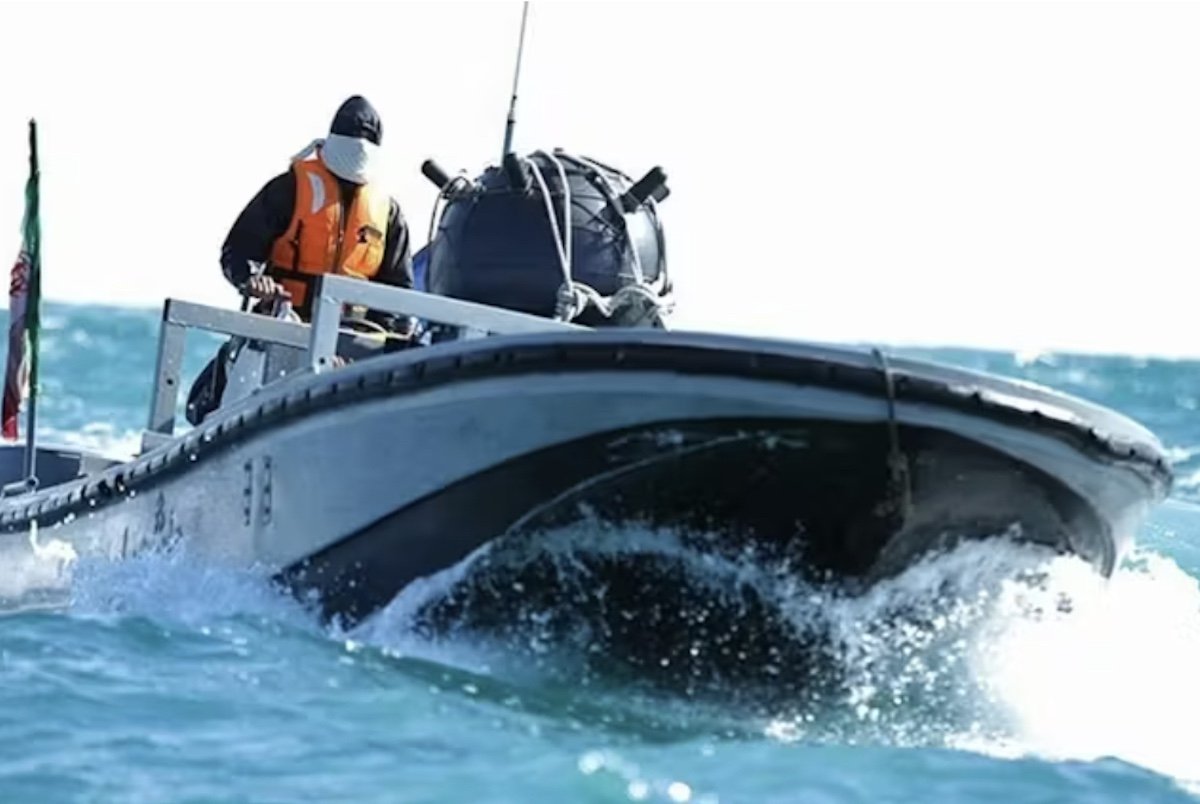
US military officials have confirmed that the Navy has initiated mine-clearing operations in the Strait of Hormuz, a narrow waterway that serves as a vital conduit for global oil and liquefied natural gas shipments. Iranian forces have deployed a limited number of mines in the strait, adding a new layer of threat alongside their existing missile and drone capabilities.
The development comes after the US Navy decommissioned its dedicated minesweeping vessels previously stationed in the Persian Gulf. However, the service retains other platforms—including aircraft and surface ships—capable of detecting and neutralizing mines. The current effort leans heavily on artificial intelligence to process sonar data and identify threats more rapidly than human analysts alone.
Modern Mines: Beyond the Hollywood Image
Naval mines have evolved far beyond the floating spheres depicted in films like Godzilla Minus One. Today’s mines are often sophisticated devices that combine multiple sensors—magnetic, acoustic, and pressure-based—to distinguish between target vessels and decoys. Some are programmed to ignore a set number of passing ships before detonating, a tactic designed to defeat sweeping attempts and strike high-value targets such as oil tankers or warships.
Iranian models such as the Maham 3 and Maham 7 exemplify this trend. The Maham 3 uses both magnetic and acoustic sensors, while the Maham 7 is a bottom mine that rests on the seabed, making it difficult to detect in shallow waters. The Manta mine, used by Iraq during the 1991 Gulf War, is another low-profile bottom mine that can be deployed from small vessels or aircraft. These weapons are relatively easy to lay and can cause disproportionate disruption to shipping lanes.
More advanced designs include rising mines, which sit on the seabed and launch upward toward a target once detected. Such mines pose a particular challenge because they can engage vessels from below, where hull protection is weakest.
AI in the Detect-Classify-Identify Pipeline
Mine detection is essentially a wide-area sonar search. Uncrewed surface vehicles tow a sonar platform—often called a towfish—at a fixed height above the seabed. The towfish carries side-scan sonar that produces images of the seafloor. These images are then processed by automatic target recognition algorithms that classify contacts as either mine-like objects or benign debris.
“The key advantage of naval mines is not just the damage they can cause, but the time and resources required to find and clear them,” said a computer scientist specializing in mine detection. “Even the possibility of mines can disrupt shipping and force extensive clearance operations.”
The US Navy also operates undersea drones such as the MK 18 Kingfish, which is equipped with sonar for mine detection. Military officials have indicated that these drones will join the effort in the Strait of Hormuz. The British Royal Navy is reportedly preparing to send a similar towed sonar array to the region.
Artificial intelligence techniques, including machine learning, are being applied to improve detection rates. Early methods segmented sonar imagery into regions of bright highlights and acoustic shadows. Newer statistical approaches model the seabed and identify anomalies that deviate from the norm. Template-matching algorithms compare sonar signatures against known mine profiles, while deep learning networks can be trained to recognize mines in varied conditions.
Despite these advances, the process remains labor-intensive. After initial detection, divers or camera systems must provide high-confidence identification to confirm the presence of a mine. This detect-classify-identify pipeline is designed to minimize false positives while ensuring that real threats are neutralized.
Strategic Implications for Asia
The Strait of Hormuz is a chokepoint for energy supplies to major Asian economies, including China, India, Japan, and South Korea. Any sustained disruption could drive up oil prices and threaten food security, as the region is also a key route for fertilizer shipments. Strait of Hormuz Disruptions Threaten Asia's Fertilizer Supply and Food Prices.
The current mine-clearing operation underscores the broader strategic competition between Washington and Tehran. Iran has long used the threat of mine warfare as a low-cost asymmetric tool to counter US naval superiority. US Military's Costly Dilemma: Million-Dollar Missiles vs. Iran's Cheap Drones highlights the economic asymmetry that also applies to mine countermeasures.
For Asian nations that rely on stable sea lanes, the outcome of this standoff carries direct consequences. US-Iran Stalemate in Hormuz Strains Alliances, Reshapes Asian Energy Security examines how prolonged tensions could force Tokyo, Seoul, and New Delhi to reassess their energy security strategies.
The use of AI in mine detection is not just a technical innovation—it reflects a broader shift toward automation in naval warfare. As mines become smarter and more difficult to sweep, navies across the Indo-Pacific are investing in uncrewed systems and machine learning to maintain freedom of navigation.