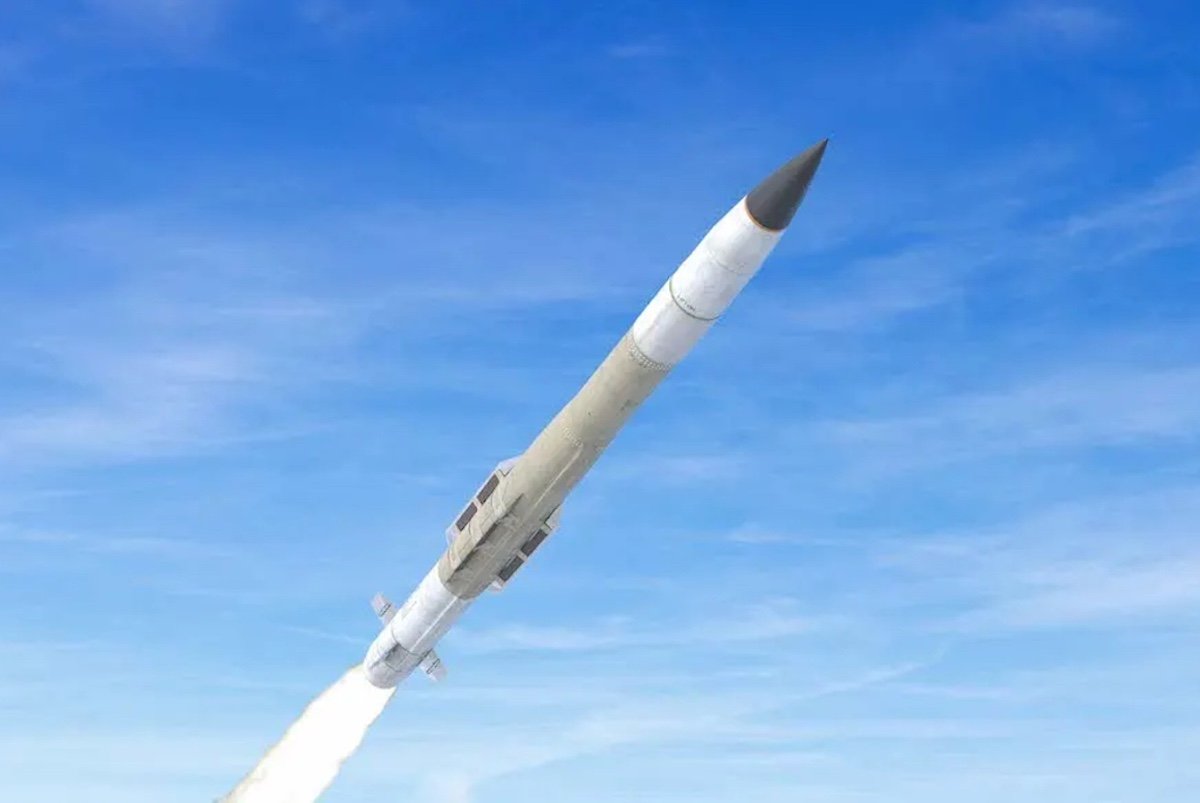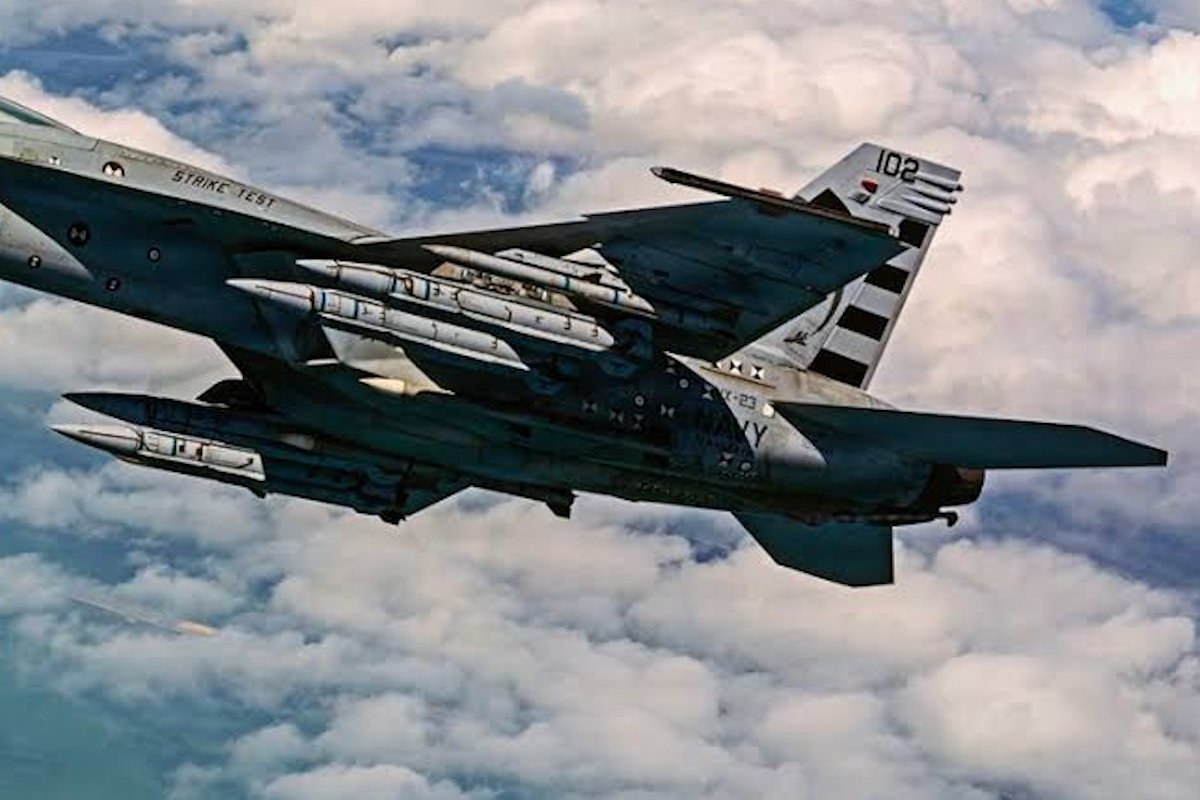
The US Navy has officially introduced the AIM-424 "Malice," a next-generation long-range air-to-air missile developed by Raytheon, aimed at countering China's carrier-killer aircraft across the Indo-Pacific. Announced at the August 2026 Tailhook Symposium, the weapon weighs 680 kilograms and measures 4.11 meters, with a range exceeding 463 kilometers—filling the gap left by the retired AIM-54 Phoenix.
Extending the defensive perimeter
By employing a two-stage solid-propellant propulsion system, the AIM-424 retains terminal maneuverability at extreme distances, enabling it to intercept hostile bombers, airborne early-warning platforms, and tankers before they can launch anti-ship missiles at US carrier strike groups. The missile integrates seamlessly with current and future aviation fleets; recent flight tests confirm it can be carried internally by F-35C stealth fighters and externally by F/A-18E/F Super Hornets, with planned compatibility for sixth-generation platforms.
US Navy and industry officials describe the weapon as a "generational leap" in air dominance, reportedly outranging all known adversarial threats. By pushing interception opportunities hundreds of kilometers farther out, the AIM-424 could expand the fleet's defensive perimeter while giving US fighters greater scope to disrupt the targeting networks that support long-range anti-ship strikes.
Targeting the kill chain
The AIM-424 is designed not merely to counter longer-range anti-ship missiles but to attack the distributed airpower and targeting networks that allow China to threaten US carriers from beyond traditional fleet-defense envelopes. China's H-6J strategic bomber, armed with six YJ-12 supersonic anti-ship missiles with a 460-kilometer range, is built to attack US carrier strike groups from beyond the reach of Aegis missile defenses. Tactically, these bombers would operate alongside H-6G electronic warfare variants tasked with jamming adversary ship and airborne radars to overwhelm defenses.
Beyond striking H-6J bombers, the AIM-424 could be employed against critical nodes in the kill chain—the assets, processes, and people required to guide a missile to its target. Such nodes include airborne warning and control system (AWACS) aircraft, such as the KJ-3000, which serves as a key network node for China's power projection in the Pacific. The KJ-3000 is reportedly capable of directing long-range anti-ship missiles, including the YJ-12 launched from H-6J bombers. Losing an AWACS aircraft could force H-6J bombers to search for and track US carriers with their onboard sensors, possibly bringing them within range of US fighters and fleet air defenses.
Aside from threatening bombers and AWACS aircraft, the AIM-424 could be used against China's aerial tankers—crucial assets in enabling force projection beyond the Second Island Chain, which runs down Japan's Ogasawara Islands, Guam, the Marianas, Palau, and parts of Micronesia. The missile complements the AIM-260 Joint Advanced Tactical Missile (JATM): with a range exceeding 463 kilometers, the AIM-424 is optimized for long-range fleet defense and disruption of enemy kill chains, while the AIM-260, with a range exceeding 193 kilometers, serves as the standard tactical air-dominance successor to the AIM-120 AMRAAM.
A broader shift in air and maritime defense
China's PL-17 reflects a similar logic, using extreme-range air-to-air engagement to threaten high-value support aircraft such as tankers and early-warning platforms. With a reported range of about 402 kilometers, it falls slightly short of the AIM-424's more than 463 kilometers. Meanwhile, its roughly six-meter length restricts it to external carriage on fighters such as the J-16. That limitation underscores how both sides increasingly rely on third-party sensing and targeting networks to exploit such weapons at extreme ranges.
The systems point to a wider shift in air and maritime defense: as weapons gain range, the contest increasingly moves from intercepting missiles after launch to disrupting the platforms and networks that enable them beforehand. While shipboard defenses such as electronic warfare, chaff and flares, and hard-kill measures such as interceptor missiles and close-in weapons systems (CIWS) remain necessary, they face increasing difficulty against such weapons, which drastically compress target reaction time and significantly reduce the chance of a successful interception.
In that sense, the AIM-424 represents less a wholly new concept than a technological return to the Cold War Outer Air Battle: destroy the launch platform and its supporting network before the carrier strike group is forced to defend against the weapon itself. In that doctrine, the US fielded long-range fighters and missiles, such as the F-14 with the AIM-54 Phoenix, to intercept enemy bombers before they launch anti-ship cruise missiles (ASCM), thereby ensuring carrier strike group survivability against emerging near-peer threats.
But the AIM-424 creates a paradox: the farther the US pushes the outer air battle from the carrier, the more dependent the missile becomes on the very sensing, networking and battle-management architecture China is seeking to destroy. As Philip Sheers noted in a March 2026 Center for a New American Security (CNAS) report, dedicated Air Battle Management (ABM) platforms serve as the indispensable "quarterback" for US air operations in priority Indo-Pacific scenarios. Regarding airborne ABM assets, Sheers mentions aircraft such as the E-2 Hawkeye, E-3 Sentry, and E-7 Wedgetail as the connective tissue of US air operations.
The development of the AIM-424 also comes amid broader concerns about US carrier availability in the region. As carrier shortages strain Indo-Pacific deterrence, the missile's ability to extend the defensive perimeter could help mitigate the impact of fewer hulls. Meanwhile, China's own naval modernization, including missile-heavy frigate upgrades, underscores the ongoing competition in maritime strike and defense capabilities.
The AIM-424's emphasis on disrupting kill chains also resonates with broader shifts in regional defense cooperation, such as the deepening India-Japan defense ties and the Mecca Defense Pact, which reflect a multipolar security landscape. As the US and its allies adapt to new threats, the outer air battle concept is being revived with modern technology, ensuring that the contest for air superiority in the Indo-Pacific remains as dynamic as ever.