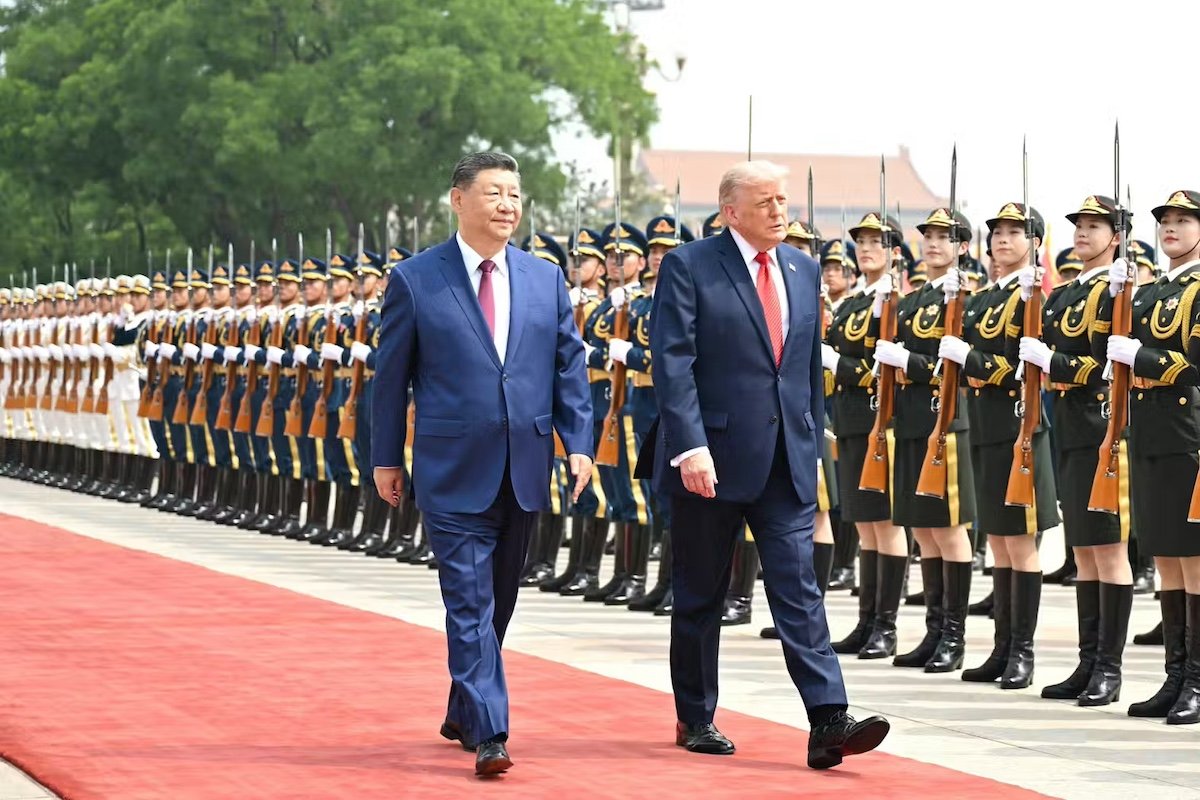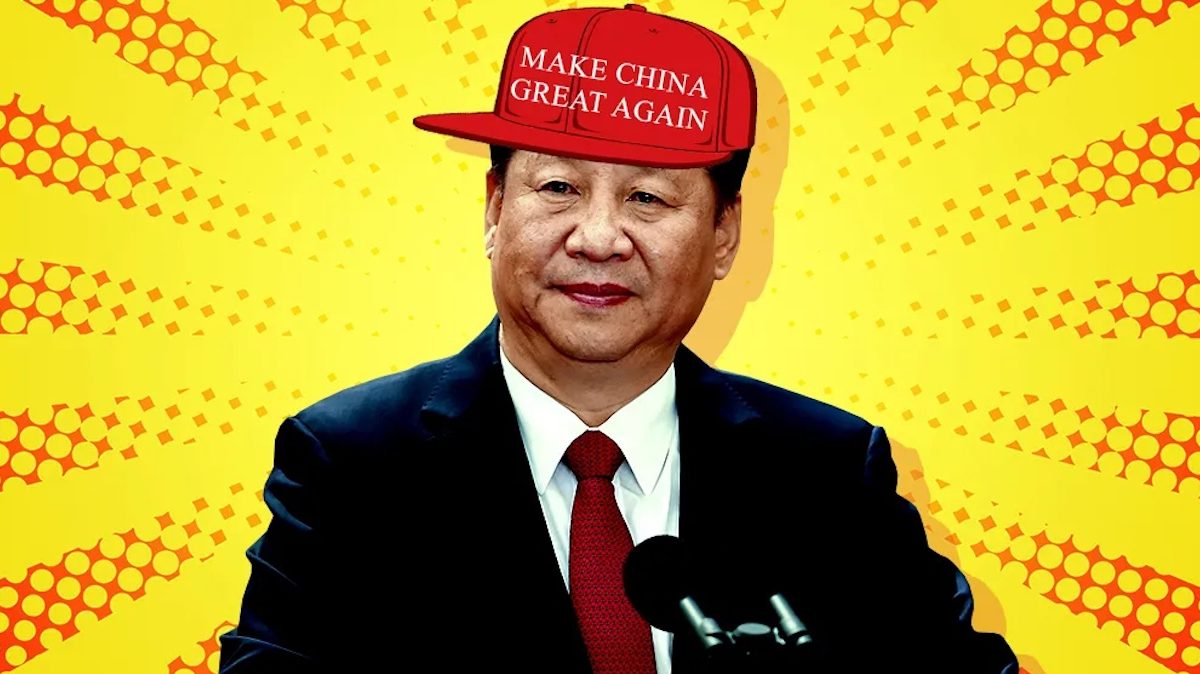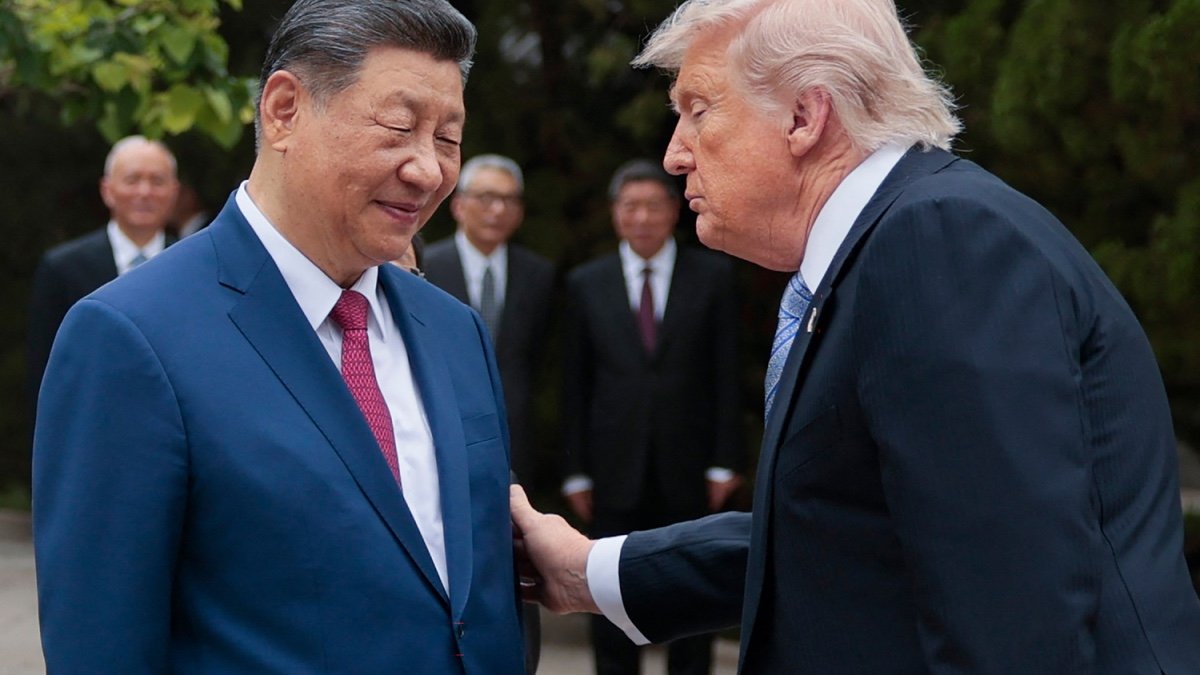
At last month's summit between Chinese President Xi Jinping and U.S. President Donald Trump in Beijing, the most significant outcome was not a tangible agreement but a new conceptual framework. Xi unveiled a fresh tífǎ—an authoritative formulation—for the bilateral relationship: "constructive strategic stability."
For the Chinese Communist Party, such formulations are more than rhetorical flourishes. They serve as strategic signals, conveying the leadership's priorities, historical judgments, and policy directions at critical junctures. Under Xi, tífǎ have been deployed across domains from foreign policy to ethnic minority affairs, marking shifts in ideological terrain and political agenda-building.
Four Pillars of a New Approach
According to state outlet Xinhua, the new formulation rests on four layers: "positive stability with cooperation as the mainstay," "stability with moderate competition," "stability with manageable differences," and "enduring stability with promises of peace." Foreign Minister Wang Yi later elaborated, emphasizing that "positive stability with cooperation as the mainstay" should be the baseline condition, reflecting deep economic interdependence where "neither can cut the other out, nor prosper without the other."
"Stability with moderate competition," Wang explained, signals Beijing's preference for guardrails to ensure competition "is kept within proper limits and is not turned into a zero-sum game." He defined the "bottom line" as mutual respect for each other's social systems, development paths, core interests, and right to development. Only if this line is respected can the relationship achieve "enduring stability."
From Reluctance to Embrace of Guardrails
This formulation marks a notable shift. During much of the Biden administration, it was Washington that pushed for guardrails, while Beijing—perceiving the U.S. as a declining power—showed little interest. Xi's March 2021 declaration that "time is on our side" reflected that confidence. Now, with Trump back in the White House, China's view of U.S. decline has not changed but has been augmented by a perception that the U.S. is more prone to "use war and conquest and the threat of war" to compensate for its waning economic competitiveness.
Jin Canrong, vice dean of the School of International Studies at Renmin University, argues that "America's current toughness and arrogance do not reflect a true rise in strength" but rather demonstrate the acceleration of its decline through "self-depletion" of military, economic, and diplomatic resources. In this context, as Wang put it, guardrails are now needed to ensure "the relationship should not be like a roller coaster."
Framing China as a Peer
More significantly, the new formulation positions China as a peer and equal of the U.S. in contributing to international order. Wang argued that "a positive outlook of China-US cooperation will provide more certainty for both countries' development and for the international situation," and that "constructive strategic stability" should "be a goal both sides uphold."
Zongyuan Zoe Liu notes the implication: "the United States should respect China's core interests, refrain from defining the relationship primarily as strategic competition and manage disputes within limits acceptable to Beijing." The Trump administration's apparent acceptance of this phraseology—if not its substance—will likely be seen in Beijing as a win in its drive to establish the "proper limits" of rivalry on its own terms.
This shift comes amid broader regional dynamics. The Quad's recent pivot to infrastructure, cables, and minerals underscores the competitive landscape in the Indo-Pacific. Meanwhile, Xi's open-door promise to U.S. CEOs has faded as China tightens capital and AI controls, highlighting the tension between cooperation and competition.
Dr. Michael Clarke, associate professor at Deakin University and adjunct associate professor at the Australia-China Relations Institute, University of Technology Sydney, authored the original analysis. The new tífǎ reflects a self-confident Beijing that sees itself as an equal architect of global stability—and is willing to set the terms of engagement accordingly.