For decades, military planners assumed that tanks, artillery, and infantry would remain the backbone of any serious army. The war in Ukraine has shattered that assumption. Drones—cheap, AI-guided, and increasingly autonomous—are now the dominant tool of combat, and any military that fails to adapt is effectively obsolete.
Ukraine’s intensive use of drones has allowed its forces to inflict casualty rates as high as 5 to 1 on the Russian army in recent months, while giving up little or no territory. According to estimates, around 96% of those casualties are caused by drones. In just the past year, Ukraine went from using a few thousand first-person-view (FPV) drones per day to using around 60,000. The shift is not incremental; it is revolutionary.
The Cost Calculus That Changes Everything
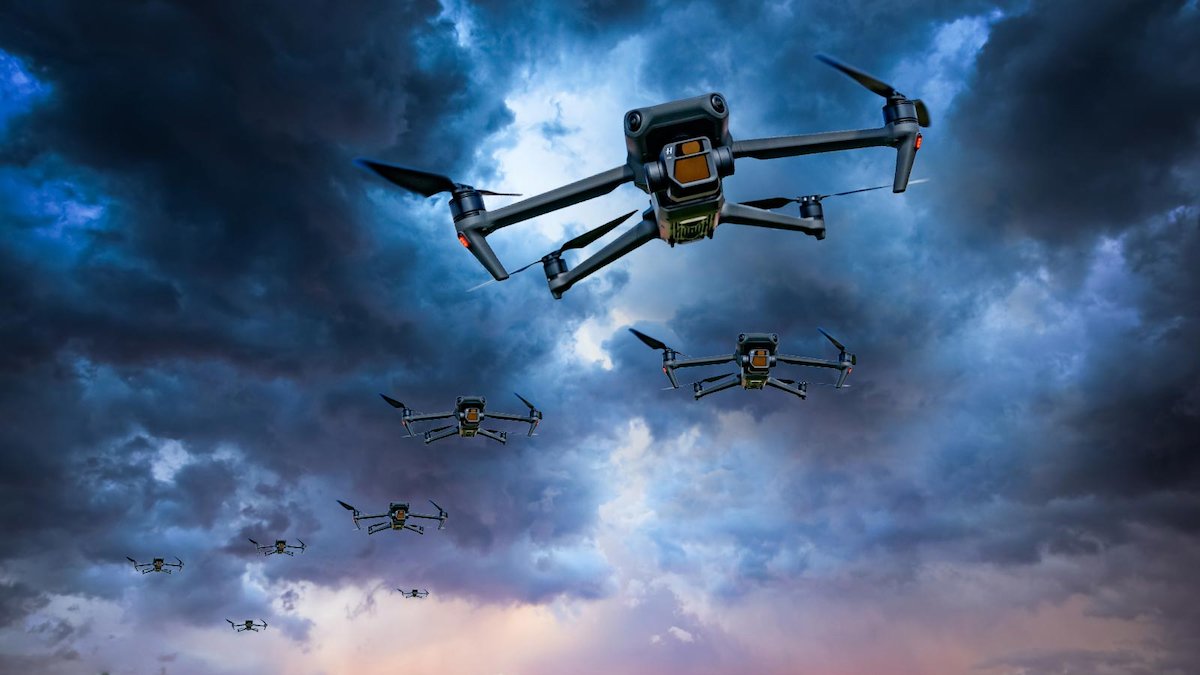
The core reason for this transformation is cost. Yaroslav Azhnyuk, founder and CEO of The Fourth Law, one of Ukraine’s leading drone startups, explained on the Latent Space podcast that drones are so cheap to mass-produce that they can overwhelm any expensive system. “The drones we manufacture in one day will be more than enough to destroy all the tanks Rheinmetall manufactures in a year,” Azhnyuk said, quoting his partner Alexey Babenko of VIARI Drone. “A drone is like $500, and a Rheinmetall tank is probably $5 million or more.”
Compare that to a 155mm artillery shell, which costs about $4,000 per piece. An FPV drone costs roughly $400. Azhnyuk argues that an FPV drone is “three orders of magnitude more versatile, more useful, more capable than artillery.” He calls it “the iPhone of warfare.”
This cost asymmetry has profound implications for the Indo-Pacific. The US Navy's drone swarm strategy is a high-stakes bet against China, but the economics favor the side that can produce drones at scale. China, with its vast manufacturing capacity, could potentially field drone swarms that dwarf any Western effort. Meanwhile, China's drone-launched mines could encircle Taiwan and entangle US forces, making the Taiwan Strait a testing ground for this new paradigm.
AI Takes the Controls
Perhaps the most underappreciated aspect of the drone revolution is the role of artificial intelligence. Azhnyuk’s company has been instrumental in automating drone operations. Instead of requiring a trained pilot with a complex remote controller—a skill that takes months to learn—soldiers can now use a smartphone. “You pick your smartphone, you say, ‘We are here. The bad guys are here. Go and get them,’” Azhnyuk explained. The drone then flies autonomously, localizes itself on a map, finds the target, bombs it, returns, and conducts damage assessment—all without human intervention.
This AI-driven autonomy is already being deployed in Ukraine, and it is spreading. The Azov Drone Patrols over Mariupol signal Ukraine’s expanding kill zone, demonstrating that drones can operate deep behind enemy lines with minimal human oversight. The implications for other theaters, from the South China Sea to the Korean Peninsula, are stark.
The Human Soldier’s Last Stand
The age of the human infantryman is rapidly drawing to a close. Simply surviving an FPV drone attack has become almost impossible for soldiers on the battlefield. The drone cordon is not yet so airtight that territory can be held without humans, but those humans now hide in dugouts for months at a time, terrified of emerging above ground lest they be instantly droned. Ground robots are developing quickly, and assaults can sometimes be conducted without any humans on the front line at all.
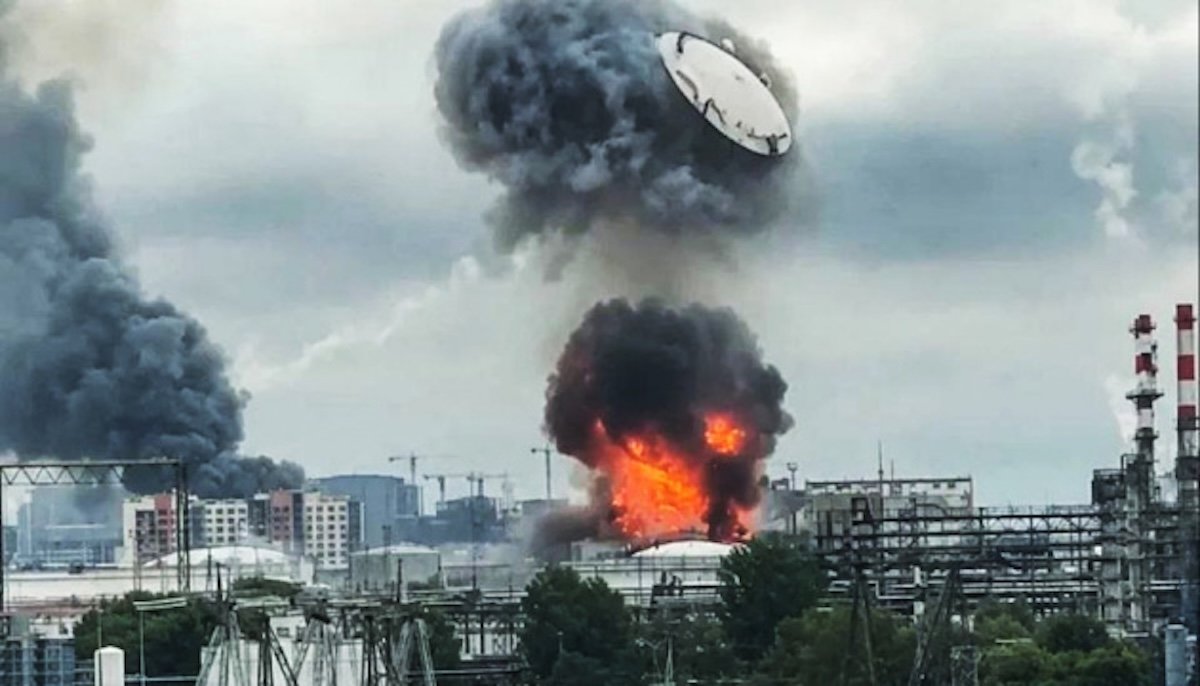
Drones are also replacing bombers and missiles as the primary tool for long-range strikes. Russia has been pounding Ukrainian cities with Iranian-made Shahed drones for years, but Ukraine is now fighting back. Ukrainian drones regularly destroy Russia’s oil infrastructure and military supply lines. In a recent escalation, Moscow was hit by over 1,000 Ukrainian drones, causing widespread damage and chaos.
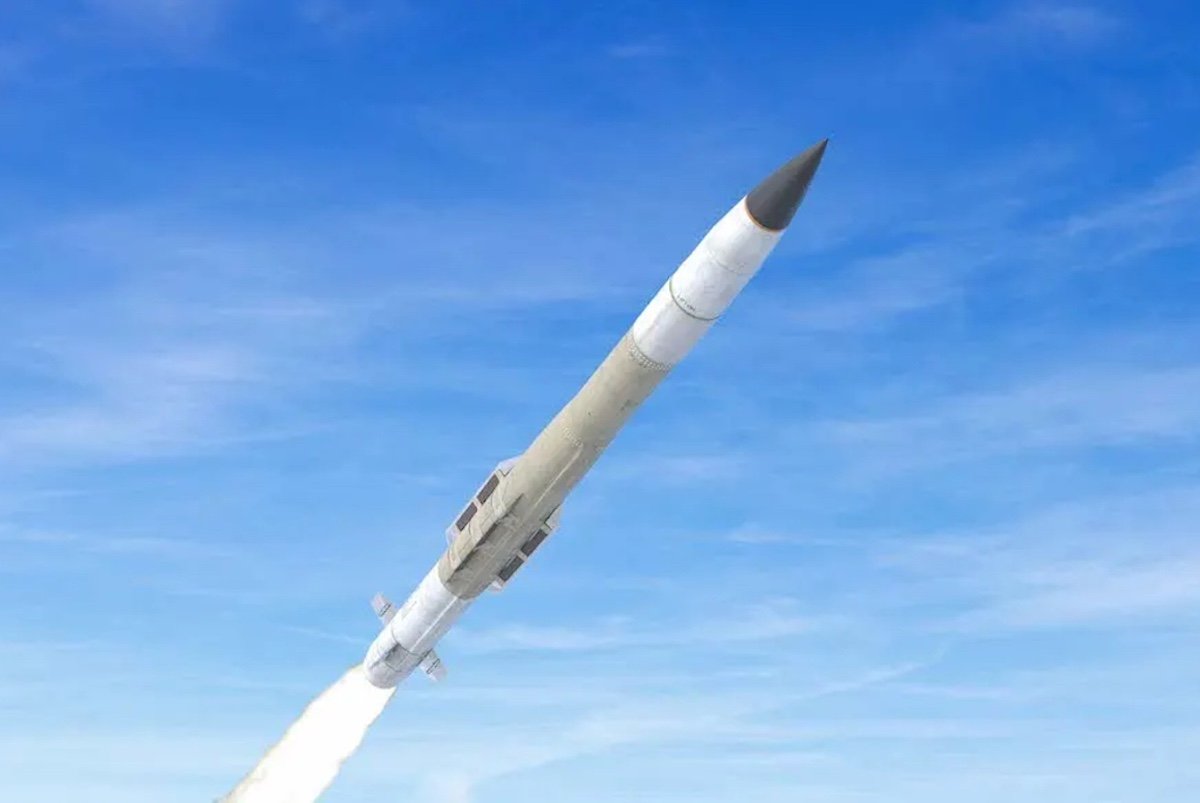
The US military's costly dilemma—million-dollar missiles versus Iran's cheap drones—highlights the broader challenge. Traditional air defense systems are designed to intercept expensive jets and missiles, not swarms of $500 drones. The math simply does not work in favor of the defender.
Lessons from History
This is not the first war in which drones have proven decisive. The Second Nagorno-Karabakh War in 2020 was a precursor, but Ukraine has been the true proving ground. As lessons from the chariot and composite bow remind us, military revolutions often come from cheap, scalable technologies that render expensive, complex systems obsolete. Drones are the chariot of the 21st century.
For Asian militaries—from India’s army along the Line of Actual Control to Japan’s Self-Defense Forces in the East China Sea—the message is clear. Investing in tanks, artillery, and traditional infantry formations without a parallel drone strategy is a waste of resources. The future belongs to those who can field autonomous swarms at scale, and the window for adaptation is closing fast.