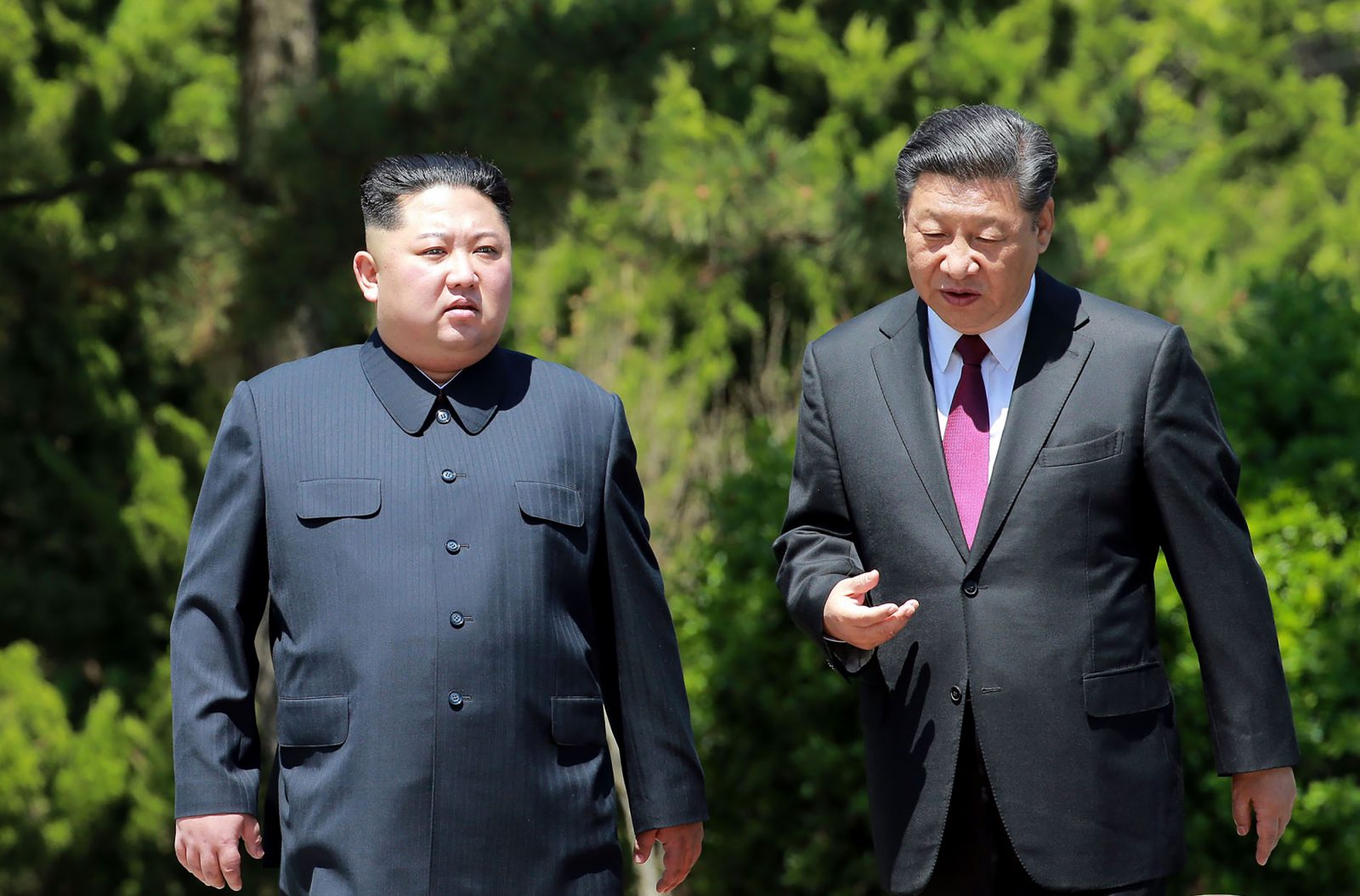
Kim Jong-un has never been shy about making bold, even brutal, decisions. In 2013 he ordered the execution of his uncle and mentor Jang Song-thaek to cow his inner circle. In 2017 he pressed ahead with nuclear and missile tests despite US threats of preventive war. In 2018 he broke out of isolation by meeting the leaders of the United States, China, and South Korea. Since 2022 he has thrown in his lot with Russia, and last year he formally abandoned his grandfather's goal of Korean reunification.
Yet the North Korean leader appears to be hesitating at a moment when a historically unusual opportunity has been placed before him. On August 16, US President Donald Trump announced on social media that he had ordered the Pentagon to "substantially reduce" joint US-South Korea military exercises. Trump repeated his long-standing complaint that these drills are "costly" and "hostile" toward Pyongyang—language that echoes the North's own talking points.
Trump's post also claimed that North Korea has been "unthreatening and respectful" during his presidency. That is a generous reading of the record. Under Trump's first term, Pyongyang demonstrated an intercontinental ballistic missile capability, conducted what it called a hydrogen bomb test, threatened to turn the US mainland "into ashes and darkness," and tested a range of ballistic, cruise, and hypersonic missiles. More recently, North Korea has sent thousands of troops to fight for Russia in Ukraine and supplied Moscow with missiles that have killed Ukrainian civilians.
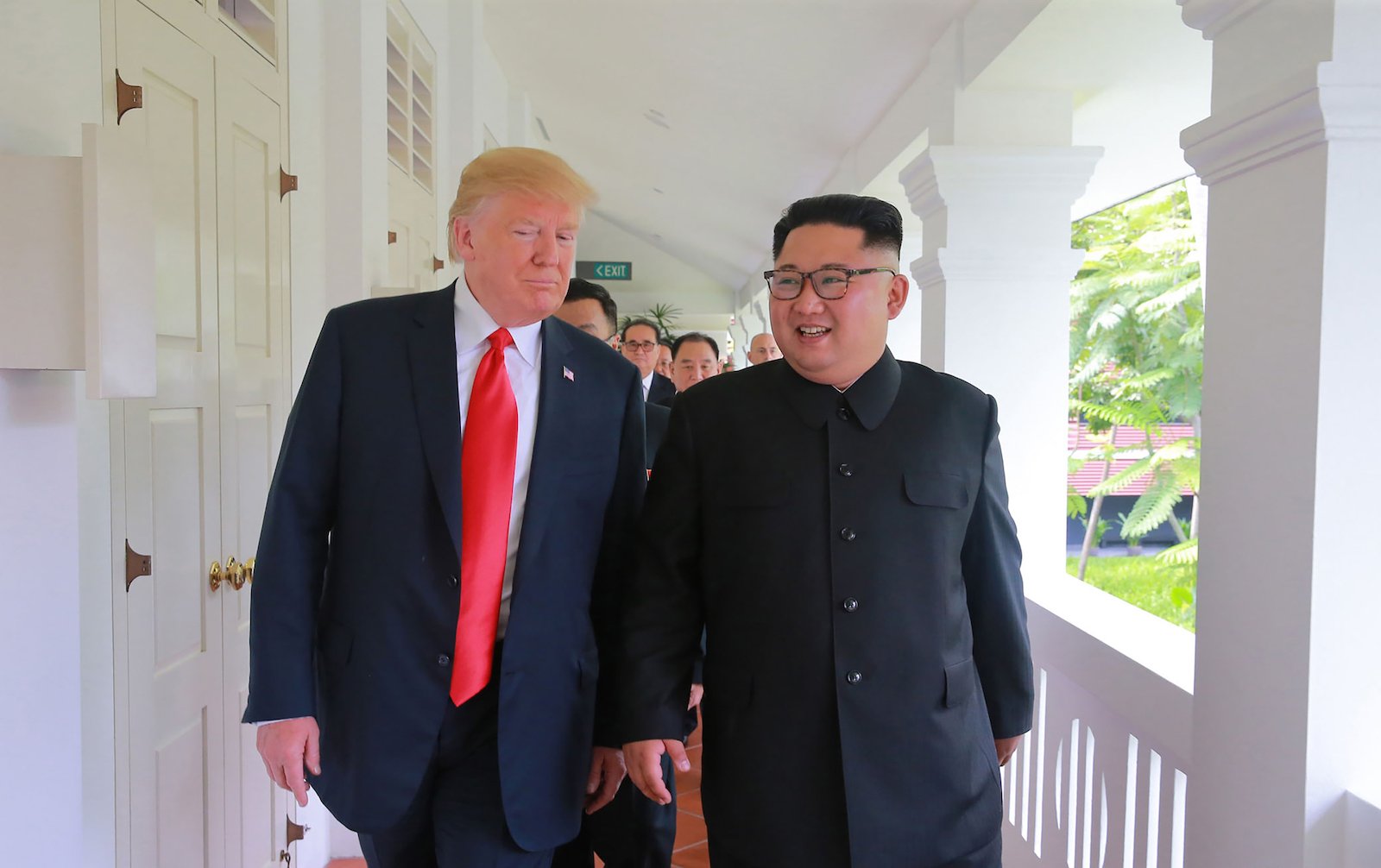
Trump's willingness to overlook these facts is central to his approach. The day after his post on military exercises, he shared a photo of Kim on the phone with the caption, "Hey Donald, we cool … Right?" These are the latest in a series of signals, dating back to before his return to the White House, that he wants to restart the summitry that collapsed after three meetings in 2018-2019. In June, he reportedly told South Korean President Lee Jae-myung that it was "time to pay attention" to the North, and he reposted a photo of himself walking with Kim in Singapore.
Trump's stance on the Korean Peninsula is an outlier in US politics. He has repeatedly called the alliance's exercises "provocative," touted his personal bond with Kim, floated the withdrawal of US troops from South Korea, and at his first summit agreed to the goal of "complete denuclearization of the Korean Peninsula"—a phrase Pyongyang interprets as the removal of the US nuclear umbrella.
Trump is also notably unsentimental about Seoul. In his August 16 post, he complained that South Korea had not sent warships to help reopen the Strait of Hormuz. He expanded on that grievance the next day, telling journalists that Lee had refused a request to "give us a hand with Iran … guarding the Strait," and asking rhetorically why the US should protect countries that do not help in return. This resentment toward South Korea as a free-rider weakens what might otherwise be a constraint on a deal that reduces pressure on Pyongyang.
With his approval ratings sliding and the Iran war unpopular, Trump is likely eager for a foreign policy win—one he may believe could earn him a Nobel Prize. He has just over two years left in office. His successor, regardless of party, is unlikely to be as accommodating to North Korean interests. Kim should be seizing this chance to meet Trump again. So far, he has not.
Pyongyang has offered no official acknowledgment of Trump's overtures. On August 19, Kim's sister and close aide Kim Yo-jong said she knew of no current communication between her brother and the US president.
Kim could gain much from renewed talks. One prize would be the lifting of US economic sanctions. That is less critical now that Russia and China no longer enforce international sanctions and the North Korean economy has grown by at least 3 percent for three consecutive years. But US sanctions still deter foreign banks from doing business with the North, and the president has the legal authority to ease most of them.
Another long-standing goal is the withdrawal of US troops from South Korea. Pyongyang has demanded this for decades, citing the US presence as a source of tension and a justification for its nuclear program. While Kim has sometimes played down the urgency, a US troop pullout would align with North Korea's grand strategy.
Yet Kim's silence suggests he may be calculating that time is on his side, or that Trump's offers are too good to be true. But history suggests such windows do not stay open long. As North Korea's military buildup deepens and its alliance with Russia strengthens, the strategic landscape is shifting. Trump's unique combination of personal affinity, disdain for the alliance, and desire for a legacy deal may not come again. Seoul and Washington should prepare for a reckless calculus, but Kim may be the one who ends up regretting his hesitation.