Current US political rhetoric surrounding the conflict with Iran is drawing upon a deep reservoir of medieval Christian thought that has historically framed Islam as a theological and civilizational adversary. This framing, which presents strategic interests in sacred terms, is not new but represents the latest adaptation of centuries-old polemics.
Contemporary Echoes of Ancient Polemics
In March 2026, US House Speaker Mike Johnson described Iran's predominant Shiite Islam as a "misguided religion" while discussing American military strikes. This theological characterization of a geopolitical adversary follows a pattern. That same month, a complaint to the Military Religious Freedom Foundation alleged a military commander claimed former President Donald Trump had been "anointed by Jesus to light the signal fire in Iran to cause Armageddon," referencing the Book of Revelation's final battle.
Right-wing pastor Andrew Sedra echoed this, stating "Trump is going after the head of the snake, which is Islam," and that "God is using President Trump... to execute judgment on evil and wicked civilizations." This language transcends policy debate, embedding military action within an apocalyptic Christian narrative.
A Historical Lineage of Hostile Depiction
These modern statements have direct antecedents in medieval Christian theology. Soon after Islam's emergence, early Christian theologians designated it a rival faith. In the 8th century, John of Damascus labeled it the "Heresy of the Ishmaelites" in what is considered the first documented critique of Islamic doctrine.
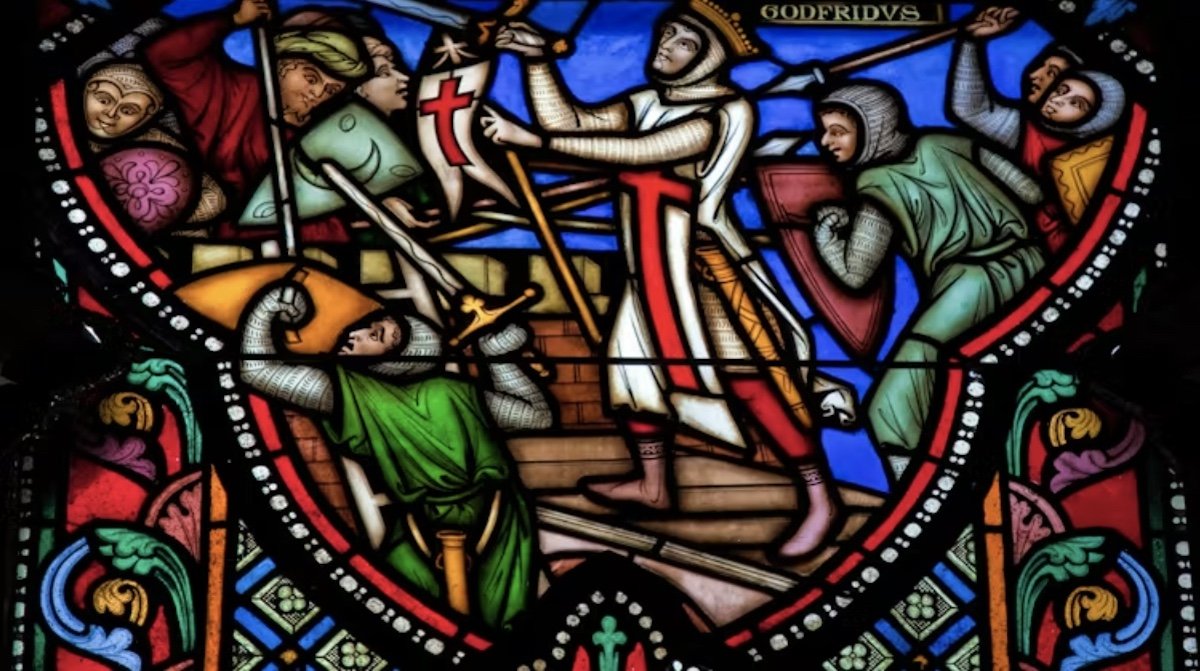
As historian John Tolan notes in Saracens: Islam in the Medieval European Imagination, medieval writers disseminated "crude insults to the Prophet, gross caricatures of Muslim ritual [and] deliberate deformation of passages of the Koran," portraying Muslims as "libidinous, gluttonous semi-human barbarians." These depictions were popularized in epic poems (chansons de geste) glorifying Christian heroes vanquishing Muslim foes and were instrumental in justifying the Crusades, called by Pope Urban II in 1095 to wrest the Holy Land from Muslim control.
The military failures of the Crusades posed a theological dilemma for medieval Christians, who believed history reflected God's judgment. Some reconciled Muslim victories by interpreting them as divine punishment for Christian sin, further entrenching the portrayal of Muslims as demonic, bloodthirsty figures in art and literature.
From Crusades to Colonialism
In later centuries, these anti-Muslim tropes were repurposed to justify European colonialism. The 19th-century "three C's" framework—Christianity, Commerce, and Civilization—presented colonial expansion as a benevolent civilizing mission. Missionaries like David Livingstone contrasted what they portrayed as Christianity's moral authority with a depiction of Islam as stagnant and simplistic.
Scholar Edward Said's seminal 1978 work Orientalism critiqued how these narratives reduced diverse Middle Eastern and Arab peoples to a set of negative, monolithic traits: barbaric, violent, lazy, and mysterious. These ideas, circulating within Western intellectual traditions, created durable representations influencing literature, art, and politics.
Modern Adaptations and Political Impact
Today, these centuries-old themes are adapted into contemporary political and media rhetoric. A 2026 survey of American Baptist clergy for the book Confronting Islamophobia in the Church found many pastors describing Islam and Muslims as inherently violent, blasphemous, oppressive toward women, or incompatible with Western society. The theological accusation of "heresy" has morphed into modern concerns about violence and social incompatibility.
This rhetoric has tangible consequences. It shapes popular understanding of a complex geopolitical conflict, potentially narrowing diplomatic options and escalating tensions. As scholar Deepa Kumar observed, "while ordinary people can and do resist dominant ideas, those who rule the society tend to set the terms of discussion." When leaders frame a nation-state conflict as a holy war, it risks inflaming religious identities globally.
Broader Implications for the Indo-Pacific
The religious framing of the Iran conflict carries significant implications for Asia, a region with substantial Muslim populations and complex interfaith dynamics. Nations like Indonesia, the world's largest Muslim-majority country, and Malaysia watch how Islam is portrayed in Western conflict rhetoric. Such portrayals can affect bilateral relations and domestic politics.
Furthermore, the escalation of the Iran conflict directly impacts Asian economies and security. As explored in our analysis US-Iran-Israel Conflict Likely to Settle into a Protrusted Stalemate, a prolonged confrontation disrupts critical energy supplies and shipping lanes. This is particularly acute for major energy importers like Japan, South Korea, and India, whose economies are strained by volatility, as noted in Iran Conflict Puts Global Economy at Risk, Strains Asian Energy Importers.
The search for stability may increasingly involve other Asian powers. China's Role Emerges as Key to Reviving Iran Nuclear Deal and Ending Conflict highlights Beijing's potential diplomatic leverage. Simultaneously, the crisis prompts regional reassessments of energy security, with some nations reconsidering nuclear power, as covered in Iran Conflict Prompts Indo-Pacific Nations to Reassess Nuclear Energy and Security Postures.
The resurgence of medieval religious rhetoric in modern statecraft is more than a historical curiosity. It is a potent force that simplifies multifaceted conflicts, risks hardening sectarian divisions, and complicates international diplomacy. For a diverse and strategically vital region like the Indo-Pacific, where religious pluralism is the norm, the global discourse surrounding Islam and conflict carries profound local resonance.