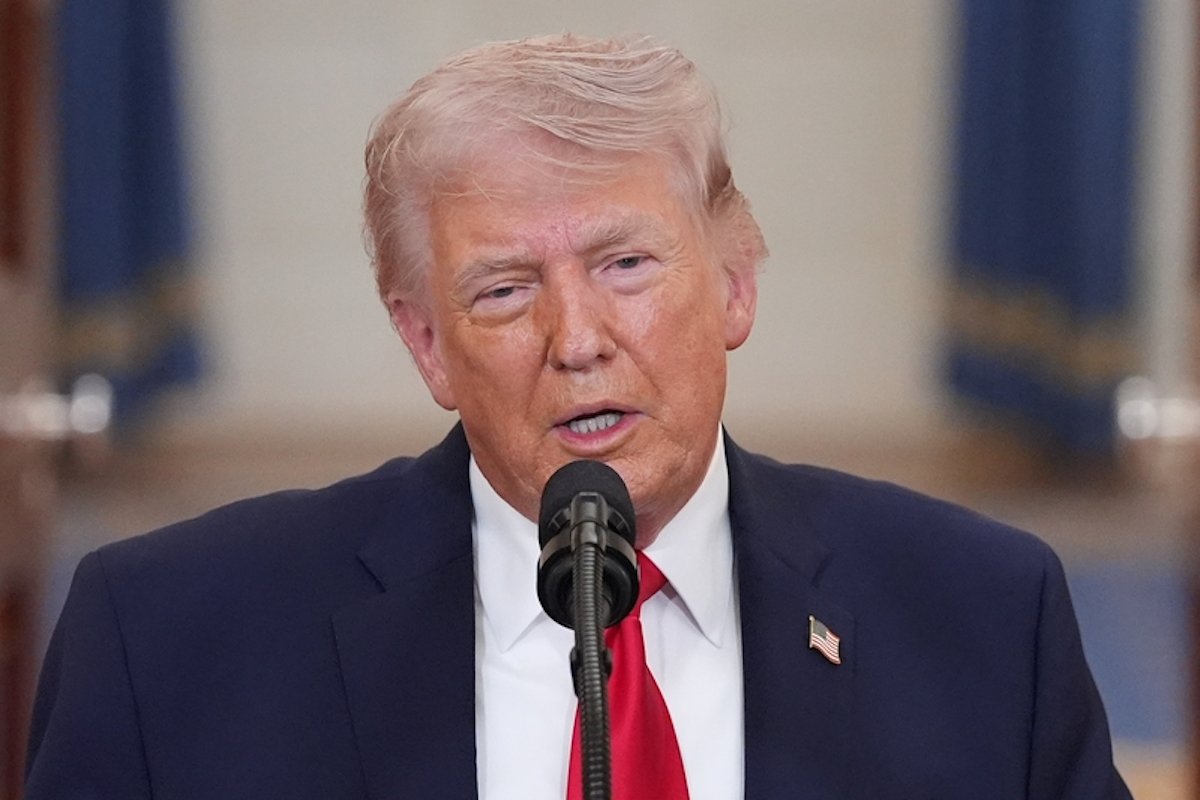
In a primetime address, US President Donald Trump declared that the American military campaign in Iran is approaching its conclusion, while simultaneously promising a severe final phase of strikes against the Islamic Republic. The announcement comes amid a costly, month-long conflict that has destabilized the Middle East and sent shockwaves through global energy markets.
Strategic Objectives and Shifting Rhetoric
Trump stated that core US strategic objectives, including dismantling Iran's ability to project power abroad by degrading its navy, air force, and missile programs, were "nearing completion." He described the campaign as militarily unprecedented. However, the president's remarks largely reiterated previous statements, offering little new strategic detail. He vowed to hit Iran "extremely hard" over the next two to three weeks, using the phrase "back to the stone ages"—a characterization he has employed repeatedly on social media.
The president's narrative on war aims and timelines has been inconsistent. Just a day before the address, he told reporters Iran's regime had been successfully changed. Yet, reports suggest the new Supreme Leader, Majtaba Khamenei, may be as or more radical than his late father, Ali Khamenei. Furthermore, Trump appeared to dismiss concerns about Iran's near-weapons-grade enriched uranium, a primary justification for the war he outlined in February.
"We will consider when Hormuz Strait is open, free, and clear. Until then, we are blasting Iran into oblivion," Trump wrote on his Truth Social platform, claiming Iran's new president had requested a ceasefire—an assertion Tehran's Foreign Ministry swiftly denied as "false and baseless."
Regional Toll and Global Repercussions
The human cost of the conflict is substantial. The Pentagon reports 13 US service members killed and 350 injured. According to the US-based advocacy group HRANA, civilian deaths in Iran from US and Israeli strikes have reached 1,598, including at least 244 children. Israel's concurrent campaign in southern Lebanon has, according to Lebanese authorities, claimed 1,240 lives, injured 3,680, and displaced 1.1 million people. Strikes have also caused casualties across Bahrain, Iraq, Jordan, Kuwait, Oman, Qatar, Saudi Arabia, Syria, and the UAE.
The war's economic impact is global. Iran's takeover of the Strait of Hormuz, a chokepoint for one-fifth of the world's petroleum, has caused oil prices to surge, pushing the average US gasoline price above $4 per gallon. This energy shock has direct implications for major Asian economies like China, Japan, India, and South Korea, which are heavily dependent on Middle Eastern oil imports. The disruption threatens growth in these trade-dependent nations.
Domestically, the war remains unpopular. Approximately two-thirds of Americans in a recent Reuters/Ipsos poll said the United States should work to end the conflict quickly.
Diplomatic Posturing and Historical Grievances
Hours before Trump's speech, Iran's President Masoud Pezeshkian, in office since 2024, posted an open letter to the American people. He accused the Trump administration of lying about Iranian aggression, framing Iran's actions as "a measured response grounded in legitimate self-defense." He pointed to a US missile strike that killed 168 elementary school children on the war's first day, asking if such actions served any purpose other than damaging US global standing.
Pezeshkian's letter also referenced the 2018 US withdrawal from the nuclear deal, a move that fueled anti-American sentiment in Iran, evidenced by lawmakers burning the US flag in parliament. He asserted the Iranian people "harbor no enmity toward other nations," despite the regime's violent crackdown on domestic protesters earlier this year. The diplomatic stalemate is reinforced by Tehran's position, as it has rejected new talks with the US, citing Trump's "erratic" threats.
The conflict also comulates other international relationships. The ongoing Hormuz blockade raises stakes for major powers, and any resolution may increasingly depend on external mediation, with China's role emerging as a potential key to reviving diplomacy.
As President Trump signals an end to open warfare, the region braces for a final, intense period of military action. The aftermath will involve navigating a shattered Iranian state, a volatile energy market, and a deeply fractured geopolitical landscape, with Asian economies keenly watching for stability to return to a critical maritime corridor.