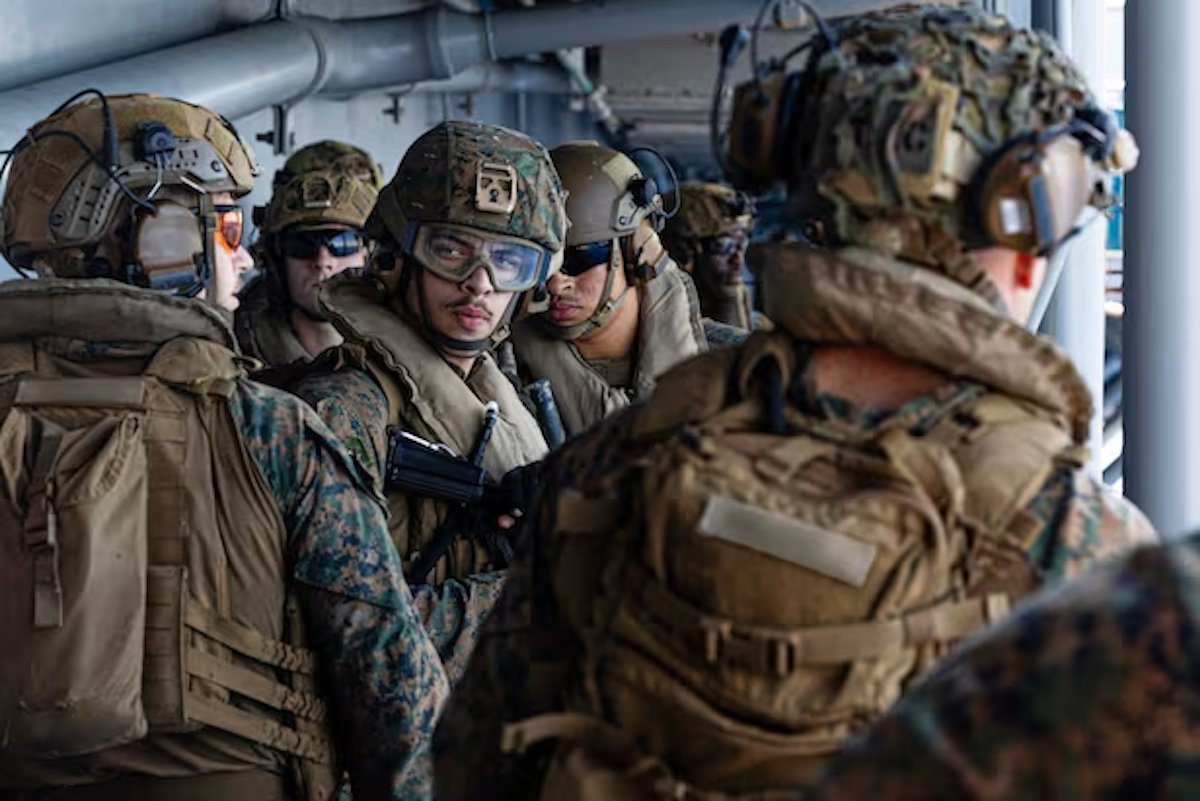
At the national conference of Veterans For Peace, military families painted a grim picture of life for US service members stationed in the Middle East. Rotten food, overflowing toilets spilling into bunk areas, insufficient space in missile shelters, confiscated cellphones that serve as the primary warning system for incoming attacks, infrequent mail delivery, and a shutdown of social media were among the complaints raised. Spouses and parents of Air Force, Army, Marine, and Navy personnel described plummeting morale, shortages of basic supplies, and attacks on US bases that have gone largely unreported in American media.
Carrier deployments stretch crews to the breaking point
The frustration voiced at the conference echoed the accounts shared by military families who met with the acting assistant secretary of the Navy and the commander of the US Pacific Fleet in San Diego on August 6, 2026. Those listening sessions, held in person and online, focused on the USS Abraham Lincoln, an aircraft carrier that has been deployed for more than 250 days since leaving Naval Base San Diego on November 21, 2025. The ship's 5,000 sailors and Marines have had only brief stops in Guam and Oman, with 208 consecutive days at sea.
Family members leaked recordings of the sessions, revealing conditions aboard the carrier: showers plagued by stubborn mildew, heavy fatigue, shortages of food and supplies, contaminated water, and lost mail. The toll on mental health has been severe. Reports in Stars and Stripes and Navy Times document at least six attempts by crew members to jump overboard, a stark indicator of the psychological strain.
The USS Gerald R. Ford, another carrier, faced similar issues during its transit from the Caribbean to the Middle East after participating in the January 2026 operation off Venezuela. Sewage repeatedly overflowed onto floors, and a laundry room fire caused extensive smoke damage, destroying over 100 bunks and personal gear. More than 200 sailors were treated for smoke inhalation, and one was medically evacuated after being injured during damage control.
A father's desperate plea
One parent, Jefferson Kelley, wrote to Senator Bernie Moreno (R-Ohio) on August 13, asking if he could perform a 'parent swap' with his 20-year-old son, Jackson, a sailor on the Abraham Lincoln. Kelley, who had not discussed the idea with his son, cited the food rations, safety concerns, water contamination, and poor mental health that have led to suicide attempts. His proposal, while heartfelt, could complicate his son's remaining time on the carrier.
The problems extend beyond the Navy. Families of Army and Marine personnel on bases scattered across the Middle East describe overcrowded missile shelters and the confiscation of cellphones, which are the only reliable warning devices for incoming attacks. The US military argues that Iran monitors social media posts to track attacks, but families counter that taking phones leaves troops without critical alerts.
According to the War Horse, the only public source for injury data during the US campaign against Iran is the Defense Casualty Analysis System. Between February 28 and April 8, more than 400 nonlethal casualties were recorded, with Army personnel accounting for the majority. Over 270 of those were Army soldiers, including 57 sergeants and 53 specialists, as well as 64 officers. The Navy reported 64 casualties, the Air Force 51, and the Marine Corps 19. Shrapnel wounds, broken bones, and smoke inhalation were common, but head trauma appeared far more frequently than any other injury.
Military health experts worry that traumatic brain injuries could become the signature wound of this conflict, as they did in Iraq and Afghanistan. Since February 28, 18 US troops have been killed and 624 wounded, according to Pentagon figures.
The deteriorating conditions and rising casualties raise serious questions about the sustainability of US operations in the Middle East. As the region's multipolar order evolves, the strain on American forces could have broader implications for security in the Strait of Hormuz and beyond. Meanwhile, Beijing watches closely, potentially benefiting from Washington's overstretch.