For three decades after the Cold War, Washington operated under a dangerous assumption: that military supremacy could indefinitely compensate for diplomatic exhaustion. The United States possessed the world's most advanced armed forces, unmatched naval reach, and a financial system capable of weaponizing sanctions against adversaries thousands of miles away. From the Balkans to Baghdad, this power often created the appearance of control. But appearances in geopolitics have a short shelf life.
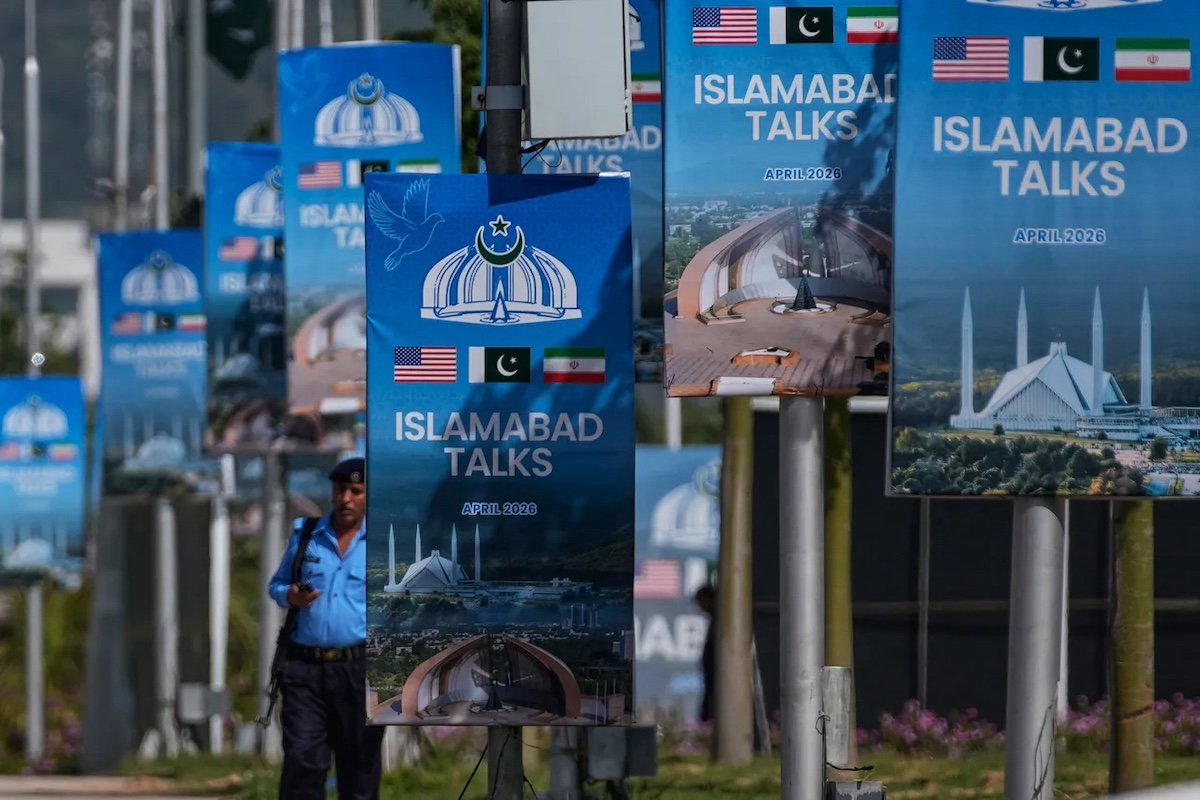
The latest confrontation with Iran has exposed something American policymakers have resisted admitting for years. The age of uncontested US primacy is ending — not because America has suddenly become weak, but because the structure of global power has changed faster than Washington's strategic imagination. What makes this realization especially painful is that the erosion of American leverage has not primarily been imposed by enemies. Rather, much of it has been self-inflicted.
Great powers, history shows, rarely collapse from a single defeat. They decline by confusing military capacity with strategic wisdom. Imperial Britain learned this after Suez in 1956. The Soviet Union learned it in Afghanistan. The US now risks learning the same lesson in the Persian Gulf.
The Paradox of Power
The Iran confrontation demonstrates a striking paradox. America can still inflict enormous damage, yet it struggles to achieve decisive political outcomes. That distinction matters because military victories are tactical events while political victories define history. Washington's Iran policy has oscillated between coercion and fantasy. One administration tears up agreements in pursuit of "maximum pressure." Another attempts partial diplomacy while maintaining the architecture of sanctions. Then comes another round of threats, military deployments, cyber operations and economic restrictions. But Washington's underlying assumption never changes: eventually, Tehran will break under pressure.
Yet states under sustained pressure often adapt instead of surrender. Iran's survival strategy resembles what smaller powers throughout history have done when confronting stronger adversaries. Vietnam did it against the US. Hezbollah did it against Israel in 2006. Ukraine, despite vastly different circumstances, is using similar principles against Russia. The objective is not necessarily outright victory. It is denial, making the cost of domination too high for the stronger actor to sustain politically.
That is precisely where Washington appears trapped. Despite overwhelming military advantages, the US is discovering that geography, asymmetric tactics, regional alliances and domestic political outrage and fatigue can neutralize conventional superiority. The Strait of Hormuz alone remains one of the world's most critical economic chokepoints. Roughly one-fifth of global oil consumption passes through it. Even limited instability there can send shockwaves through global markets. This creates leverage for Tehran that no sanctions package can entirely erase.
Implications for Asia
For Asia, the lesson is immediate and practical. The US remains the dominant military power in the Indo-Pacific, but its ability to translate that into political outcomes is increasingly questioned. South Korea, for instance, is already exploring hedging strategies. Singapore finds its AI neutrality model cracking under US-China pressure. Even longtime allies like Japan and Australia are recalibrating their expectations.
China's rise is not merely the result of Beijing's economic planning or industrial capacity. It has also been accelerated by persistent American strategic overreach. The Iraq war alone cost trillions of dollars while diverting attention from Asia during the very decades China was consolidating manufacturing dominance, technological growth and global infrastructure influence. History offers a cruel irony here. The US won the Cold War partly because the Soviet Union exhausted itself in unsustainable geopolitical competition. Yet Washington increasingly risks reproducing the same mistake through perpetual military commitments and open-ended confrontations.
Meanwhile, other countries are adapting accordingly. Saudi Arabia now balances relations between Washington and Beijing. India buys Russian oil while deepening ties with the US. Turkey pursues an aggressively independent regional policy despite NATO membership. Even longtime American allies increasingly hedge rather than align automatically. This is what declining primacy looks like in practice — not dramatic collapse, but gradual diversification.
The phrase "indispensable nation," once popular in American foreign policy circles, now sounds less like confidence and more like nostalgia. Nations no longer assume Washington's approval is necessary before pursuing their interests. Iran understood this earlier than many in Washington did. Years of sanctions pushed Tehran eastward economically and strategically. China became a lifeline. Russia became a partner of convenience. The BRICS bloc expanded. Dollar alternatives, while still limited, gained momentum. None of this means the US is about to be displaced as the world's dominant power. But it does mean the costs of coercive unilateralism are rising rapidly.
For Asian capitals, the message is clear: the era of a single superpower dictating terms is over. The region's future will be shaped by networks, not nations, as explored in Networks, Not Nations, Define Power in the Post-Pax Era. The Strait of Malacca, like the Strait of Hormuz, is emerging as a potential flashpoint in great-power rivalry, as detailed in this analysis. The US may still be the world's greatest power, but that no longer guarantees victory — and Asia is watching closely.